This article provides a comprehensive guide to Ethereum Name Service (ENS), emphasizing its positioning as a decentralized domain system that simplifies blockchain user interactions. Introduced by the Ethereum Foundation in 2017, ENS addresses the complexity of blockchain addresses, serving over 65,000 holders by 2025. Key topics include its technical architecture and market performance, alongside challenges such as scalability and regulatory risks. Readers will gain insights into ENS's work mechanism, ecosystem applications, partnerships, and how to actively participate, following a logical sequence from origin to future roadmap.
ENS's Positioning and Significance
In 2017, the Ethereum Foundation introduced ENS (ENS), aiming to solve the challenge of human-readable addresses in the blockchain space.
As the first decentralized domain name system on Ethereum, ENS plays a crucial role in improving user experience and accessibility in the Web3 ecosystem.
As of 2025, ENS has become a cornerstone infrastructure for Ethereum and Web3 applications, boasting over 65,000 holders and an active developer community. This article will delve into its technical architecture, market performance, and future potential.
Origin and Development History
Birth Background
ENS was created by the Ethereum Foundation in 2017, aiming to solve the complexity of interacting with blockchain addresses.
It was born in the context of growing adoption of Ethereum and the need for user-friendly interfaces in the blockchain space, with the goal of simplifying interactions with blockchain applications to change the status quo.
ENS's launch brought new possibilities for both developers and users in the Ethereum ecosystem.
Important Milestones
- 2017: Mainnet launch, achieving human-readable Ethereum addresses.
- 2021: Major upgrade introducing ENS governance token, enabling community governance.
- 2021: Adoption surged, pushing the price to an all-time high of $83.4.
- 2023: Ecosystem expansion, with numerous DApps and wallets integrating ENS.
With the support of the ENS DAO and the wider Ethereum community, ENS continues to optimize its technology, security, and real-world applications.
How Does ENS Work?
Decentralized Control
ENS operates on the decentralized Ethereum network, free from control by any single entity or government.
This decentralized nature ensures transparency and resilience, giving users greater autonomy over their digital identities.
Blockchain Core
ENS's functionality is built on top of Ethereum's blockchain, a public, immutable digital ledger that records all ENS registrations and updates.
Transactions are grouped into blocks and linked through cryptographic hashes, forming a secure chain.
Anyone can view the records, establishing trust without intermediaries.
Ensuring Fairness
ENS leverages Ethereum's Proof-of-Stake (PoS) consensus mechanism to validate transactions and maintain network security.
Validators participate by staking ETH and running nodes, receiving rewards for their contribution to network security.
Secure Transactions
ENS uses public-private key cryptography to secure transactions:
- Private keys are used to sign transactions and prove ownership of ENS domains
- Public keys (Ethereum addresses) are used to receive ENS domains
This mechanism ensures the security of ENS registrations and transfers, maintaining pseudonymity for users.
ENS also implements additional security features such as registrar contracts and resolver contracts to manage domain ownership and resolution.
ENS Market Performance
Circulation Overview
As of September 16, 2025, ENS has a circulating supply of 33,165,585.054507963 tokens, with a total supply of 100,000,000.
Price Fluctuations
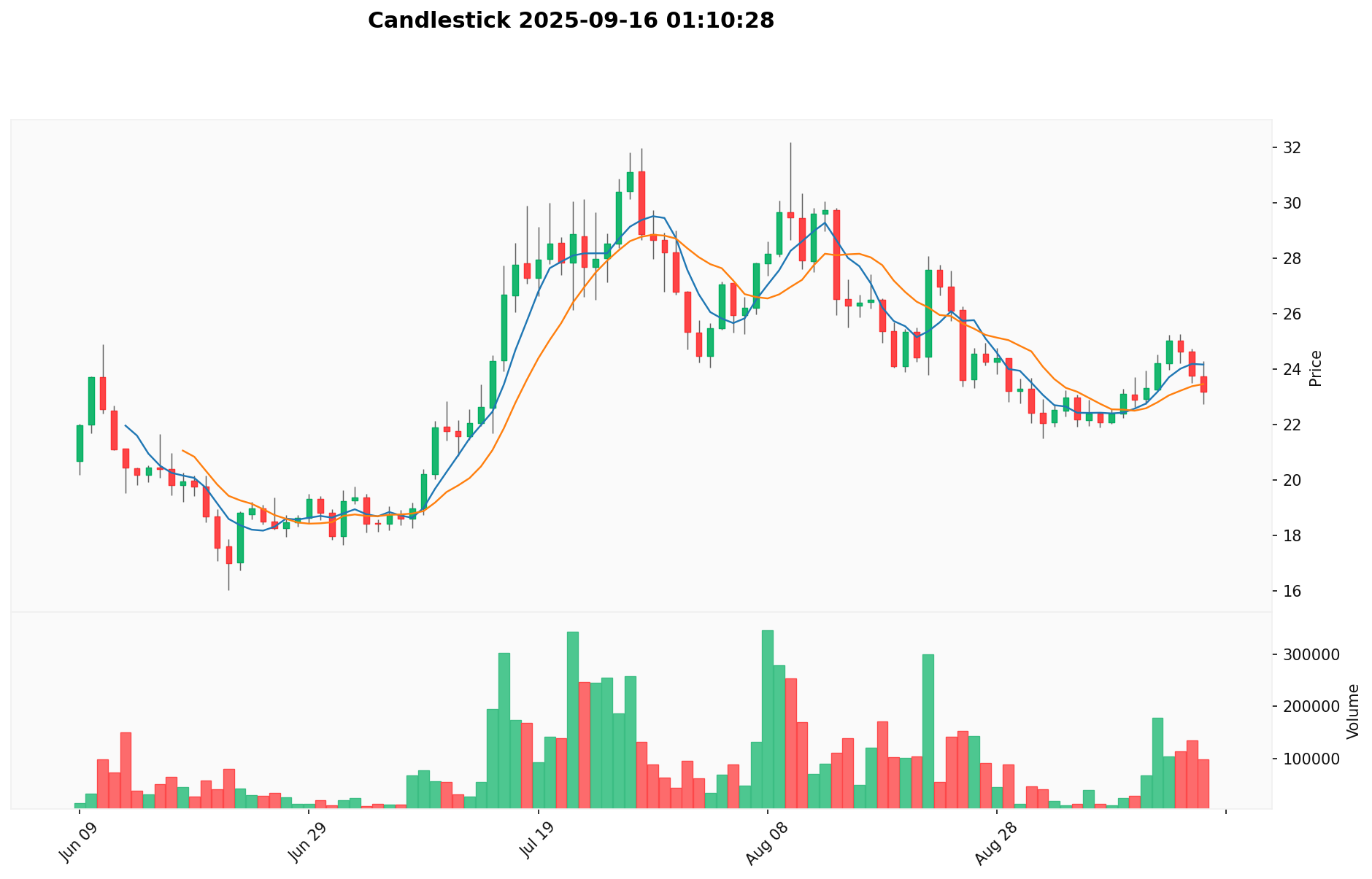
ENS reached its all-time high of $83.4 on November 11, 2021, driven by the overall crypto market bull run and increased adoption of Ethereum-based services.
Its lowest price was $6.69, occurring on October 19, 2023, likely due to broader market downturns and regulatory uncertainties in the crypto space.
These fluctuations reflect market sentiment, adoption trends, and external factors affecting the Ethereum ecosystem and decentralized domain services.
Click to view the current ENS market price
On-Chain Metrics
- Daily Transaction Volume: $2,296,205.78829 (indicating network activity)
- Active Addresses: 65,969 (reflecting user engagement)
ENS Ecosystem Applications and Partnerships
Core Use Cases
ENS's ecosystem supports various applications:
- Domain Names: ENS provides human-readable Ethereum addresses, simplifying crypto transactions and interactions.
- Web3 Identity: ENS domains serve as digital identities across the Web3 space.
Strategic Partnerships
ENS has established partnerships with several Ethereum-based projects and wallets, enhancing its integration and usability across the ecosystem.
Controversies and Challenges
ENS faces the following challenges:
- Technical Challenges: Scalability issues inherent to the Ethereum network.
- Regulatory Risks: Potential classification as securities by regulatory bodies.
- Competitive Pressure: Emergence of alternative naming systems on other blockchains.
These issues have sparked discussions within the community and market, driving continuous innovation for ENS.
ENS Community and Social Media Atmosphere
Fan Enthusiasm
ENS's community is vibrant, with over 65,969 holders as of September 2025.
On X, hashtags like #ENS frequently trend, especially during major updates or price movements.
Social Media Sentiment
Sentiment on X shows a mix of opinions:
- Supporters praise ENS for its utility in simplifying Ethereum addresses and its role in Web3 identity.
- Critics focus on concerns related to Ethereum's scalability issues affecting ENS usability.
Recent trends indicate generally positive sentiment, particularly as Web3 adoption grows.
Hot Topics
X users actively discuss ENS's role in decentralized identity, its governance model, and potential integrations with other blockchain networks.
More Information Sources for ENS
- Official Website: Visit ENS official website for features, use cases, and latest updates.
- X Updates: On X, ENS uses @ensdomains, with posts covering technical updates, community events, and partnership news.
ENS Future Roadmap
- Ongoing: Continuous improvements to the ENS protocol and governance system.
- Ecosystem Goals: Expand integration with more Web3 applications and wallets.
- Long-term Vision: Become the standard for decentralized naming and identity in the Web3 space.
How to Participate in ENS?
- Purchase Channels: Buy ENS tokens on Gate.com
- Storage Solutions: Use Web3 wallets supporting ENS for secure storage
- Participate in Governance: Engage in community decisions through the ENS DAO
- Build the Ecosystem: Visit the ENS developer documentation to integrate ENS into your projects
Summary
ENS redefines digital identity on the Ethereum blockchain, offering human-readable addresses and Web3 usernames. Its active community, rich resources, and strong market performance make it stand out in the cryptocurrency field. Despite facing challenges like regulatory uncertainties and technical limitations tied to Ethereum, ENS's innovative spirit and clear roadmap position it as a key player in the future of decentralized technology. Whether you're a newcomer or an experienced user, ENS is worth watching and participating in.
FAQ
What does ENS mean in crypto?
ENS stands for Ethereum Name Service. It links human-readable names to Ethereum addresses, making it easier to send and receive crypto. It's like a domain name system for blockchain addresses.
What is ENS in medical terms?
ENS stands for Enteric Nervous System, a network of neurons controlling the gastrointestinal tract. It regulates digestion and gut motility independently of the central nervous system.
What is ENS used for?
ENS (Ethereum Name Service) is used to simplify Ethereum addresses, allowing users to replace long, complex wallet addresses with human-readable names, making transactions and interactions in the Ethereum ecosystem more user-friendly and accessible.
What is the meaning of ENS?
ENS stands for Ethereum Name Service. It's a decentralized naming system built on the Ethereum blockchain that translates human-readable addresses into machine-readable identifiers, simplifying cryptocurrency transactions and interactions with decentralized applications.
* The information is not intended to be and does not constitute financial advice or any other recommendation of any sort offered or endorsed by Gate.












