At its core, a bank's business model revolves around the "deposit-to-loan" cycle, where financial intermediation generates revenue through interest rate spreads and service fees. HBAN (Huntington Bancshares), a key regional bank in the U.S. Midwest, builds its profit structure on traditional deposit and lending operations while extending into wealth management and corporate financial services, creating a diversified revenue stream.
From a regional banking perspective, HBAN's core advantage lies in its stable customer base and expertise in local markets. Its revenue performance is closely tied to the economic health of the Midwest, prevailing interest rates, and credit demand. Thus, understanding its business model requires analyzing the interplay of deposit-loan structure, customer ecosystem, and interest rate cycles.
HBAN Stock: Key Facts
HBAN's business model relies on the coordinated operation of three segments—retail banking, corporate banking, and wealth management—ensuring comprehensive customer lifecycle coverage. This structure delivers solid interest income while boosting the share of non-interest income through fees and management charges, strengthening the bank's resilience to economic cycles.
Fundamental data shows HBAN's market cap ranks in the upper-middle tier among Midwest regional banks, with stock price fluctuations more moderate than those of major national banks. Investors can assess the bank's financial health and market performance through public financial reports, reviewing quarterly revenue structures, capital adequacy ratios, and non-performing loan ratios. A stable operating model and regional focus offer shareholders long-term value potential.
Additionally, HBAN stock serves as a barometer of regional economic vitality. Its earnings growth is closely linked to local small business development, consumer credit demand, and the interest rate environment. Therefore, investors should monitor macroeconomic policy, rate cycles, and regional economic conditions to gauge the stock's investment potential and risk.
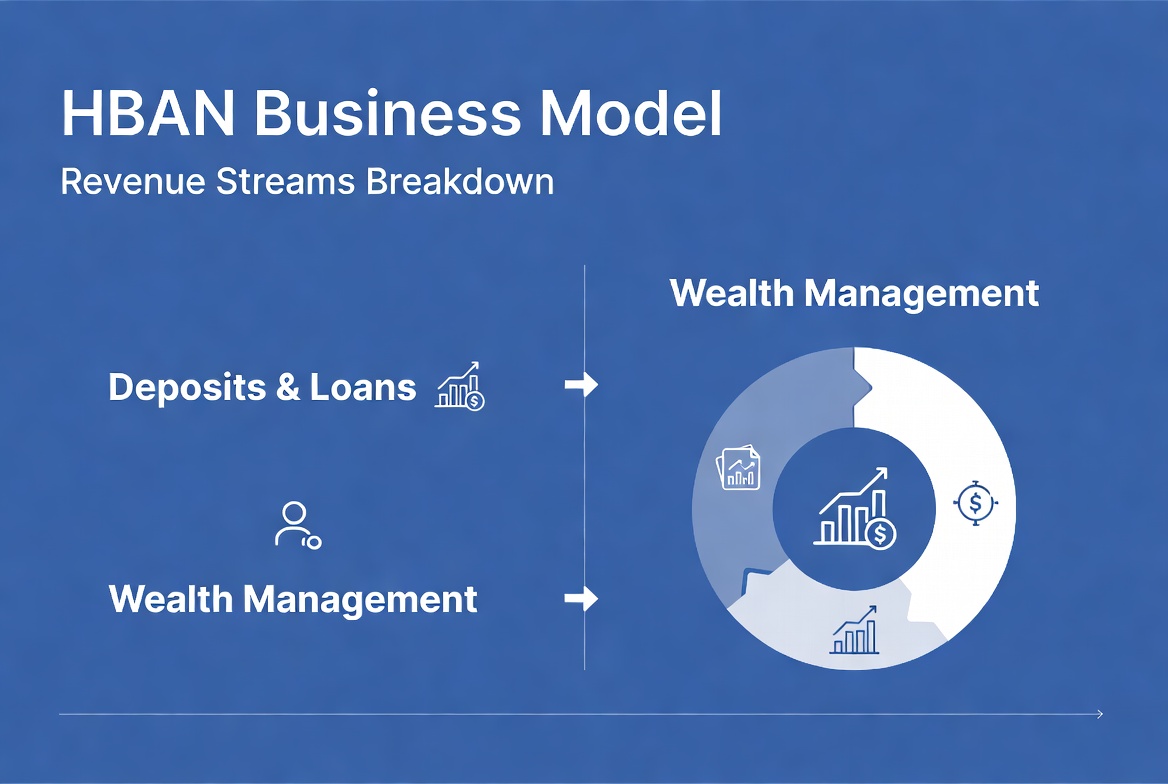
Huntington Bank's Revenue Sources
HBAN's revenue splits into two main categories: interest income and non-interest income. Interest income stems from deposit and lending activities—taking in savings deposits and issuing personal and corporate loans to earn a spread. Non-interest income comes from fees, wealth management services, investment advisory, and transaction-related charges. This mix ensures a stable overall revenue structure.
On the interest income side, deposit and lending operations are central. The bank earns stable returns by managing the gap between lending and deposit rates while keeping non-performing loans low through rigorous credit approval and risk control. On the non-interest side, HBAN generates management and service fees via credit cards, payment services, and wealth management, creating a steady cash flow that complements interest income.
Corporate financial services also contribute, including cash management, trade finance, and payment settlement. This diversified revenue structure reduces reliance on any single business and strengthens the bank's ability to weather different economic cycles, providing long-term value for shareholders.
How Deposit and Lending Operations Generate Income
Deposit and lending operations form the core of HBAN's business model. The bank pools customer deposits and extends loans to individuals and businesses, earning interest income from the rate spread. Loan types include mortgages, personal loans, and commercial loans, each with distinct risk and return profiles.
Operationally, HBAN manages loan risk through credit assessment, risk-based pricing, and diversified portfolio management. The bank uses big data and regional market intelligence to evaluate borrower creditworthiness, while offering a range of loan products to cover different customer segments, balancing returns with risk.
Beyond direct interest income, deposit and lending operations drive customers to other bank services—such as credit cards, wealth management, and payment products—fostering cross-selling and long-term loyalty. This model helps HBAN maintain a stable income source despite interest rate volatility and economic cycles.
How Wealth Management Drives Growth
HBAN's wealth management segment offers portfolio management, retirement planning, education fund planning, and asset allocation advisory. This business delivers professional financial solutions while generating ongoing revenue from management fees, advisory fees, and transaction commissions, boosting the bank's non-interest income share.
Wealth management attracts high-net-worth individuals and family clients, enabling the bank to build lasting relationships beyond core deposit and lending. Through its platform, HBAN provides asset custody, portfolio optimization, and personalized investment advice, enhancing customer stickiness and overall value within the bank's ecosystem.
Moreover, wealth management creates cross-business opportunities. For instance, clients planning investments may also use loan, savings, or insurance products, diversifying revenue and maximizing customer lifetime value—providing steady support for long-term growth.
How Corporate Financial Services Broaden Revenue
HBAN offers small and medium-sized enterprises a comprehensive suite: loans, credit lines, cash management, payment settlement, and trade finance. Corporate banking not only generates interest income but also yields non-interest income through service fees, transaction fees, and advisory charges, diversifying the bank's revenue base.
In practice, HBAN's cash management platform helps businesses optimize cash flow with centralized account management, payment scheduling, and liquidity control. This support ensures efficient operations while deepening customer reliance on the bank, fostering long-term partnerships.
Corporate banking also synergizes with deposit, lending, and wealth management. For example, business owners using loan and payment services may also open personal wealth accounts or retirement plans, increasing overall revenue and customer stickiness.
Why Interest Rates and Economic Cycles Impact Profitability
Bank profitability is highly sensitive to interest rates and economic cycles. Rising rates widen loan spreads but may curb loan demand; falling rates compress spreads but stimulate borrowing. HBAN must flexibly adjust deposit and lending rates across different rate environments to sustain stable profits.
Economic cycles directly affect non-performing loan ratios and credit risk. During downturns, defaults rise, forcing the bank to increase provisions and denting profits; during upturns, credit demand increases, defaults fall, and profit margins expand. HBAN counters these fluctuations through risk management and asset diversification.
Digital banking and a diversified business mix also provide a buffer. Non-interest income—such as wealth management fees, payment fees, and corporate service revenue—is less directly affected by interest rates, helping maintain profit stability during economic swings and bolstering long-term growth potential.
Summary
HBAN (Huntington Bank) builds its business model on deposit and lending operations, wealth management, and corporate financial services, achieving stable profitability through a blend of spread income and non-interest income. Deposit and lending provide core interest income; wealth management yields ongoing management and advisory fees; and corporate services contribute a diversified revenue stream.
The interest rate environment and economic cycle significantly influence HBAN's profitability, but through risk management, business diversification, and digital channels, the bank sustains stable cash flow and long-term growth potential. Overall, HBAN's strengths in deep regional market cultivation, a comprehensive financial ecosystem, and customer loyalty management secure its competitive edge in the Midwest regional banking market.