Aset Dunia Nyata (RWA/Real World Assets) merupakan aset keuangan tradisional—meliputi obligasi, saham, dan properti—yang ditokenisasi menggunakan teknologi blockchain, sehingga memungkinkan aset tersebut direpresentasikan, diperdagangkan, dan beredar secara on-chain. Artikel ini diawali dengan logika utama TradFi (keuangan tradisional), dengan pendekatan sistematis untuk mengkaji bagaimana RWA bergantung pada, terhubung dengan, dan memperkuat sistem keuangan tradisional. Artikel ini juga menganalisis apakah RWA akan benar-benar menggantikan keuangan tradisional atau hanya berfungsi sebagai pelengkap, serta mengidentifikasi peluang peningkatan efisiensi, alasan utama adopsi institusi, batasan praktis, dan tren konvergensi di masa mendatang.
RWA (Real World Assets) adalah proses tokenisasi aset keuangan nyata—seperti obligasi, saham, dan properti—dengan teknologi blockchain, sehingga memungkinkan aset tersebut direpresentasikan dan diperdagangkan secara on-chain. Inovasi ini menjadi jembatan penting antara Traditional Finance (TradFi) dan keuangan on-chain (DeFi).
Dalam beberapa tahun terakhir, seiring kematangan blockchain dan ekosistem kripto, pertumbuhan RWA terbukti lebih dari sekadar inovasi teknis; ini merupakan langkah nyata dalam modernisasi infrastruktur keuangan. RWA mendefinisikan ulang likuiditas, transparansi, dan kepatuhan aset tradisional di blockchain, serta mengubah secara fundamental praktik penyelesaian, kustodian, dan investasi di pasar konvensional.
Artikel ini membahas secara mendalam beberapa topik utama: definisi TradFi dan logika operasionalnya; alasan RWA harus bergantung pada sistem keuangan tradisional; proses kepatuhan untuk membawa aset tradisional ke blockchain; bagaimana RWA meningkatkan dan membatasi keuangan tradisional; serta jalur integrasi masa depan antara keuangan on-chain dan TradFi.
Pengantar RWA dan TradFi
RWA (Real World Assets) dan TradFi (Traditional Finance) adalah dua model berbeda dalam pengelolaan dan sirkulasi aset—keuangan on-chain dan sistem keuangan tradisional. Kedua model ini kini semakin sering berinteraksi dan berintegrasi.
Keuangan tradisional (TradFi) adalah sistem keuangan yang berpusat pada bank, broker, manajer aset, dan bursa efek. Fungsi utamanya mencakup intermediasi modal, alokasi risiko, serta pembayaran dan penyelesaian. TradFi menjadi tulang punggung arus modal ekonomi modern dan fondasi institusi untuk penerbitan, perdagangan, dan kustodian aset secara global.
Pengantar RWA dan TradFi
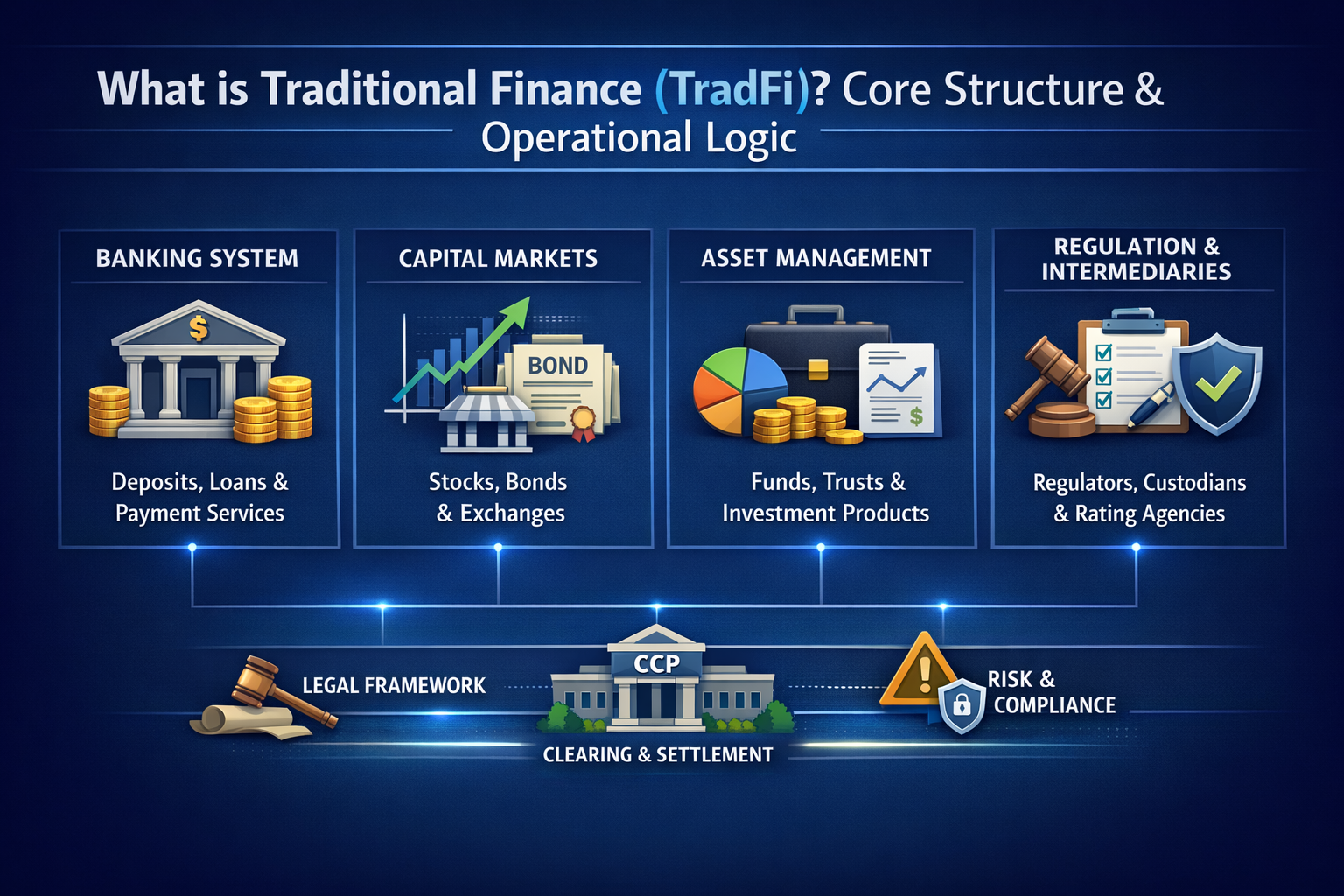
Struktur inti TradFi meliputi:
Sistem Perbankan: Mengelola simpanan, pinjaman, serta menyediakan layanan pembayaran dan penyelesaian;
Pasar Modal: Memfasilitasi pembiayaan dan investasi melalui sekuritas seperti saham dan obligasi, didukung oleh bursa, penjamin emisi, dan lembaga kliring;
Lembaga Manajemen Aset: Menghimpun dana investor melalui fund dan trust untuk dikelola secara profesional;
Institusi Regulasi dan Intermediasi: Termasuk regulator, lembaga pemeringkat, dan kustodian, membentuk kerangka kepatuhan dan pengendalian risiko TradFi.
Institusi-institusi ini beroperasi berdasarkan sistem hukum yang matang, jaringan kliring, dan mekanisme central counterparty (CCP), biasanya dengan jam operasional tetap, struktur penyelesaian bertingkat, serta proses kepatuhan yang kompleks.
Sebaliknya, RWA menggunakan blockchain untuk men-tokenisasi aset tradisional, memungkinkan sirkulasi dengan frekuensi lebih tinggi dan pengelolaan terprogram di blockchain. Namun, status hukum dan penjaminan nilai tetap berakar pada kerangka TradFi.
Mengapa RWA Harus Bergantung pada Sistem Keuangan Tradisional
Inti RWA adalah pemetaan aset nyata ke blockchain, sehingga harus bergantung pada infrastruktur TradFi untuk penjaminan nilai dan kepatuhan. Alasan utamanya:
Sifat Hukum Aset dan Bukti Kepemilikan: Hak kepemilikan dan pendapatan atas aset seperti saham, obligasi, dan properti dilindungi hukum; kode on-chain tidak dapat menggantikan kerangka hukum asli;
Struktur Kustodian dan Penyelesaian: Tokenisasi RWA biasanya menggunakan special purpose vehicle (SPV) atau kustodian untuk memegang aset dasar, membutuhkan dukungan kustodian, audit, dan akuntansi TradFi;
Persyaratan Kepatuhan dan Regulasi: Penerbitan dan perdagangan aset nyata harus mematuhi KYC/AML dan hukum sekuritas, yang ditetapkan dan diawasi oleh regulator tradisional;
Peserta Pasar dan Infrastruktur: Sebagian besar obligasi negara, saham fund, dan aset serupa masih diterbitkan dan diperdagangkan di bursa TradFi serta sistem penyelesaian tradisional.
RWA tidak membongkar aset dari TradFi, melainkan membawa teknologi blockchain ke dalam infrastruktur hukum dan keuangan TradFi.
Bagaimana RWA Terkoneksi dengan Bank, Broker, dan Lembaga Manajemen Aset
Agar tokenisasi dan perdagangan RWA secara on-chain dapat berjalan, perlu dibangun lapisan koneksi antara TradFi dan blockchain. Ini melibatkan beberapa model kerja sama:
Kustodian Bank dan Integrasi Teknologi: Bank bertindak sebagai kustodian arus kas dan aset obligasi dasar, menerbitkan token representatif melalui platform smart contract;
Integrasi Broker dan Platform Perdagangan: Broker dapat menawarkan perdagangan sekuritas tokenisasi dalam kerangka kepatuhan, memungkinkan interoperabilitas antara sekuritas tradisional dan pasar on-chain;
Digitalisasi Produk Manajemen Aset: Manajer aset mendigitalisasi produk seperti fund dan obligasi, menerbitkan token yang dapat diperdagangkan di blockchain sambil menjaga struktur kepatuhan.
Integrasi ini bukan hanya overlay teknis—melainkan membutuhkan proses standar di bidang hukum, akuntansi, penyelesaian, dan kepatuhan, agar transaksi on-chain dan sistem kliring tradisional dapat berjalan selaras.
Bagaimana Aset Tradisional Menyelesaikan Proses Kepatuhan On-Chain
Bagaimana Aset Tradisional Menyelesaikan Proses Kepatuhan On-Chain
Membawa aset tradisional ke blockchain secara patuh membutuhkan langkah-langkah utama berikut:
Desain Struktur Hukum: Menggunakan SPV atau trust untuk memperjelas hubungan hukum antara token on-chain dan hak atas aset dasar;
Review Kepatuhan: Memastikan penerbitan token sesuai dengan hukum sekuritas lokal, KYC/AML, dan persyaratan regulasi lainnya;
Kustodian dan Audit: Kustodian memegang aset asli dan menjalani audit rutin untuk memastikan token on-chain sesuai dengan aset dasar;
Oracle Data dan Price Feed: Sumber data terpercaya mengirimkan valuasi dan status aset nyata secara aman ke smart contract.
Karena regulasi berbeda di setiap negara, proses ini sering membutuhkan kerja sama dengan regulatory sandbox atau kerangka spesifik.
Apakah RWA Akan Mengganggu TradFi atau Menjadi Pelengkap?
Belum ada konsensus di industri apakah RWA akan menggantikan TradFi:
Pandangan Pelengkap: Sebagian besar pihak meyakini RWA melengkapi dan meningkatkan TradFi, membuat aset lebih mudah diperdagangkan dan difraksionalisasi di blockchain, serta meningkatkan efisiensi pasar tanpa menggantikan struktur hukum dan keuangan yang ada;
Jalur Integrasi: RWA cenderung memperkenalkan teknologi blockchain di dalam kerangka keuangan yang sudah ada, dengan entitas TradFi dan platform Web3 bersama-sama membangun infrastruktur;
Bukan Disrupsi Penuh: Faktor regulasi, hukum, dan praktik pasar membuat RWA lebih mungkin memperluas batas pasar daripada menggantikan struktur pasar tradisional secara penuh.
Bagaimana RWA Meningkatkan Efisiensi Keuangan Tradisional
RWA meningkatkan efisiensi TradFi di beberapa aspek utama:
Likuiditas Lebih Tinggi: Tokenisasi memecah aset besar menjadi unit kecil yang dapat diperdagangkan, menarik lebih banyak investor;
Penyelesaian Lebih Cepat: Smart contract mengotomatisasi kliring dan pembayaran, sehingga waktu penyelesaian sangat berkurang;
Transparansi Lebih Besar: Catatan transaksi on-chain dapat diaudit secara real-time, mengurangi asimetri informasi;
Akses Pasar Global: Investor dapat berdagang lintas wilayah, 24/7, tanpa batas jam pasar tradisional.
Peningkatan efisiensi ini masih dibatasi regulasi dan infrastruktur, serta membutuhkan adopsi komersial nyata untuk membuktikan efektivitasnya.
Mengapa Institusi Mulai Mengadopsi Model RWA
Institusi keuangan mengadopsi model RWA karena beberapa alasan:
Meningkatkan Efisiensi Modal: Tokenisasi memungkinkan aset digunakan sebagai jaminan, sehingga pemanfaatan modal meningkat;
Produk dan Layanan Inovatif: Format produk baru bermunculan dalam manajemen aset, penerbitan sekuritas, dan perdagangan;
Menarik Investor Muda: Akses pasar on-chain menarik basis investor yang lebih luas;
Membangun Infrastruktur Baru: Menjadi fondasi bagi ekosistem keuangan yang lebih digital dan otomatis.
Tantangan yang Dihadapi TradFi dan Batasan Praktis RWA
Meski menjanjikan, RWA masih menghadapi tantangan besar dalam praktik:
Ketidakpastian Regulasi: Belum ada kerangka regulasi global yang terpadu untuk RWA, dan aturan berbeda di setiap yurisdiksi;
Keterbatasan Teknologi dan Infrastruktur: Kompatibilitas lintas chain, keamanan oracle, perlindungan privasi, dan kurangnya standardisasi menjadi hambatan ekspansi RWA;
Kekurangan Likuiditas: Pasar RWA masih tahap awal, dan banyak aset tokenisasi memiliki likuiditas pasar sekunder terbatas;
Biaya Integrasi Operasional dan Hukum: Kompleksitas dan biaya proses kepatuhan on-chain membuat adopsi luas semakin menantang.
Tren Masa Depan: Jalur Integrasi Keuangan On-Chain dan Tradisional
Integrasi keuangan tradisional dan on-chain kemungkinan akan semakin mendalam melalui beberapa cara berikut:
Arsitektur Pasar Hybrid: Menghubungkan perdagangan token on-chain dengan sistem kliring TradFi, sehingga saling melengkapi daripada bersaing;
Kerangka Regulasi Terpadu: Badan regulasi internasional dapat mendorong standar regulasi aset on-chain dan kolaborasi lintas negara;
Teknologi dan Proses Standardisasi: Penetapan standar aset lintas chain, mekanisme sertifikasi oracle, dan protokol privasi sebagai infrastruktur dasar.
Tren ini akan membawa RWA dari proyek percontohan menuju adopsi skala besar, serta memacu inovasi kolaboratif antara TradFi dan DeFi.
Kesimpulan
Singkatnya, RWA bukan pengganti sederhana untuk TradFi, melainkan peningkatan dan perluasan yang membawa teknologi on-chain ke fondasi keuangan tradisional. Proses ini menyeimbangkan kepatuhan, kustodian, keamanan, dan efisiensi, sekaligus membuka likuiditas dan peluang pasar baru bagi aset tradisional. TradFi dan keuangan on-chain akan terus berkonvergensi, mendorong modernisasi dan transformasi digital pasar keuangan global.
Penulis: Max
Pernyataan Formal
* Informasi ini tidak bermaksud untuk menjadi dan bukan merupakan nasihat keuangan atau rekomendasi lain apa pun yang ditawarkan atau didukung oleh Gate.
* Artikel ini tidak boleh di reproduksi, di kirim, atau disalin tanpa referensi Gate. Pelanggaran adalah pelanggaran Undang-Undang Hak Cipta dan dapat dikenakan tindakan hukum.
Falcon Finance merupakan protokol agunan universal DeFi multi-chain. Artikel ini membahas penangkapan nilai token FF, metrik utama, serta roadmap 2026 untuk mengevaluasi potensi pertumbuhan di masa mendatang.
Falcon Finance dan Ethena adalah proyek utama di sektor stablecoin sintetis, mewakili dua pendekatan utama bagi masa depan stablecoin sintetis. Artikel ini mengulas perbedaan desain keduanya dalam mekanisme imbal hasil, struktur agunan, dan pengelolaan risiko, guna membantu Anda memahami peluang serta tren jangka panjang di ekosistem stablecoin sintetis.
Smart Leverage menghilangkan kebutuhan margin dan meniadakan risiko likuidasi, namun hal ini tidak berarti tanpa risiko. Risiko utama berasal dari ketidakpastian keuntungan yang melekat pada mekanisme leverage dinamis, serta potensi erosi keuntungan saat volatilitas pasar, ketergantungan pada jalur pergerakan harga, dan kondisi pasar yang mendatar atau bergejolak. Dalam situasi pasar ekstrem, Nilai Aktiva Bersih (NAB) tetap dapat mengalami fluktuasi signifikan, dan keterbatasan pengguna dalam mengendalikan leverage semakin membatasi fleksibilitas strategi. Pada akhirnya, Smart Leverage tidak mengurangi risiko, melainkan merestrukturisasi risiko. Fitur ini paling tepat digunakan secara strategis oleh mereka yang benar-benar memahami mekanisme dasarnya.
Midnight, yang dikembangkan oleh Input Output Global, merupakan jaringan blockchain berfokus privasi dan menjadi komponen penting dalam ekosistem Cardano. Melalui penerapan zero-knowledge proofs, struktur buku besar dua status, serta fitur privasi yang dapat diprogram, jaringan ini menjaga data sensitif pada aplikasi blockchain tanpa mengurangi aspek keterverifikasian.
Midnight, yang dikembangkan oleh Input Output Global, merupakan jaringan blockchain berfokus privasi yang menyediakan fitur privasi terprogram untuk Cardano. Platform ini memungkinkan para pengembang membangun aplikasi terdesentralisasi dengan tetap menjaga kerahasiaan data.
Smart Leverage (杠杆无忧) merupakan alat perdagangan berbasis leverage dinamis dan pengendalian risiko otomatis, dengan efektivitas yang sangat bergantung pada kondisi pasar serta cara penggunaan. Di pasar yang sedang tren, Smart Leverage mampu memperbesar keuntungan dengan mengikuti tren utama. Di pasar sideways, mekanisme rebalancing dinamisnya berfungsi mengurangi risiko. Untuk perdagangan jangka pendek, alat ini meningkatkan efisiensi modal. Smart Leverage juga dapat digunakan dalam strategi hedging guna menekan volatilitas portofolio. Namun, Smart Leverage tidak diperuntukkan bagi holding jangka panjang maupun pasar dengan ketidakpastian tinggi. Kunci pemanfaatannya terletak pada "pencocokan skenario + eksekusi strategi."