Com o avanço do setor de novas energias, a Tesla se consolida como uma das empresas mais observadas nos mercados de capitais globais. O ticker TSLA não é apenas um ativo em alta no mercado dos EUA, mas também serve como referência para muitos investidores que o consideram um indicador-chave da indústria de novas energias. Tanto investidores de longo prazo quanto traders de curto prazo monitoram de perto o crescimento dos negócios e o desempenho das ações da TSLA.
O interesse global pela Tesla é impulsionado pela rápida expansão de sua divisão de veículos elétricos, além das sólidas perspectivas de crescimento em armazenamento de energia, tecnologia de baterias e direção autônoma. Em relação às montadoras tradicionais, a Tesla tem uma abordagem mais centrada em tecnologia, tornando a TSLA um ativo de investimento reconhecido tanto pelo potencial de valorização quanto pela volatilidade.
O que é TSLA? A relação entre TSLA e Tesla
TSLA é o símbolo de negociação da Tesla na bolsa NASDAQ. Ao comprar ações TSLA, investidores passam a deter uma fração do patrimônio da Tesla e podem se beneficiar do crescimento futuro da companhia.
Fundada em 2003, a Tesla começou focada na fabricação de veículos elétricos e, gradualmente, expandiu para sistemas de armazenamento de energia, soluções solares e software de direção autônoma. Hoje, a Tesla vai além de uma montadora — é uma empresa diversificada que atua em novas energias e tecnologia.
Esse modelo de negócios integrado — automotivo, energia e software — garante à Tesla grande destaque nos mercados de capitais, tornando a TSLA uma das principais ações de crescimento para investidores.
Principais negócios e fontes de receita da Tesla
A receita da Tesla é composta principalmente por três segmentos: vendas automotivas, energia e serviços de software. As vendas automotivas seguem como principal fonte de receita, com modelos como Model 3 e Model Y representando uma parcela significativa do total. Com o crescimento da demanda global por veículos de novas energias, o segmento automotivo da Tesla assegura uma base de receita sólida.
Além dos veículos, a Tesla amplia sua atuação no segmento de energia, oferecendo soluções de armazenamento e produtos solares. Embora a participação da energia na receita ainda seja menor que a das vendas automotivas, a tendência global de adoção de energia limpa posiciona esse segmento como um dos principais vetores de crescimento da Tesla.
O software de direção autônoma e os serviços associados também são estratégicos para o modelo de negócios da Tesla. O segmento de software costuma apresentar margens de lucro mais elevadas, e o mercado espera que ele se torne uma fonte relevante de lucratividade no longo prazo. A diversificação das fontes de receita impulsiona as perspectivas de crescimento da Tesla e aumenta a atratividade da TSLA no mercado.
Por que TSLA atrai atenção do mercado?
A TSLA desperta forte interesse do mercado devido à liderança da Tesla no segmento de veículos de novas energias e ao seu potencial de crescimento de longo prazo. Como uma das fabricantes de veículos elétricos mais reconhecidas do mundo, a Tesla se destaca pela força da marca, inovação e capacidade de expansão.
A avaliação de mercado da Tesla não depende apenas das vendas atuais, mas também das expectativas em relação ao segmento de energia e ao desenvolvimento de tecnologias de direção autônoma. Com perfil de crescimento orientado por tecnologia, a TSLA é vista como uma ação que reúne características de empresas industriais e de tecnologia, o que reforça sua visibilidade nos mercados de capitais.
Além disso, a popularidade da Tesla e o elevado volume de negociações atraem grande participação de investidores, tornando a TSLA uma das ações mais negociadas globalmente.
Principais fatores que impactam o preço da TSLA
O preço da TSLA é determinado por diversos fatores, sendo o desempenho financeiro da Tesla o mais relevante. Resultados trimestrais, volume de entregas e tendências de margem de lucro influenciam diretamente o sentimento do mercado em relação ao futuro da empresa. Quando os resultados superam as expectativas, o preço da TSLA tende a reagir positivamente.
A concorrência no setor é outro ponto de atenção. Com o avanço de empresas como a BYD, a Tesla enfrenta crescente pressão competitiva. Caso isso provoque redução nas margens, o mercado pode reavaliar a precificação da TSLA.
Fatores como inovações tecnológicas e condições macroeconômicas também exercem influência. Atualizações em sistemas de direção autônoma, lançamentos de novos modelos e mudanças nas taxas de juros podem alterar as expectativas dos investidores sobre o crescimento da Tesla. Como ação de crescimento, a TSLA costuma apresentar alta sensibilidade ao sentimento do mercado, resultando em maior volatilidade.
Como comprar ações da TSLA
Investidores podem adquirir ações da TSLA em plataformas que oferecem negociação de ações dos EUA. O processo padrão inclui:
- Abrir uma conta com acesso à negociação de ações dos EUA
- Realizar um depósito
- Pesquisar pelo ticker TSLA
- Definir a quantia e efetuar a ordem
A compra direta de ações da TSLA permite ao investidor participar do potencial de crescimento da Tesla, mas também implica exposição à volatilidade dos preços. É essencial entender o modelo de negócios e o contexto de mercado da Tesla antes de investir.
O que é o token alavancado TSLA3L?
Além da compra de ações da TSLA, plataformas como a Gate disponibilizam tokens alavancados TSLA3L, que permitem ampliar os retornos de mercado sem a necessidade de operar alavancagem diretamente.
TSLA3L é um produto alavancado que replica o % de mudança da TSLA, proporcionando exposição long 3x. Quando a TSLA se valoriza, os ganhos do TSLA3L são potencializados; em caso de queda, as perdas também são amplificadas. Embora esses produtos possam aumentar o retorno de curto prazo, apresentam risco muito superior ao da posse direta da ação.
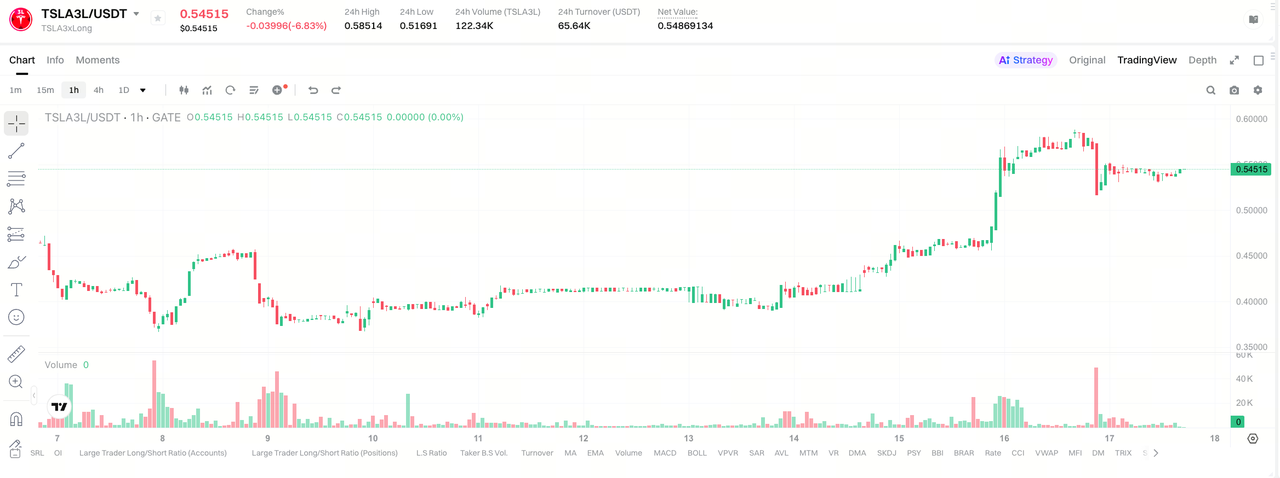
Por serem altamente voláteis, os produtos alavancados são indicados apenas para investidores com perfil de risco elevado e pleno domínio do funcionamento do produto.
TSLA: oportunidades de investimento e riscos potenciais
No longo prazo, o potencial de crescimento da Tesla em veículos elétricos, armazenamento de energia e direção autônoma torna a TSLA um ativo bastante atrativo. Com a expansão global do setor de novas energias, a oportunidade de mercado da Tesla segue em crescimento.
As principais oportunidades de investimento em TSLA incluem:
- Expansão contínua do mercado de veículos de novas energias
- Potencial de valorização de longo prazo em direção autônoma
- Novas fontes de receita em armazenamento de energia
Por outro lado, a TSLA enfrenta riscos relevantes, como aumento da concorrência, avaliação elevada e mudanças macroeconômicas — fatores que podem intensificar a volatilidade dos preços.
Investidores devem acompanhar de perto:
- Pressão competitiva no setor
- Risco de volatilidade devido à alta avaliação
- Incertezas na implementação de tecnologia
Assim, embora a TSLA ofereça grande potencial de valorização, ela também apresenta risco elevado de volatilidade, sendo mais adequada para investidores com perfil de risco mais agressivo.
Resumo
TSLA é o ticker das ações da Tesla, e seu valor de investimento está diretamente ligado ao crescimento nos segmentos de veículos elétricos, energia e software. Como líder no setor de novas energias, a Tesla mantém elevada competitividade e atrai atenção constante dos mercados de capitais globais.
Entretanto, o potencial de crescimento da TSLA traz consigo maior risco de volatilidade. Investidores precisam ponderar as perspectivas de longo prazo diante da concorrência, avaliação e riscos de mercado. Só com uma compreensão completa do modelo de negócios e do perfil de risco da Tesla é possível tomar decisões embasadas sobre o valor do investimento em TSLA.
Perguntas frequentes
Por que a TSLA atrai atenção do mercado?
A TSLA está em destaque entre investidores pelo forte potencial de crescimento da Tesla em veículos elétricos, armazenamento de energia e direção autônoma.
Qual a diferença entre TSLA3L e TSLA?
TSLA é a ação da Tesla, enquanto TSLA3L é um produto de negociação que replica as variações de preço da TSLA com alavancagem, oferecendo maior risco.
Quais riscos estão associados ao investimento em TSLA?
Os principais riscos são o aumento da concorrência no setor, volatilidade decorrente da avaliação elevada e riscos de mercado relacionados a mudanças no cenário macroeconômico.