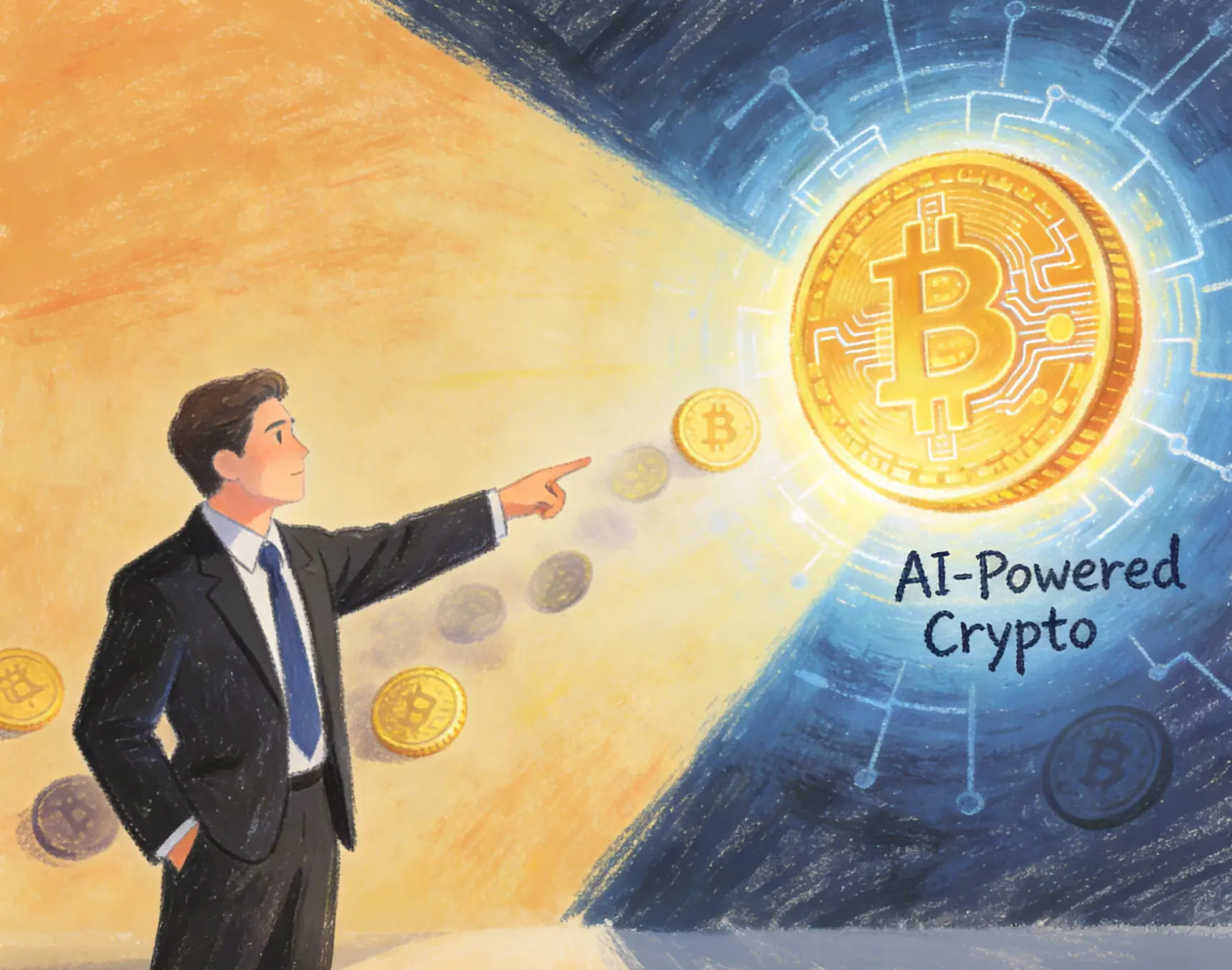
 Robbie Mitchnick, BlackRock’s head of digital assets, told attendees at the Digital Asset Summit in New York on March 24, 2026, that institutional investors are increasingly concentrating on bitcoin and ether while viewing most other tokens as short-lived “nonsense,” and that artificial intelligence—not the proliferation of new cryptocurrencies—represents the more powerful long-term force shaping the sector.
Mitchnick argued that crypto serves as “computer-native money,” creating a natural symbiosis with AI as “computer-native data and intelligence,” positioning digital assets as infrastructure for the AI economy rather than a purely speculative asset class. He noted that client demand has shifted away from broad token exposure toward a narrow set of assets, with only bitcoin and ether maintaining consistent relevance amid rapid turnover among top tokens.
Institutional Investor Focus Narrows
Concentration on Bitcoin and Ether
Mitchnick described a market where the turnover among top tokens has been “pretty ferocious,” with only bitcoin and ether maintaining consistent positions over time. Referring to the vast number of tokens in circulation, he stated: “The majority of that is nonsense.” As a result, institutional clients now focus on a narrow set of assets rather than building wide portfolios, with limited interest beyond bitcoin and Ethereum.
Shift Away from Broad Exposure
The pattern reflects a broader evolution in institutional crypto demand. Rather than seeking diversified exposure across numerous tokens, investors are concentrating on what Mitchnick characterized as the most enduring digital assets. This shift aligns with BlackRock’s observation that most newer tokens fail to hold long-term relevance.
AI as the Key Intersection with Crypto
Natural Symbiosis
Mitchnick framed crypto and AI as complementary technologies with a natural connection. “AI agents are very unlikely to use Fedwire and SWIFT,” he said. “What is crypto? Crypto is computer-native money… AI is computer-native data and intelligence. And so there’s a natural symbiosis there.”
This framing positions crypto less as a speculative asset class and more as foundational infrastructure for the AI economy. As AI systems increasingly require autonomous, programmable payment rails, crypto’s role as native internet money becomes more relevant.
AI as Larger Force
Mitchnick stressed that AI represents a larger theme than digital assets overall, but emphasized that the two intersect in ways that could create significant opportunities. He suggested that crypto may play a critical role in the AI economy, with blockchain-based payments providing the settlement layer for autonomous agents and AI-driven transactions.
Bitcoin Miners Pivot Toward AI Infrastructure
Real-World Convergence
A growing number of publicly traded bitcoin miners have begun shifting resources toward AI workloads, drawn by steadier revenue and rising demand for computing power. Several listed miners are either repurposing data centers or signing hosting deals tied to AI and high-performance computing:
Hut 8 (HUT) : Actively repurposing infrastructure for AI workloads
Core Scientific (CORZ) : Expanding into high-performance computing
Iren (IREN) : Pursuing AI-related computing opportunities
Other miners have signaled similar plans, even if mining remains their core business. The trend illustrates the practical convergence between crypto mining infrastructure and AI computing needs.
Bitcoin as a Diversifier Amid AI-Driven Disruption
Hedging Against Technological Uncertainty
Mitchnick also linked AI-driven disruption to bitcoin’s appeal as a portfolio diversifier. As new technologies reshape industries and create uncertainty, he suggested bitcoin may serve as a stabilizing allocation during periods of rapid change.
“There are intersection points that are relevant… there’s clearly an advantage and an opportunity to play a role in the AI economy,” he said, positioning bitcoin as a potential hedge against the volatility and transformation driven by AI adoption.
Frequently Asked Questions
What did BlackRock’s Robbie Mitchnick say about institutional crypto investing?
Mitchnick stated that institutional investors are increasingly concentrating on bitcoin and ether, viewing most other tokens as short-lived “nonsense.” He noted that client demand has shifted away from broad exposure toward a narrow set of assets, with only bitcoin and Ethereum maintaining consistent positions amid rapid turnover among top tokens.
How does BlackRock see AI intersecting with crypto?
Mitchnick argued that crypto serves as “computer-native money” while AI is “computer-native data and intelligence,” creating a natural symbiosis. He suggested that AI agents are unlikely to use traditional payment rails like Fedwire and SWIFT, positioning blockchain-based payments as the native settlement layer for the AI economy.
What evidence did Mitchnick cite for crypto-AI convergence?
Mitchnick pointed to the growing number of bitcoin miners shifting resources toward AI workloads, including Hut 8, Core Scientific, and Iren repurposing data centers or signing hosting deals tied to AI and high-performance computing. He framed this as a real-world example of crypto infrastructure serving the AI economy.
Disclaimer: The information on this page may come from third parties and does not represent the views or opinions of Gate. The content displayed on this page is for reference only and does not constitute any financial, investment, or legal advice. Gate does not guarantee the accuracy or completeness of the information and shall not be liable for any losses arising from the use of this information. Virtual asset investments carry high risks and are subject to significant price volatility. You may lose all of your invested principal. Please fully understand the relevant risks and make prudent decisions based on your own financial situation and risk tolerance. For details, please refer to
Disclaimer.


