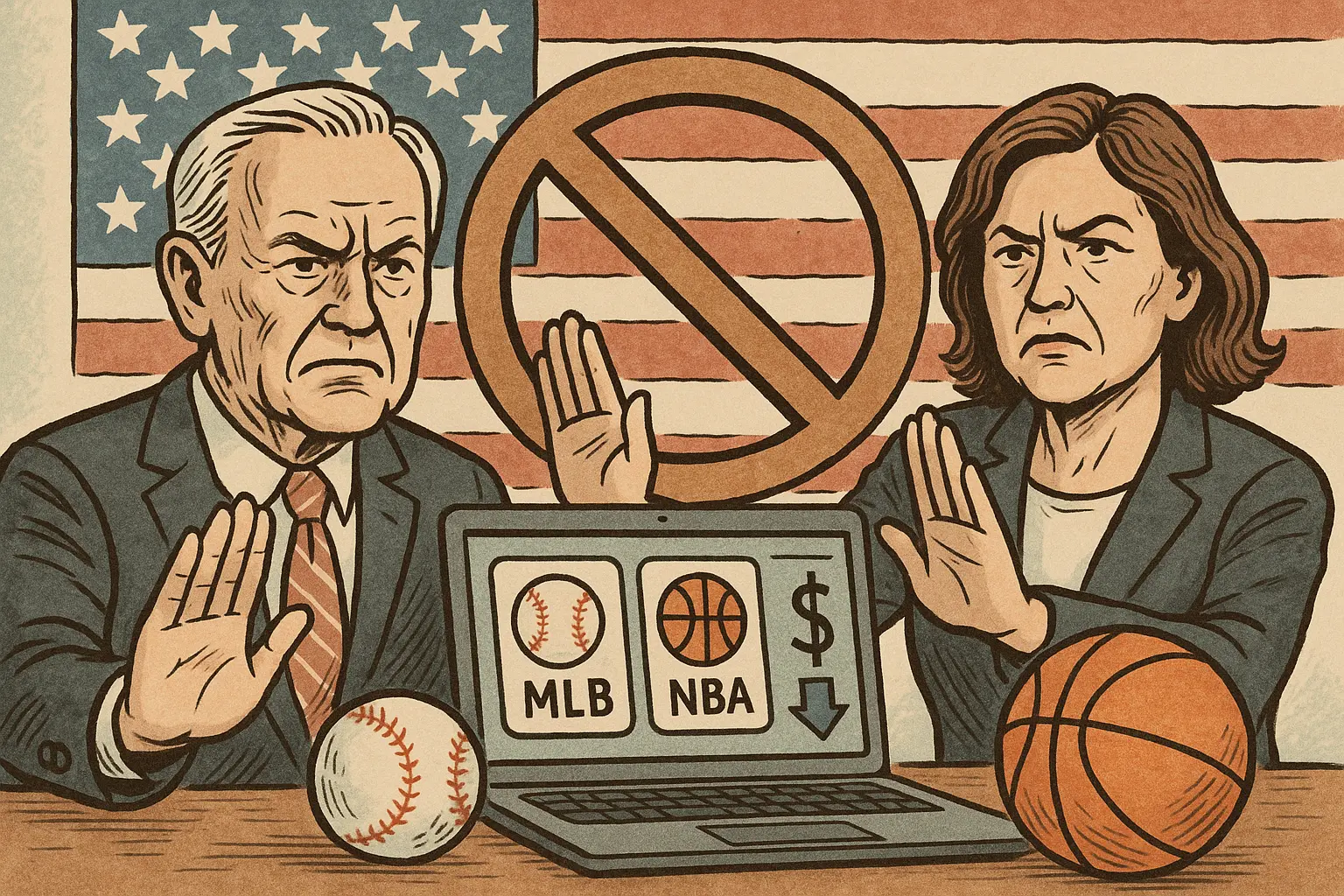
U.S. Democratic Senator Adam Schiff and Republican Senator John Curtis plan to jointly introduce a new bill on Monday that would comprehensively ban prediction market platforms regulated by the Commodity Futures Trading Commission (CFTC)—including Kalshi and Polymarket—from listing event contracts related to “sports events.” This marks the first legislative effort in the U.S. Congress to restrict the expansion of prediction markets.
Core of the Legislative Proposal: Which Contracts Will Be Fully Banned
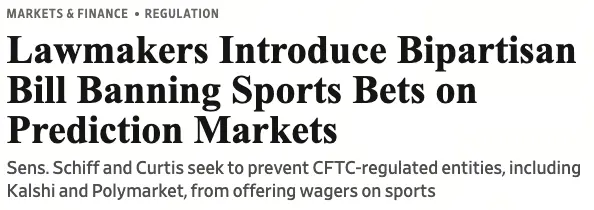
(Source: The Wall Street Journal)
The bill’s ban scope covers two main categories and directly criticizes existing regulatory gaps.
Types of Prediction Contracts to Be Banned
Sports Event Contracts: All prediction contracts involving the outcomes of professional and amateur sports events, including MLB baseball, NBA basketball, and other professional leagues.
Casino-Style Game Contracts: Prediction contracts related to casino-type products such as slot machines, blackjack, poker, and bingo.
Adam Schiff pointed out that the CFTC not only has been overly permissive with these markets but has actively promoted their growth. He believes Congress should eliminate this regulatory loophole, which he describes as “violating state consumer protection laws, infringing on tribal sovereignty, and contributing nothing to government revenue.” John Curtis emphasized that many young people in Utah are exposed to addictive sports betting contracts, which “should be regulated by state governments, not federal agencies.”
CFTC vs. State Jurisdiction: Lawsuits Are Widespread Across the U.S.
The CFTC claims that prediction markets are inherently derivatives and fall under federal jurisdiction, explicitly stating in legal filings this February that states have no authority to regulate prediction market platforms.
States have rejected this stance and have taken legal action in multiple jurisdictions:
Nevada: Successfully obtained a temporary restraining order to block Kalshi from offering sports, election, and entertainment prediction contracts.
Arizona: Filed criminal charges against Kalshi’s parent company, accusing it of operating unlicensed illegal gambling; Kalshi strongly denies and urges the lawsuit to be dismissed.
Massachusetts and Michigan: Both have filed lawsuits against Kalshi.
Polymarket: This month, counter-sued Michigan to block enforcement of the state’s gambling regulations.
U.S. Ninth Circuit Court of Appeals: Denied Kalshi’s emergency motion to stay enforcement in Nevada, indirectly paving the way for other states to take further action.
Industry Still Attracts Capital; MLB Chooses Collaboration Over Confrontation
Despite regulatory uncertainties, prediction markets continue to attract investment. It is reported that Kalshi and Polymarket are seeking new funding at a valuation of $20 billion. Susquehanna and Jump Trading are market makers for Kalshi, and Tradeweb, a financial information services provider, has established data partnerships with them.
While some sports organizations are increasingly concerned about match manipulation and insider trading, Major League Baseball (MLB) has taken a different approach—reaching a licensing agreement with Polymarket to allow the use of official league data, with both sides working closely to monitor suspicious betting activities and maintain game integrity.
Frequently Asked Questions
What specific prediction market contracts are prohibited under the new U.S. Senate proposal?
The bill proposes to ban prediction market platforms regulated by the CFTC from offering contracts related to sports events (covering MLB, NBA, and other professional leagues) and casino-style game products (slot machines, blackjack, poker, bingo). It mainly targets Kalshi and Polymarket’s existing operations in the U.S.
What is the core dispute between the CFTC and the states?
The CFTC claims prediction markets are derivatives and fall under federal jurisdiction, asserting states have no authority to regulate them. States argue these contracts are essentially gambling and should be regulated under state gambling laws. The legal battle over federal versus state jurisdiction is ongoing in courts across Nevada, Arizona, Michigan, and other states.
Why did MLB choose to cooperate with Polymarket instead of oppose it?
MLB adopted a “licensing and monitoring” strategy—allowing Polymarket to use official league data through a licensing agreement while requiring both parties to establish strict surveillance mechanisms to detect suspicious activities. This approach aims to preserve game integrity and contrasts with organizations that take a more hardline stance against prediction markets.
Disclaimer: The information on this page may come from third parties and does not represent the views or opinions of Gate. The content displayed on this page is for reference only and does not constitute any financial, investment, or legal advice. Gate does not guarantee the accuracy or completeness of the information and shall not be liable for any losses arising from the use of this information. Virtual asset investments carry high risks and are subject to significant price volatility. You may lose all of your invested principal. Please fully understand the relevant risks and make prudent decisions based on your own financial situation and risk tolerance. For details, please refer to
Disclaimer.


