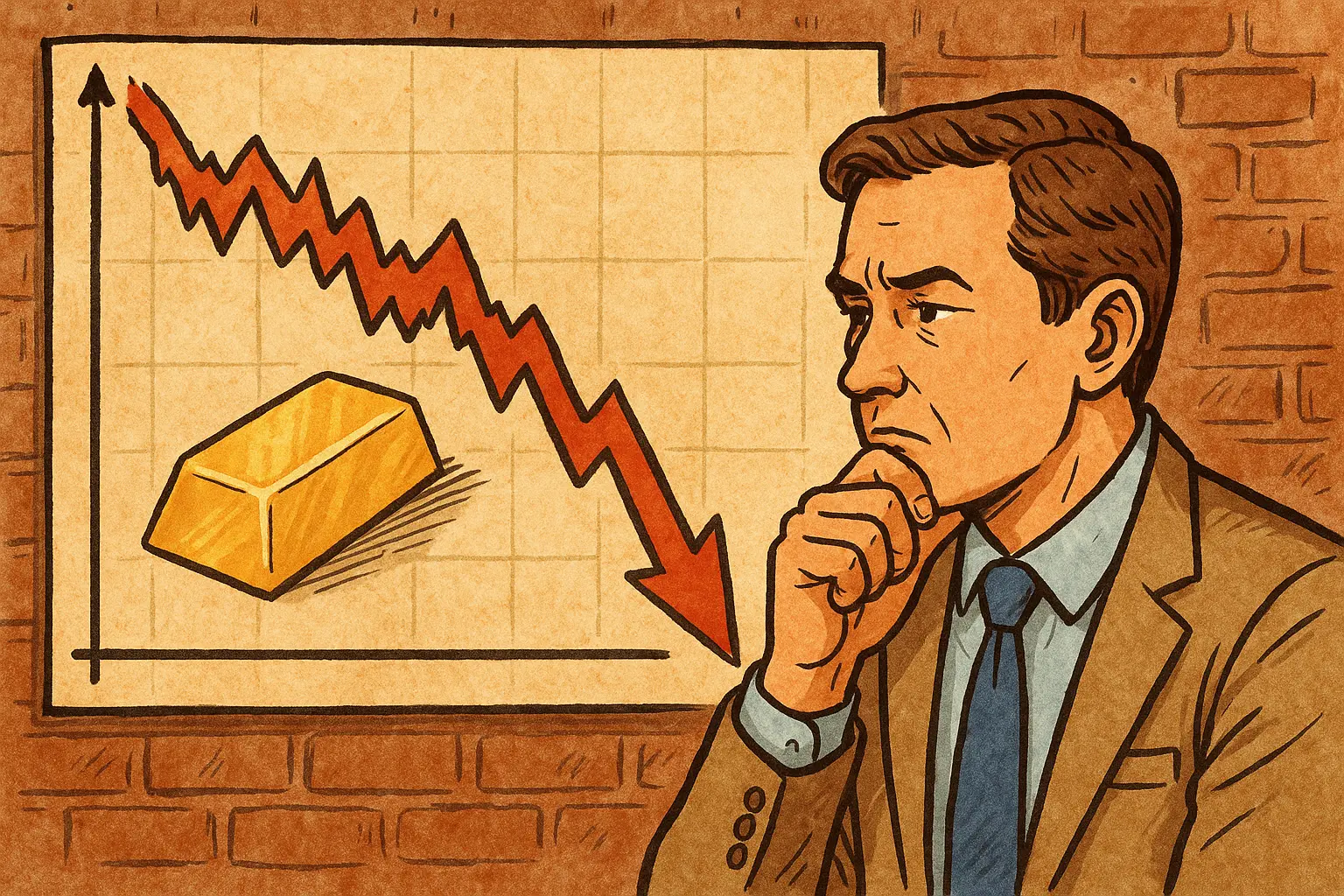
One of Russia’s largest investment firms, Finam Financial Group analyst Nikolai Dudchenko, warns that gold could fall to $3,100 per ounce in the worst-case correction. For investors who have not yet established positions, Dudchenko clearly recommends staying away from the market and waiting for a price reversal signal rather than trying to buy the dip during the decline.
Two Fundamental Reasons for the Decline in Gold
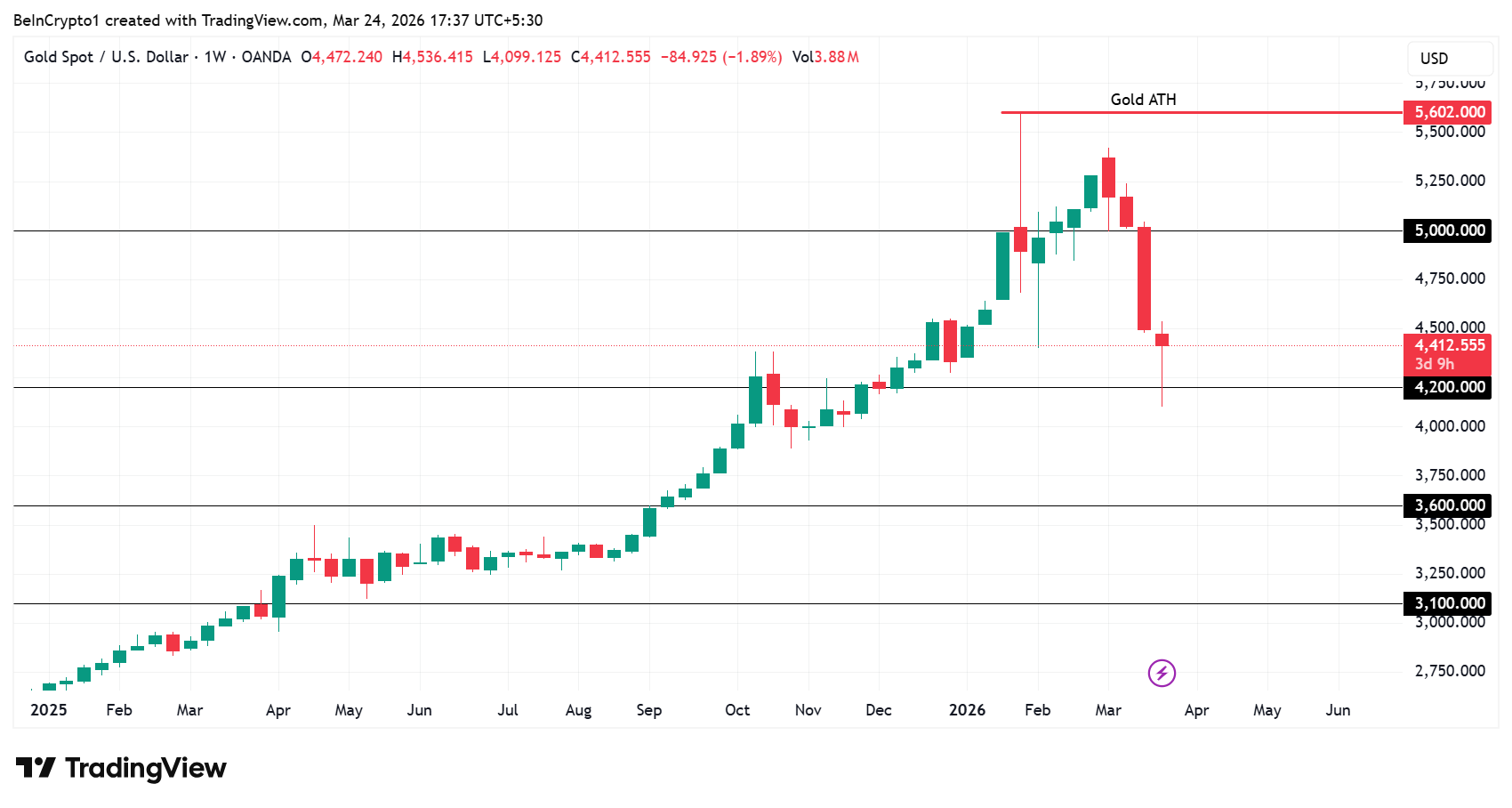 (Source: Trading View)
Dudchenko points out that this wave of gold decline is mainly driven by two factors.
Market concerns over Federal Reserve (Fed) interest rate policies: Amid ongoing Middle East conflicts, market participants may expect the Fed to be unable to cut rates as scheduled. High interest rates are clearly negative for non-yielding assets like gold, triggering systemic portfolio reassessments.
Speculation about large market participants liquidating positions: Based on the pattern and speed of the price decline, this drop may stem from passive liquidation by a major institution rather than a shift in overall market sentiment to bearish. If the latter is true, a technical rebound in the short term is quite likely.
Four Key Support Levels in This Gold Correction
$4,200: The first line of defense. If broken, the downside target shifts to $4,000.
$4,000: An important psychological level and a core technical support.
$3,600: The next support target in a pessimistic scenario.
$3,100: The extreme low in the worst-case scenario, but even if reached, it remains within the correction range after a 65% rally in 2025, and does not necessarily indicate a long-term bear market structurally.
Dudchenko also notes that the probability of gold continuing toward $5,000 per ounce remains quite high. Once a reversal signal appears, investors can consider building positions.
Investment Strategy Recommendations and Silver Market Correlation
For investors who have not yet entered the market, Dudchenko explicitly advises: the best current strategy is to stay away and wait for a bottom reversal before establishing positions. Even if entering after the price rebounds, the entry price may be higher than today, but it offers better downside risk protection. For those already holding positions, it is recommended to continue holding, but if the downtrend intensifies, reducing holdings to free up liquidity and re-enter at lower prices is a more cautious approach.
It is also worth noting that the silver (XAG) market faces similar pressures, mainly driven by the Fed’s interest rate policy path. Currently, key support levels for silver are between $62 and $64 per ounce. If the bears break through these levels, the next important support is around $54.5 to $55.
Frequently Asked Questions
Why did gold experience a significant correction after rising in 2025?
Dudchenko explains that the main reason is a change in Fed policy expectations—market concerns that, amid ongoing Middle East conflicts, the Fed will be unable to cut rates as scheduled, putting pressure on non-yielding assets. Additionally, passive liquidation by large market players may also contribute to short-term volatility.
Does gold falling to $3,100 mean the end of the long-term bull market?
Dudchenko believes not. He states that even if gold drops to $3,100, it still falls within the correction range after a roughly 65% increase in 2025. The probability of gold continuing toward $5,000 remains quite high.
Is now a good time to buy gold?
Dudchenko explicitly advises against blindly entering the market before a trend reversal. He recommends waiting until a reversal signal appears and the price resumes toward $5,000. Although the entry price may be higher, this approach offers better risk protection and avoids losses from catching a falling knife.
Disclaimer: The information on this page may come from third parties and does not represent the views or opinions of Gate. The content displayed on this page is for reference only and does not constitute any financial, investment, or legal advice. Gate does not guarantee the accuracy or completeness of the information and shall not be liable for any losses arising from the use of this information. Virtual asset investments carry high risks and are subject to significant price volatility. You may lose all of your invested principal. Please fully understand the relevant risks and make prudent decisions based on your own financial situation and risk tolerance. For details, please refer to
Disclaimer.


