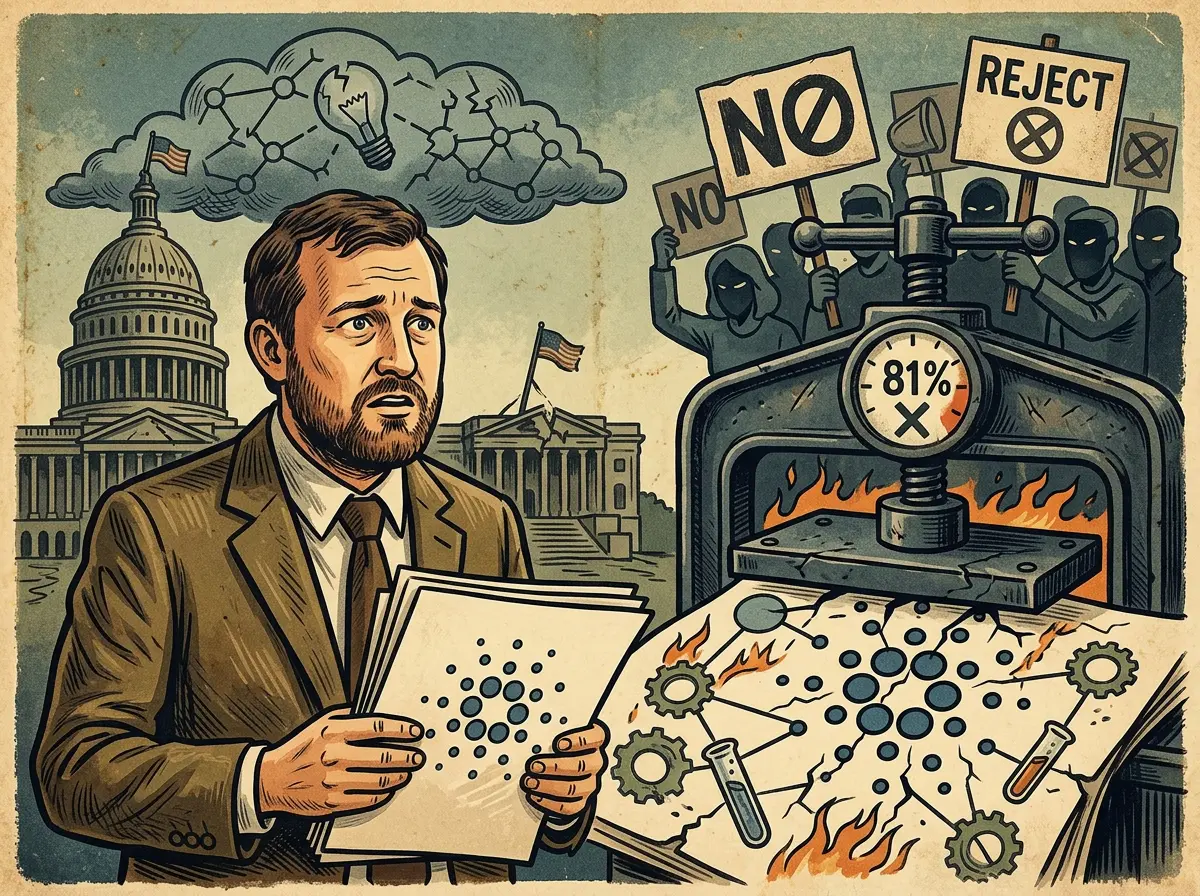
Cardano founder Charles Hoskinson warned on May 21 that if the research funding proposal for 32.9 million ADA fails to pass before the June 8 deadline, Cardano will lose its scientists and its core research labs will be forced to shut down. Current on-chain voting shows that about 81% of active dRep are against the proposal, while about 18% support it.
Voting status and proposal details: as of the June 8 deadline, the 67% threshold has not been reached
The proposal is led by IOG Chief Scientist Aggelos Kiayias, funding academic research into Ouroboros Leios, post-quantum cryptography, and zero-knowledge proofs. As of the time of reporting, on-chain voting shows about 81% of active dReps oppose the proposal, with about 18% in favor. The Cardano Voltaire Constitution requires Treasury proposals to reach a 67% approval threshold, with the voting deadline set for June 8, 2026; the gap between the two is currently significant. Hoskinson estimates that the proposal failing would result in losses of hundreds of millions of Dollars within the next decade or more.
Hoskinson’s specific call: an emergency appeal to Japan dRep
Hoskinson specifically reached out to the Japan dRep community, noting that Japan is one of the markets from Cardano’s early credential ICO. He said: “We are deeply sorry for the votes of some Japanese dReps that oppose our research proposals. If this proposal is not approved, we hope that the entire Japanese community fully understands that Cardano will lose its scientists, and our labs will be forced to shut down.” In another quote, he directly points to the core of Cardano’s brand: “This concerns the core of our entire ecosystem being destroyed. Cardano is a science-backed money. This is our brand. We spent hundreds of millions of Dollars and a decade to earn this right. You can’t just throw it away.” He urged ADA holders to delegate their voting power to dReps that support the research agenda before the deadline.
Critics’ reasons for opposing and options after the proposal fails
Critics say the proposal lacks clear milestones and is more like a packaged annual budget than a list of audit-ready deliverables. Some dReps said they want to let competing teams challenge IOG through public tenders, rather than automatically renewing. If the proposal fails, IOG will choose among three options: private funding, a restructured proposal, or scaling down the scope of research—each outcome will reshape how Cardano supports academic development behind its Consensus Mechanism. IOG has not yet released details of any contingency plans.
FAQ
What are the requirements in the Cardano Voltaire Constitution for a Treasury proposal to pass?
Under Cardano’s Voltaire Constitution, Treasury proposals must reach a 67% dRep approval threshold to pass. Currently, on-chain voting shows about 81% oppose and about 18% support; the gap from the approval threshold is significant, and the voting deadline is June 8, 2026.
What are the specific reasons critics oppose IOG’s research proposal?
The main objections include: the proposal lacks clear milestones and is presented more like a packaged annual budget rather than audit-ready deliverables; some dReps want to introduce competing teams via public tenders instead of allowing IOG to automatically renew.
If the proposal fails, what backup options does IOG have?
Hoskinson said that if the proposal fails, IOG will choose among three options: private funding, a restructured proposal, and scaling down the work scope. IOG has not made an official statement regarding its specific contingency plan.


