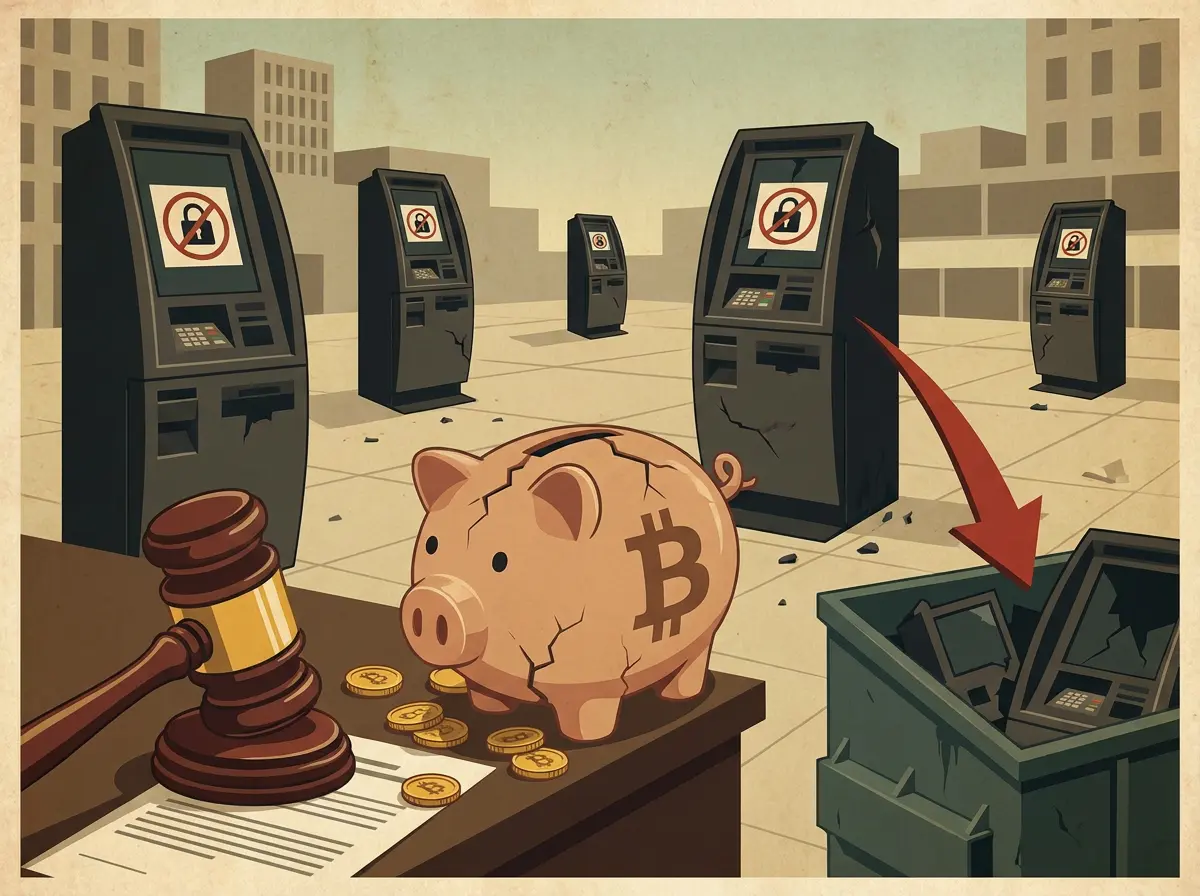
North America’s largest crypto ATM operator, Bitcoin Depot, officially filed for Chapter 11 bankruptcy protection with a U.S. court on May 18. About 9,000 Bitcoin ATMs went offline on a large scale under the company, and in some regions users cannot use withdrawal and cash-exchange services; the stock plummeted by over 70% that day. According to court documents, Bitcoin Depot faces issues such as high debts, rising operating costs, and falling transaction volumes.
Confirmed Facts in the Bankruptcy Filing
Based on court documents and confirmations from multiple media reports:
Bankruptcy type: Chapter 11 bankruptcy protection (intended for restructuring rather than immediate liquidation)
Affected machines: About 9,000 Bitcoin ATMs have been taken offline on a large scale
Stock ticker: NASDAQ: BTM; the single-day share price drop exceeded 70%
Filing reasons (company statement): High debts, rising operating costs, and declining transaction volume
Restructuring intention: The company said it hopes to restructure assets through the Chapter 11 process and maintain some core operations
Competition and regulatory pressure: Confirmed market background
Competitive pressure: Coinbase, Robinhood, and major bank apps have successively offered more convenient ways to buy cryptocurrencies, reducing the convenience advantage of crypto ATMs; physical machines are also facing rising costs for rent, cash management, maintenance, and compliance.
Regulatory pressure: U.S. regulators have continued to strengthen scrutiny in recent years of crypto ATMs for anti-money laundering (AML) and scams; the FBI and multiple state governments have publicly warned that more and more funds transfers related to elder scams, ransomware, and cross-border money laundering are being carried out via crypto ATMs; some state governments have already required ATM operators to strengthen KYC verification and transaction restrictions.
Background Information Confirmed for Bitcoin Depot
Founded: 2016
Historical scale: It expanded to supermarkets, convenience stores, and gas stations across the U.S., and at one point was the world’s largest Bitcoin ATM operator
Going public: Listed via SPAC in 2023 (NASDAQ: BTM)
Historical market cap: At its peak, its market cap had exceeded several billion Dollars
Frequently Asked Questions
Does Chapter 11 bankruptcy protection mean Bitcoin Depot immediately shuts down?
Not necessarily. Chapter 11 is a bankruptcy process intended for restructuring rather than immediate liquidation. The company can continue some operations under court supervision while seeking debt restructuring solutions. Bitcoin Depot said it hopes to maintain some core operations through this process, but its specific restructuring plan has not yet been fully disclosed.
After 9,000 ATMs go offline, how will ongoing transactions or deposited funds be handled?
Based on available reporting, about 9,000 machines have gone offline on a large scale, and in some areas users cannot withdraw or exchange cash. As of the time of the report, the official has not released any announcement explaining how existing user funds will be handled.
What are the key regulatory confirmation pressures facing the crypto ATM industry?
According to media reports, the FBI and multiple state governments have publicly warned that crypto ATMs are being used for elder scams, ransomware, and cross-border money laundering, and some state governments have required operators to strengthen KYC verification and transaction restrictions. CoinDesk reported that the crypto ATM industry as a whole is facing a structural turning point.
Disclaimer: The information on this page may come from third-party sources and is for reference only. It does not represent the views or opinions of Gate and does not constitute any financial, investment, or legal advice. Virtual asset trading involves high risk. Please do not rely solely on the information on this page when making decisions. For details, see the
Disclaimer.


