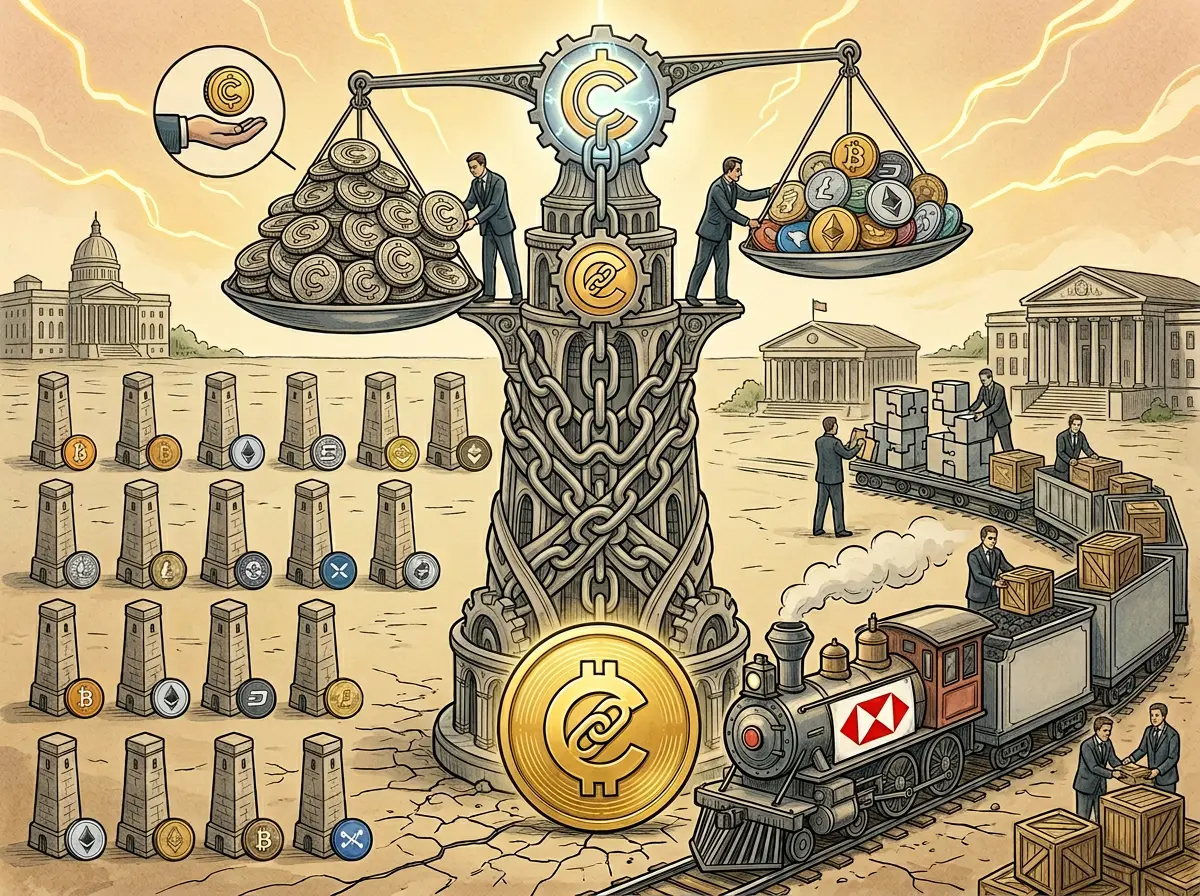
According to Messari’s 2026 Q1 Blockchain Industry Status Report published on June 4, Canton Network ranked first in fees among the 21 blockchains tracked by Messari, with Q1 fees of approximately $193 million, accounting for 42% of the $457 million combined fees across the 21 blockchains. HSBC completed a tokenized deposits pilot program on the network in April.
Confirmed Institutional Milestones for Canton Network
The Messari report lists Canton Network’s institutional participants and Q1 2026 activities: Goldman Sachs, BNP Paribas, and Deutsche Börse as founding participants; JPMD deposit tokens were issued on Canton in January 2026 by Kinexys, JPMorgan Chase’s business unit; DTCC is moving forward with tokenizing the U.S. Treasury securities it holds; HSBC completed a tokenized deposits pilot program on the network in April 2026. Canton uses privacy features and a Global Synchronizer (currently managed by the Canton Foundation under the Linux Foundation), enabling different institutions’ systems to jointly settle transactions.
Q1 2026 RWA Growth Breakdown: Sei Leads at 350%
RWA quarterly growth data by chain in the Messari report:
Sei: RWA increase +350% (highest growth rate)
Base: +93%
BNB Chain: +76%
Ethereum: Largest absolute increase, nearing $3.9 billion
The Messari report notes: “Even in a sluggish quarter, some networks still saw growth in fees, stablecoins, and RWA.” Messari defines the overall industry landscape in Q1 2026 as “selective advantage,” with growth concentrated in a handful of blockchains.
Other Chains’ Q1 Performance: Tron Goes Against the Trend, Stablecoins Rise Slightly
Tron is the only top-5 market-cap blockchain to see market-cap growth. Its Q1 market cap increased by about 10.3% to $29.7 billion; its Q1 fees of approximately $83 million were all burned in the form of TRX. Stablecoin supply across the industry rose slightly to $299 billion, with Polygon and BNB Chain growing the fastest.
FAQ
Why can Canton Network grow fees against the market downturn?
The Messari report says Canton Network’s growth momentum comes from institutional adoption of crypto, not retail trading. Specific drivers include the tokenization of real-world assets, expansion of the repurchase market, and banks increasing the size of bonds settled on-chain. The specific deployment cases by JPMorgan Chase and HSBC in Q1 are cited as confirmations.
Where does DTCC’s tokenization progress on Canton Network stand?
According to the Messari report, DTCC is currently working on tokenizing the U.S. Treasuries it holds, but the specific timeline, scale, and go-live dates have not been disclosed in existing coverage.
How is Canton Network’s token CC performing in the market right now?
As of the time of the report, the trading price of Canton Coin (CC) is close to $0.15, down about 3% over the past 24 hours, and is ranked around #20 by market cap (CoinGecko data).


