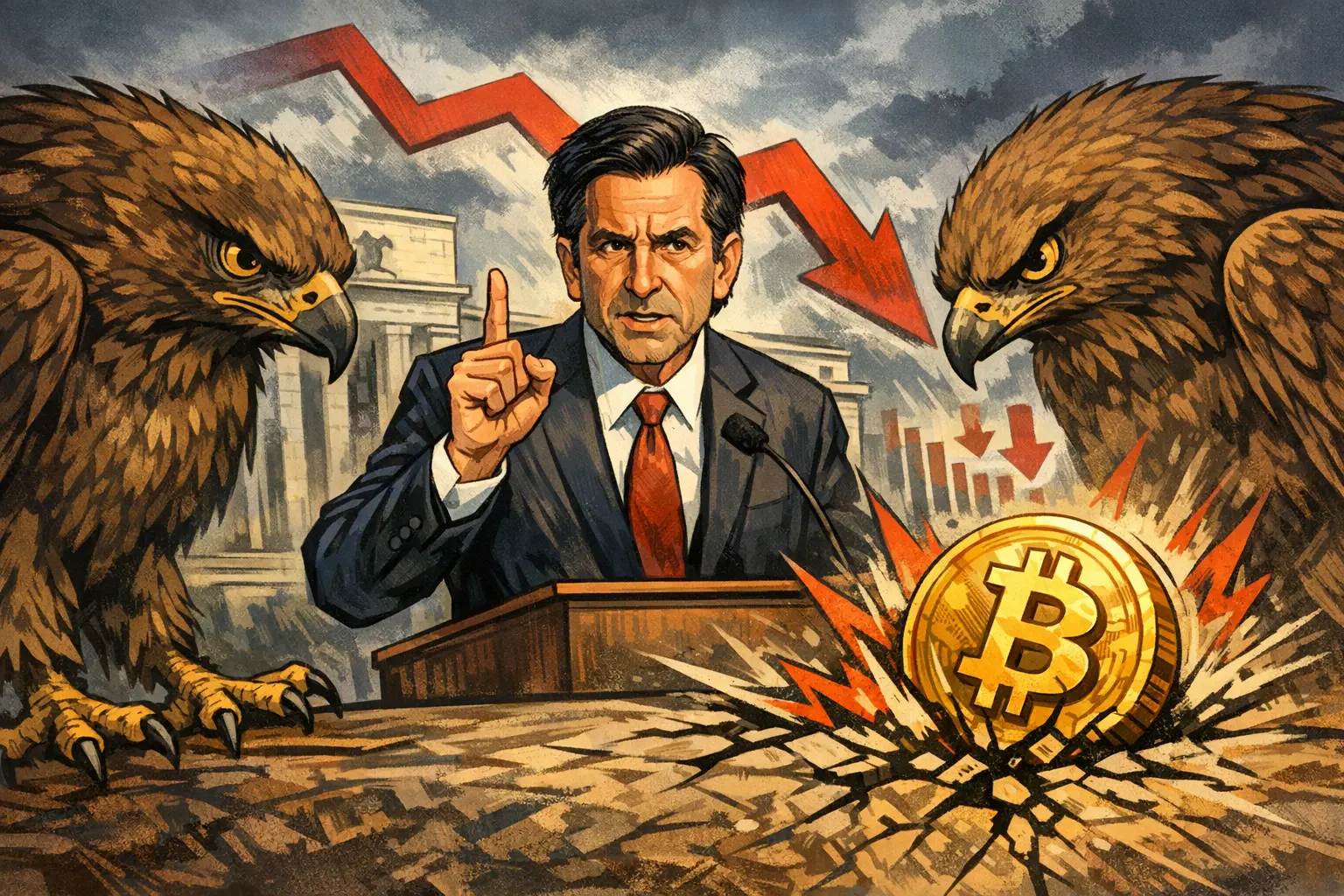
Kevin Warsh hosted his first Federal Open Market Committee (FOMC) meeting on June 17, announcing that the federal funds rate would be kept unchanged at 3.5% to 3.75% and that five special working groups would be established. Warsh clearly stated that he would end forward guidance, a stance that signals a fundamental shift in the market expectations mechanism. The hawkish signals released by the June 17 meeting led to a drop in Bitcoin and the crypto market.
Warsh’s Five Special Working Groups: Reform Goals for Each Group
According to the FOMC meeting announcement, the reform directions for the five special working groups are as follows:
Communications Working Group: If Warsh implements the end of forward guidance, market participants will need to build a new framework to forecast Federal Reserve actions. This working group has the most direct relationship with traders.
Balance Sheet Working Group: This indicates that Warsh wants to accelerate the process of shrinking the Federal Reserve’s large balance sheet. Warsh has long believed that the practice during the pandemic of purchasing large amounts of Treasuries and mortgage-backed securities distorted the price discovery mechanism.
Inflation Framework Assessment Working Group: The Federal Reserve currently follows the “flexible average inflation targeting regime” passed in 2020, which allows inflation to run above the target over a period of time to make up for earlier low inflation. Warsh previously described inflation as “a kind of choice,” and this framework faces the risk of being reassessed.
Employment and Productivity Working Group and the Data Working Group: Reforms targeting the Federal Reserve’s policy considerations on employment and its approach to data usage, respectively.
Warsh’s Stated Positions on Forward Guidance and the Balance Sheet
In his nomination confirmation hearing at the Senate, Warsh clearly said, “I don’t believe in forward guidance,” and he has long criticized the distortion effects that quantitative easing policies and an oversized balance sheet have on the market’s price discovery mechanism. His predecessor, Jerome Powell, has gradually come to accept treating the balance sheet as an active policy tool; Warsh’s public stance is the opposite, and he wants to reduce the Federal Reserve’s influence on financial markets.
Ending forward guidance would have significant effects on various asset classes, including cryptocurrencies. In the past, markets relied on the Federal Reserve’s forward-looking statements to price future expectations. Once this signal is removed, all global asset classes face higher uncertainty.
Warsh’s Direct Link to Crypto: Bitcoin Remarks and Shareholding Disclosures
Warsh has publicly called Bitcoin “the new gold for people under 40,” and he disclosed investments in more than 20 blockchain-related entities, including dYdX and Solana, but he has already pledged to divest these holdings.
The hawkish signals released by the June 17 meeting caused Bitcoin and the broader crypto market to fall. Historical experience shows that if the Federal Reserve puts suppressing inflation first and maintains high interest rates for a long time, it will adversely affect risk assets, including cryptocurrencies. The article points out that current interest rates are maintained at 3.5% to 3.75%, while signals indicate that the next move (if any) may be to raise rates rather than cut them.
Frequently Asked Questions
When and how did Warsh become the chair of the Federal Reserve?
According to reports, Warsh was nominated by President Trump in March 2026 and was formally approved by the U.S. Senate in May of the same year to become the chair of the Federal Reserve. Previously, he served as a Federal Reserve governor from 2006 to 2011, with his term covering the period of the 2008 financial crisis and the era when quantitative easing policies emerged.
Why does Warsh want to end forward guidance?
Based on Warsh’s public stance (including his statements at the Senate hearing in April), he “does not believe in forward guidance.” He believes that the practice of the Federal Reserve providing explicit guidance to the market about the future interest-rate path weakens the market’s ability to set prices autonomously and increases excessive reliance on central bank communication. Ending forward guidance is part of his overall position of reducing the Federal Reserve’s influence on financial markets.
What specific policy changes could Warsh’s inflation framework working group bring?
According to reports, the Federal Reserve currently implements the “flexible average inflation targeting regime” passed in 2020, which allows inflation to exceed the 2% target over a period of time. Warsh previously called inflation “a kind of choice,” meaning he is critical of this framework. The formation of the working group suggests that this framework may be modified or abolished; the specific direction still awaits the working group’s report.


