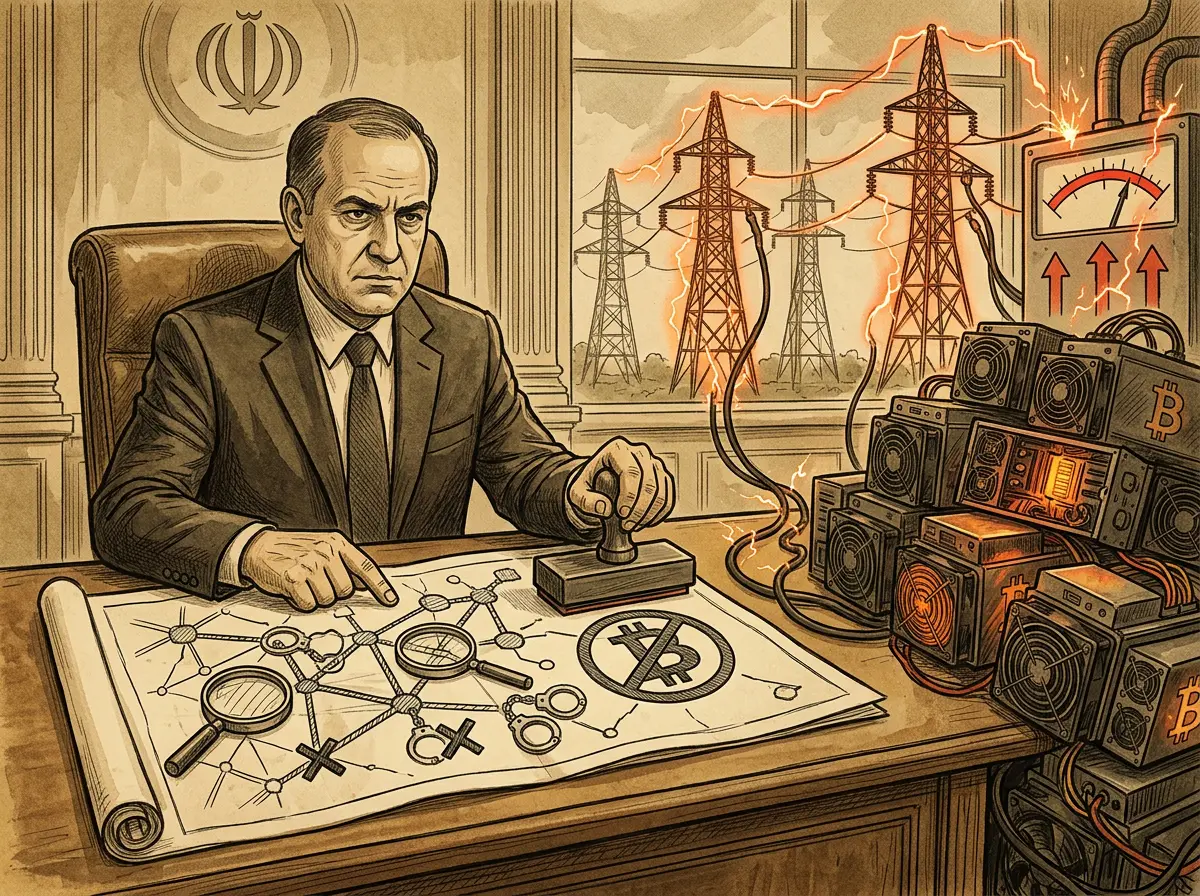
Iran’s Deputy Minister of Energy, Mostafa Mashhadi, said on June 8 via Fars News Agency that unauthorized cryptocurrency mining activities are putting enormous pressure on Iran’s power grid; Iran has drawn up plans to identify and crack down on illegal mining activities, and authorities typically collect leads on illegal mining through rewards.
Details of the U.S. Sanctions on Nobitex
On June 2, the U.S. Treasury’s OFAC imposed sanctions on the following entities:
· Nobitex: Iran’s largest digital asset exchange
· Three other Iranian digital asset exchanges (specific names were not fully listed in the report)
OFAC accused Nobitex of helping the Central Bank of Iran and the Islamic Revolutionary Guard Corps (IRGC) handle hundreds of millions of dollars, helping sanctioned national institutions evade Western sanctions. This round of sanctions was included in the Trump administration’s “economic fury” plan, as part of a series of actions taken to counter threats from Iran.
Energy Consumption Data for Cryptocurrency Mining
Reference figures for energy consumption in Bitcoin mining:
Electricity needed to mine one Bitcoin: about 155,000 kilowatt-hours (kWh), applicable to professional mining rigs using efficient equipment (Crypto.com data)
Average electricity consumption per Bitcoin transaction: 851.77 kWh, equivalent to the electricity use of a typical U.S. household for one month
Comparison background: In 2025, multiple regions in Russia banned cryptocurrency mining to protect energy resources.
FAQ
What specific measures has Iran taken to crack down on illegal crypto mining?
Based on the explanation by Iran’s Deputy Minister of Energy, Mashhadi, via Fars News Agency, Iran has developed a plan to identify illegal mining activities and typically collects leads on illegal mining through rewards. The specific enforcement mechanisms and reward amounts have not been disclosed in existing reporting.
Why did the U.S. sanction Nobitex?
The U.S. Treasury’s OFAC allegations include that Nobitex assisted Iran’s Central Bank and the Islamic Revolutionary Guard Corps in evading Western sanctions, and handled hundreds of millions of dollars in funds. The sanctions took effect on June 2, 2026, as part of the Trump administration’s “economic fury” plan.
Why is Iran’s illegal mining problem drawing particular attention?
The article notes that Iranian rulers have long been accused of using cryptocurrency to evade Western sanctions over decades, while the U.S. Treasury’s sanctions on Nobitex also point to Iranian government institutions carrying out fund operations through crypto platforms. The added grid pressure from illegal mining activities, combined with accusations of sanctions evasion by the government, has placed Iran’s crypto environment under double scrutiny.


