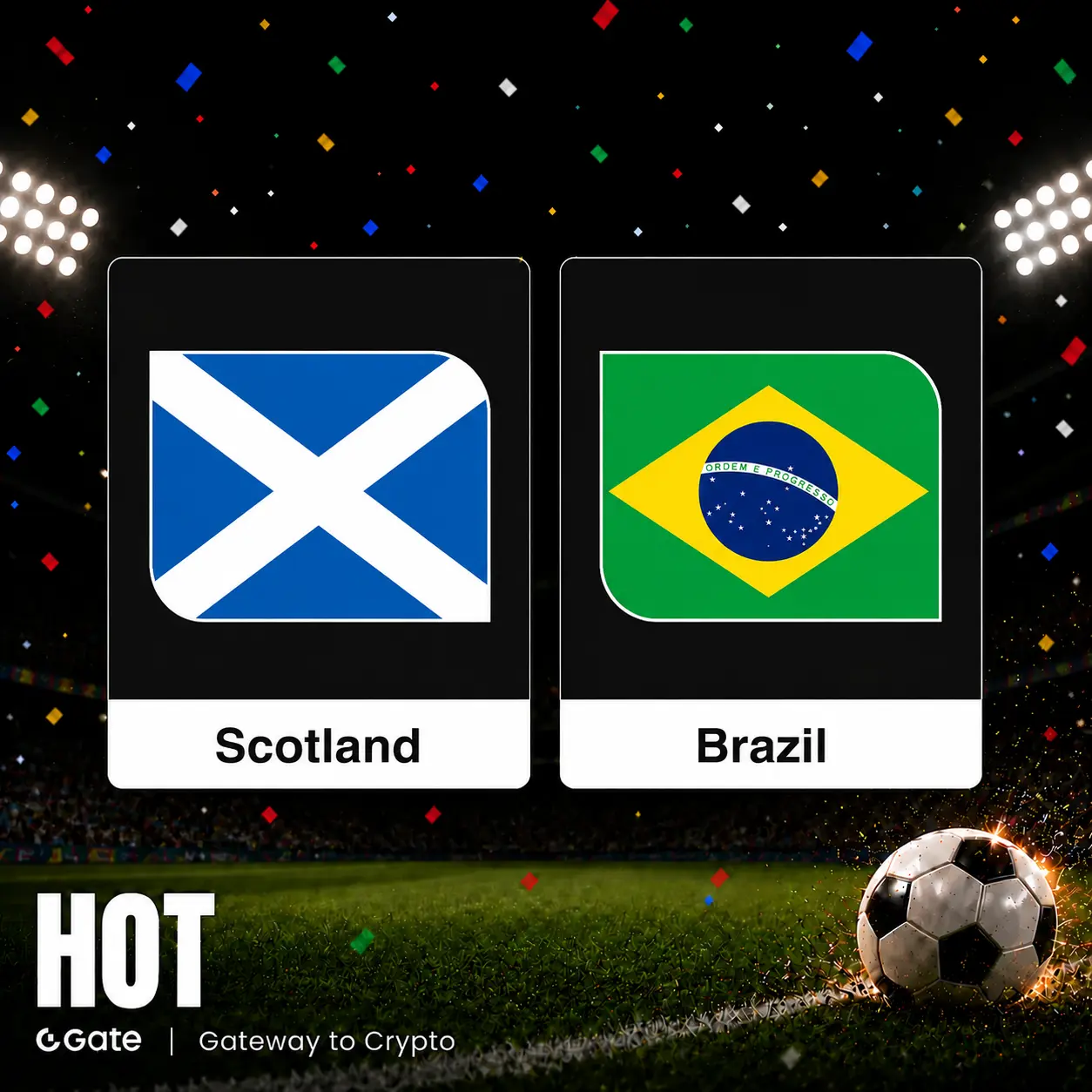
Behind these figures is the market’s multi-dimensional pricing of the two teams. After two rounds in Group C, Brazil and Morocco are tied with 4 points each; Brazil currently sits first in the group due to goal difference. Scotland has 3 points and is in third place. Haiti has 0 points, is already eliminated, and trails at the bottom. In the final round, Scotland faces five-time World Cup champions Brazil, striving for a historic milestone: their first-ever qualification to the World Cup knockout stage. But standing in their way is an opponent that has never been beaten by Scotland in World Cup history.
With such a wide probability gap in the prediction market—73% vs. 11%—what exactly are the funds expressing?
Group C standings: three-way fight for two advancement spots
To understand the market pricing of this match, first you need to understand the advancement picture in Group C.
After two rounds, Brazil and Morocco are tied on 4 points, with Brazil leading the group on goal difference. Scotland has 3 points and ranks third. Haiti has 0 points, is confirmed eliminated. This means the suspense over advancement in Group C is concentrated among three teams: Brazil, Morocco, and Scotland.
Brazil’s situation is the most comfortable. With 4 points and the advantage of goal difference, Brazil only needs to avoid losing to Scotland in the final round to secure advancement. Winning guarantees first place in the group; a draw also ensures qualification at least as runners-up. Scotland’s situation is the toughest: they must beat Brazil to advance directly. A draw or a loss would leave them finishing third in the group, requiring them to compete with other group third-place teams for the remaining qualification spot.
This scenario is crucial in shaping the match tempo. Brazil doesn’t need to press forward actively—a draw is acceptable. Scotland, however, must push forward to secure victory. The market’s 73% implied win rate for Brazil is effectively an assessment of a tactical scenario where a strong team is comfortably poised while a weaker team is forced to commit upward. It reflects Brazil’s ability to seize opportunities.
Head-to-head history: Scotland’s World Cup “Brazil curse”
Prediction market pricing considers not only the present, but also history.
Scotland and Brazil have met 4 times in World Cup history: Scotland has 1 draw and 3 losses, with no wins. The 0-0 draw in 1974 was Scotland’s closest moment to beating Brazil; in 1982 Scotland suffered a 1-4 defeat. In 1990, Müller’s late winner saw Scotland lose 0-1. In the 1998 France World Cup first round, Scotland again lost 1-2.
If you include all competitions, the two sides have played 10 times historically, with Scotland having 2 draws and 8 losses—clearly trailing. Even more striking is another stat: in World Cup history, Scotland has faced teams from South America 8 times, with only 2 draws and 6 losses—no wins. This is also the longest winless record by a single country against opponents from the same continent in World Cup history.
These data points form the market’s “prior probability”—even without any other information, historical patterns point to Brazil. Scotland’s 11% win rate essentially evaluates the likelihood of “a half-century-long historical record being broken.” Market pricing is never just a simple repetition of history; it’s a judgment about whether the historical规律 still applies in the present.
Team form: different qualification paths, different match demands
The fact that Scotland can stand on the World Cup stage is itself a story.
This is Scotland’s first return to the World Cup since 1998, ending a wait of 28 years. In the European qualifiers, Scotland finished first in their group with 13 points, beating Denmark, Greece, and Belarus to qualify directly. After entering the finals, Scotland beat Haiti 1-0 in the first round to record their first World Cup group-stage win in 36 years. In the second round they lost 0-1 to Morocco. Currently, with 3 points, Scotland sits third in the group and still has a chance to advance.
In terms of squad, Scotland has key players such as Robertson (Liverpool), McTominay (Napoli), and McGinn (Aston Villa). But the team’s overall structure is not balanced—lacking a world-class goalkeeper and a world-class central striker are clear weaknesses. Scotland scored 9 goals in their last 5 matches, but many opponents had relatively weaker strength. Against Japan and Côte d’Ivoire, Scotland lost 0-1 in both matches, exposing a lack of attacking punch when facing stronger teams.
Brazil’s situation is far more complicated.
In the South American qualifiers, Brazil finished only fifth. They suffered heavy losses to Argentina and were also outmatched by Uruguay, Paraguay, and Colombia. However, after Ancelotti took over, the team gradually regained form in the finals stage: they drew 1-1 with Morocco in the first round, then beat Haiti 3-0 in the second round. On offense, they boast top attackers like Vinícius, Neymar, and Matheus Cunha. But their defense and midfield structure are still a work in progress. Notably, Raphinha is confirmed to miss this match due to a hamstring injury. Neymar, meanwhile, returns to the main squad for the first time since his anterior cruciate ligament injury in October 2023, and he could make his comeback in this match.
Brazil’s squad depth remains top-tier—goalkeeper Alisson and Ederson as a two-choice setup, defenders like Marquinhos and Gabriel, and a midfield where Casemiro and Bruno Guimarães provide both protection and thrust. But the issues are also obvious: poor qualifier form, declining performance in tough matches, and an over-reliance on single-point brilliance from Vinícius. These factors collectively form the “discount” when the market offers Brazil a 73% win rate—if this were a Brazil at peak form, the figure could be higher.
Market pricing logic: where does the 73% come from?
A 73% Brazil win rate, 19% draw probability, and 11% Scotland win rate together form the price structure, which essentially represents probability-weighted pricing of the match’s three possible paths.
Brazil win (73%): This is the market’s baseline scenario. Brazil holds advantages across overall strength, head-to-head history, and squad depth. Scotland’s tactical posture of being forced to attack will create space for Brazil’s counterattacks. Odds offered by multiple institutions also support this view—Brazil’s odds are around -250, implying a probability of about 71%, closely matching Gate’s 73%. Another data model gives Brazil a 69.9% win probability, Scotland 11.1%, and draws 19%, which is almost perfectly aligned with Gate’s pricing.
Draw (19%): This is the main path for Brazil to “fail to win.” Since Brazil only needs to avoid defeat to advance, while Scotland must win to take control, a draw is an outcome both sides could accept. The 1-0 score pattern for Scotland across the first two rounds makes low-score outcomes a possibility that the market has priced in fully.
Scotland win (11%): This is the market’s “tail risk” scenario. Scotland needs to beat an opponent that has never been defeated by them in World Cup history within 90 minutes, while also overcoming the gap in quality and tactical disadvantages. An 11% probability means the market believes the scenario occurs roughly about one in nine times—not impossible, but requiring multiple low-probability events to occur at the same time.
This price structure is highly consistent with external market pricing. Brazil’s odds are around -250; Scotland’s win odds are between +650 and +700; the draw is around +425. Gate’s 73%-19%-11% structure aligns with the implied probability distribution from these odds and reflects the market’s consensus judgment about this match.
Variables outside the data: what factors might change the pricing?
Prediction market prices are not static. The following variables could materially affect pricing before or during the match:
Neymar’s condition and playing time. After Neymar returned from the anterior cruciate ligament injury in October 2023, it remains unknown how fully he can recover. If Neymar starts and plays actively, Brazil’s attacking creativity and finishing ability could improve significantly. If his playing time is limited or his condition is poor, Brazil’s attacking efficiency may suffer.
Scotland’s defensive strategy and energy allocation. Scotland conceded a goal just 70 seconds into the match against Morocco, and the full game saw 6 shots with none on target. Against Brazil, Clark needs to find a balance between “defensive stability” and “attacking threat.” If Scotland chooses to defend low and look for counterattacks, the match tempo will lean more toward Brazil controlling play. If Scotland goes high-pressure from the start, their defensive line may be exposed and exploited by Brazil.
The real-time score in the other match in the same group. Brazil vs. Scotland is played at the same time as Morocco vs. Haiti. If Morocco takes an early lead, Scotland’s chances of advancing become even slimmer, which could affect their tactical choices and level of commitment.
Weather and venue factors. Miami’s June temperatures and humidity are an extra test of fitness for European teams. Scotland needs to maintain high-intensity pressing for 90 minutes in the heat, and the energy drain will be far beyond normal conditions.
Prediction markets as an information aggregation mechanism
Gate’s 73%-19%-11% pricing is essentially the collective judgment of tens of thousands of participants. Each buy and sell order is transmitting information—an integrated assessment of team form, tactical fit, injury impact, and advancement situation.
Importantly, this price structure is not simply “odds replication.” It is the collective output after market participants independently interpret the same set of publicly available information. With sufficient liquidity, prices are sensitive enough to new information—whether it’s the starting lineup at the last moment before kickoff, or any goal or red card during the match, it will be rapidly reflected in price changes.
From this perspective, 73% is not merely a number, but the market’s best current collective estimate for the event “Brazil defeating Scotland.” It incorporates all known information and also leaves room for adjustments to unknown information.
Gate prediction market x World Cup: participate in daily marquee event predictions, share the 50,000 USDT prize pool
With the 2026 World Cup officially underway, global attention is focused on the pitch. From the group stage to the crowning of champions, Gate prediction market will curate 35 marquee matches and hot events across the entire World Cup schedule to create daily prediction challenges throughout the event period. During the campaign, users can earn rewards by participating in the daily marquee event predictions—without needing to predict correctly—while sharing the 50,000 USDT prize pool together.
Benefit 1: Participate in daily marquee World Cup event predictions to share 35,000 USDT rewards
During the campaign, Gate will select 35 marquee matches and hot events from the entire World Cup schedule as designated challenges. Each event has a 1,000 USDT prize pool, for a total shared reward of 35,000 USDT. After registering, users participate in the daily marquee World Cup event predictions and trade at least 50 USDT to receive a 10 USDT reward. The prediction results will not affect eligibility. Each day is limited to the first 100 users on a first-come, first-served basis. A single user can earn up to 200 USDT in total rewards, which are distributed weekly.
Benefit 2: Exclusive perks for new users, share 10,000 USDT rewards
During the campaign, new users who participate in the Gate prediction market for the first time can receive a 10 USDT new-user reward after completing any World Cup marquee event prediction and trading at least 20 USDT. Limited to the first 1,000 eligible new users, first-come, first-served. Rewards cannot be stacked with Benefit 1, and rewards are distributed weekly.
Benefit 3: Everyone-gets-something award, share a 5,000 USDT prize pool
During the campaign, users whose cumulative World Cup prediction trading volume reaches 500 USDT will automatically receive eligibility for the Everyone-gets-something award and share the 5,000 USDT prize pool. After the campaign ends, the platform will allocate rewards based on the proportion of each eligible user’s cumulative World Cup prediction trading volume. The higher the cumulative trading volume, the higher the reward they can receive.
How to participate? Click 「立即参与」to complete registration → participate in the “World Cup daily marquee events” prediction → complete a prediction trade of no less than 50 USDT → wait for settlement and reward distribution.
Frequently Asked Questions (FAQ)
Q: How are the win-rate data in the Gate prediction market derived?
The prices in the prediction market are jointly determined by participants’ buying and selling behavior. When more funds bet on a particular outcome, the implied probability for that outcome increases accordingly. A 73% win rate means market participants collectively believe Brazil has roughly a three-quarters chance of winning—this is a collective judgment formed by real money voting, not a forecast unilaterally given by the platform.
Q: Does a 73% win rate mean Brazil is guaranteed to win?
No. Prediction market probabilities reflect market consensus, not certainty. In the first round, Brazil vs. Morocco was widely favored, yet it ultimately ended in a 1-1 draw. Low-probability events always exist in soccer matches. The value of a prediction market is to dynamically reflect market sentiment and fund flows, not to provide a deterministic match result prophecy.
Q: How much impact does Neymar’s return have on this match?
After Neymar returned from his anterior cruciate ligament injury in October 2023 for the first time, his comeback would significantly enhance Brazil’s creativity and finishing ability in the forward areas, but there are also uncertainties regarding his condition and tactical fit. The market has already incorporated this variable into the 73% win-rate pricing.
Q: How likely is it for Scotland to pull off an upset and beat Brazil?
Gate’s prediction market gives Scotland a win rate of 11%. Scotland has never beaten Brazil in World Cup history (4 matches: 1 draw, 3 losses), and in World Cup history Scotland has also recorded no wins in 8 matches against South American teams. But Scotland did top its qualification group to qualify ahead of Denmark, and in the first round they also achieved their first World Cup win in 36 years. So while it’s not impossible to create a miracle, the foundation for that outcome does exist.
Q: Where can I view real-time data for the Gate prediction market?
Users can upgrade the Gate App to the latest version. On the home page, there will be a new one-click entry to the World Cup section, where you can browse schedules, standings, and popular prediction markets. The platform has also launched a team subscription feature: users can choose the national team they want to follow, and the system will automatically subscribe to all that team’s matches during the World Cup.
Q: How do I participate in the Gate World Cup prediction campaign?
After registering 活动, users can participate in the daily marquee event predictions with a trading amount no less than 50 USDT to qualify for rewards. The prediction results do not affect reward eligibility. The campaign centers on 35 marquee events selected across the full World Cup schedule, with a total shared prize pool of 50,000 USDT. New users who participate in predictions for the first time can also enjoy an exclusive 10,000 USDT reward pool.