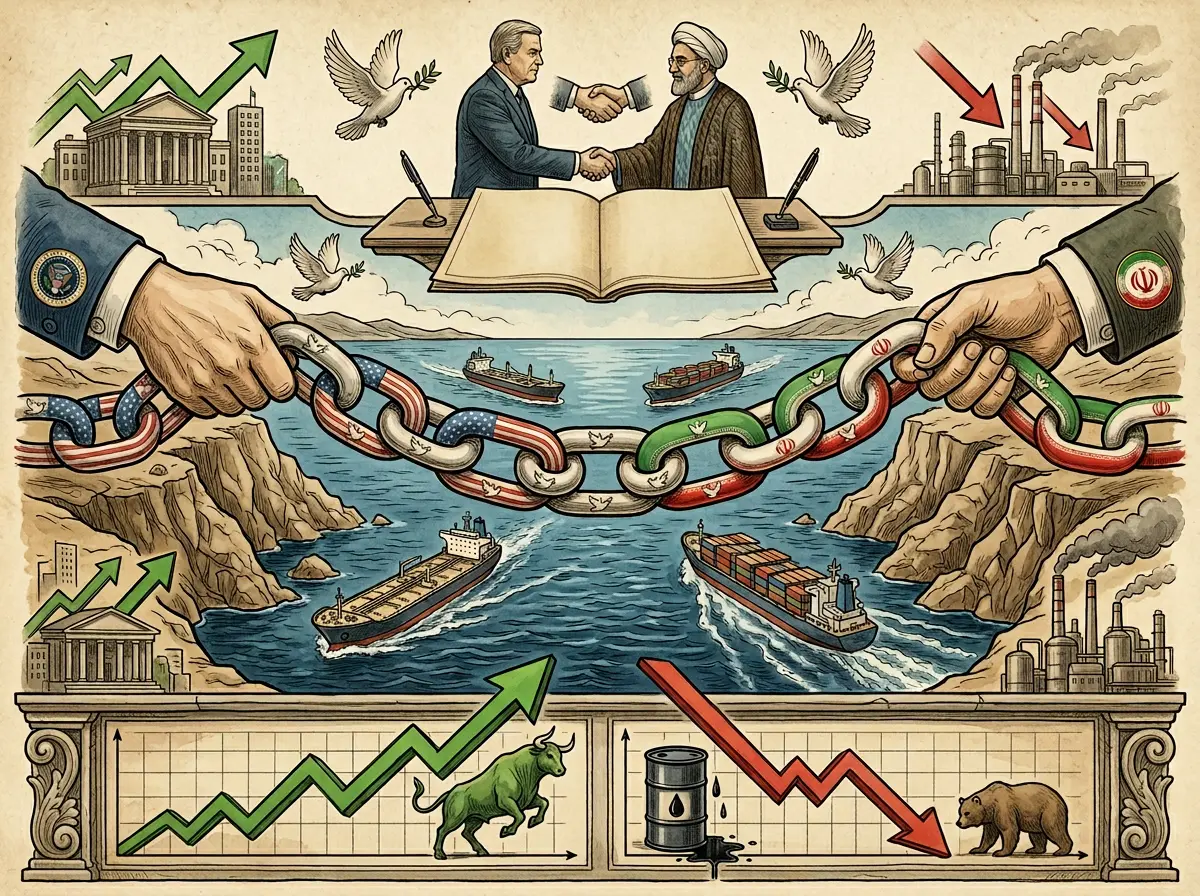
U.S. President Trump announced on Truth Social that the Strait of Hormuz would be fully opened after authorizing it, and immediately lifted the U.S. Navy blockade, about half an hour before the start of U.S. futures trading on June 15. Iranian President Masoud Pezeshkian confirmed on X that an agreement has been reached. After the news was released, Dow Industrial Index futures rose by 267 points, Nasdaq 100 Index futures rose by 1.26%, Brent crude oil fell by about 4%, and WTI crude oil fell by nearly 5%.
Weekly futures market confirmation data
According to weekly futures market data reported by media such as CNN:
Dow Industrial Index futures: +267 points (+0.52%)
S&P 500 Index futures: +0.79%
Nasdaq 100 Index futures: +1.26%
WTI crude oil futures: -3.8%, to $81.65 per barrel
Brent crude oil futures: -3.4%, to $84.35 per barrel; another data point showed it fell to about $83.78 (the lowest since March)
Gold: +1.6%, to $4,307.30 per ounce
Dollar versus euro: -0.35%
Dollar versus Japanese yen: -0.20%
U.S. 10-year Treasury yield: unchanged at 4.483%
Confirmed agreement terms: signing date, reopening arrangements, and mine clearance
According to confirmation statements from all parties:
Official signing date: Friday (June 19) in Geneva
Reopening of the Strait of Hormuz: Trump confirmed it will be fully reopened after the agreement is signed on Friday; before the agreement, the strait accounted for about 20% of global oil and liquefied natural gas flows
U.S. Navy blockade: Trump announced it would be lifted immediately
Mine issue: Trump added that more time is needed to clear mines in the Strait of Hormuz
Since late February, when the United States and Israel launched a war against Iran, Iran has been blocking the Strait of Hormuz for nearly four months. Although Iran’s regular forces have been badly hit, its Islamic Revolutionary Guard Corps still retains enough combat capability to deter global shipping.
60-day negotiations and macroeconomic backdrop
According to Iran’s deputy foreign minister, the most contentious issues will be discussed within the 60-day negotiation window, including: lifting sanctions, allowing Iran to use frozen assets, and the handling approach for Iran’s nuclear program (details are currently unclear).
On the macro backdrop, the U.S. May annual inflation rate reached 4.2%, the highest in three years, partly due to energy shocks that pushed up commodity and transportation costs. As Iran’s war escalates inflation pressure, the Federal Reserve’s meeting on Wednesday (June 17) is widely expected to keep interest rates unchanged.
Common questions
Will the Strait of Hormuz return to normal navigation immediately after the agreement is signed on Friday?
Trump announced the Strait would be reopened immediately after the agreement is signed on Friday, but added that more time is needed to clear mines in the strait. The agreement announcement states that after the reopening, the strait should be able to return to pre-war normal levels (about 20% of global oil and liquefied natural gas flows).
Does the U.S.-Iran agreement include specific terms regarding Iran’s nuclear program?
According to confirmation from Iran’s deputy foreign minister Gharibabadi, details on how Iran’s nuclear program will be handled will be discussed in the upcoming 60-day negotiation window. The agreement announced on Sunday does not include specific terms on the nuclear program.
Why did the U.S. dollar fall after the U.S.-Iran agreement was reached?
According to reports, the dollar fell 0.35% versus the euro and fell 0.20% versus the Japanese yen. The market interpretation is: the agreement reduces the geopolitical risk premium, weakening demand for the dollar as a safe-haven currency; at the same time, expectations of lower oil prices reduce inflation pressure further, weakening expectations that the Federal Reserve will keep interest rates high.


