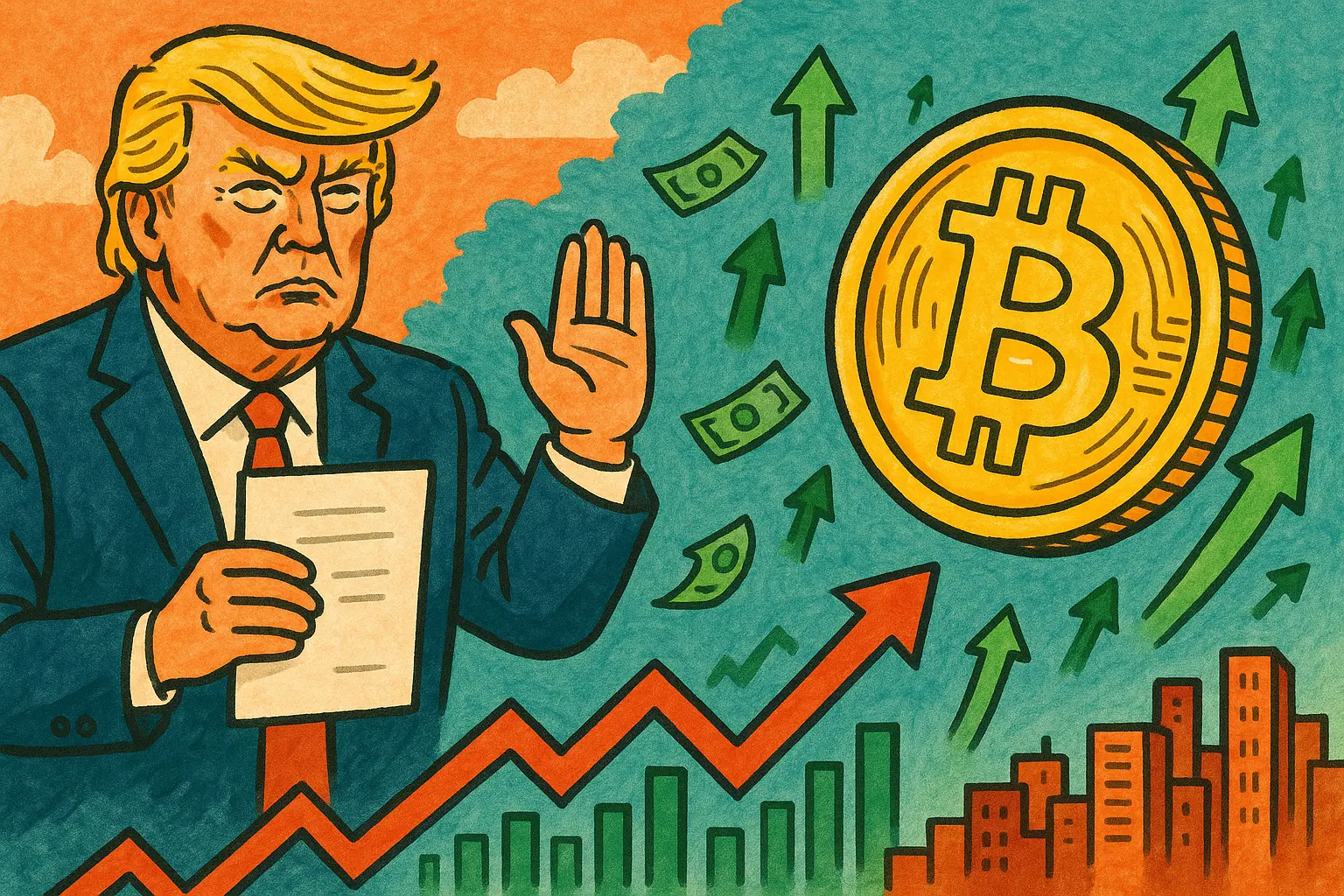
On Monday, Israel’s Channel 12 and The New York Times reported that the U.S. government allegedly proposed a conflict-ending plan to Iran through Pakistan, including 15 conditions, and is considering a one-month ceasefire to create a window for negotiations. Following the news, global financial markets reacted significantly: Brent crude oil futures briefly plummeted to $94.15, gold surged higher, and U.S. stock index futures strengthened. Bitcoin traded around $70,000, rebounding as overall risk sentiment improved.
Core Framework of the US-Iran 15-Point Ceasefire Plan
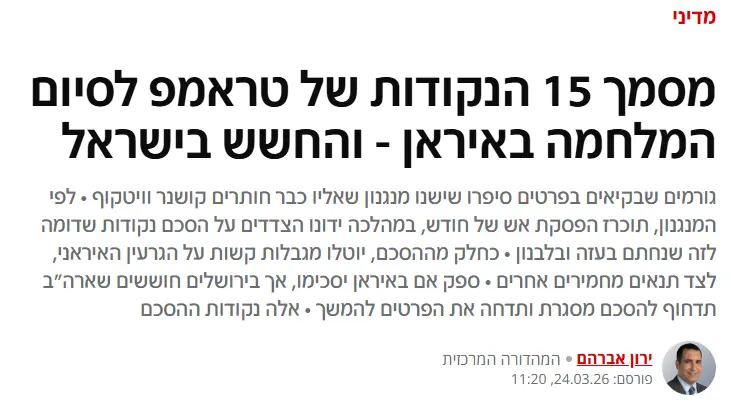
(Source: Israel Channel 12)
Media reports indicate that the 15-point framework conveyed by the U.S. through Pakistan covers three main issues: Iran’s nuclear program, ballistic missile capabilities, and regional security. On nuclear matters, the U.S. demands the dismantling of nuclear facilities at Natanz, Isfahan, and Fordow, the transfer of approximately 60% of high-enriched uranium stockpiles, and full inspections by the International Atomic Energy Agency (IAEA).
In exchange, Iran may receive a comprehensive lifting of international sanctions, U.S. support for civilian nuclear projects, and the cancellation of the “snapback” mechanism. The plan was designed by Trump advisor Jared Kushner and Steve Witkoff.
However, several diplomats suggest that this “15-point new plan” may largely follow the old framework submitted by the U.S. to Iran in May 2025—an agreement that was interrupted when Israel launched airstrikes on Iran’s nuclear facilities. Iran denies any in-depth negotiations, only acknowledging indirect contacts about resuming talks. Trump announced a five-day delay in the planned Monday night attack on Iran’s energy infrastructure.
Market Immediate Reaction: Geopolitical Risk Premium Begins to Recede
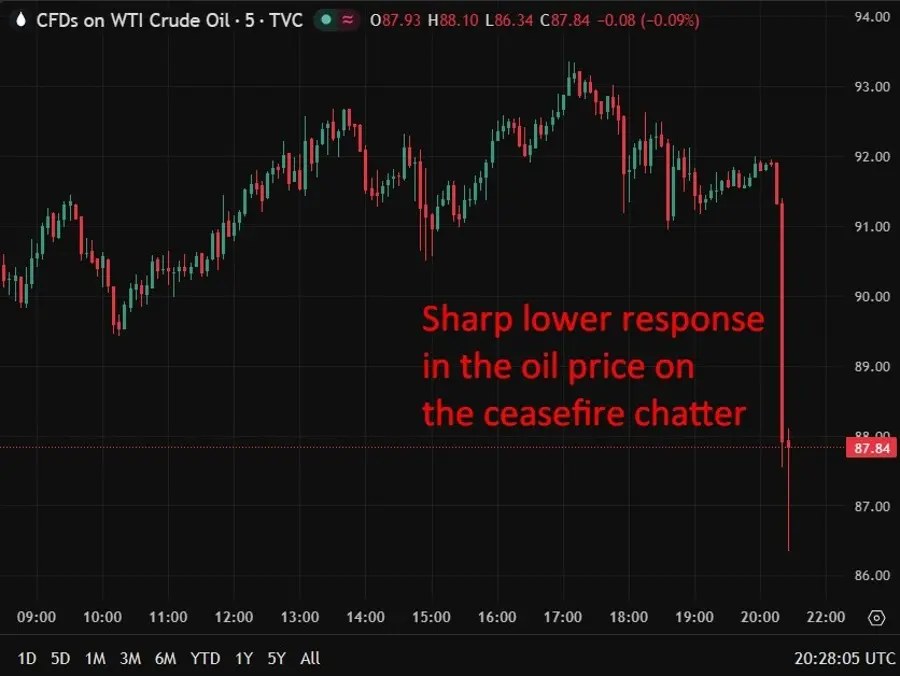
(Source: TradingView)
Brent crude oil futures: Dropped over 3% to $94.15, indicating the risk premium from conflict is beginning to unwind.
Spot gold: Rose nearly $90 to $4,484.42 per ounce, up more than 1.6%.
Spot silver: Increased by 3% during the day, reaching a high of $71.22 per ounce.
U.S. stock futures: Generally higher at the open, with Nasdaq futures up nearly 1%.
Investing.com analyst Adam Button noted that the oil price decline reflects traders’ reassessment of short-term geopolitical risks rather than a conclusion that the conflict has been fully resolved. He emphasized that for this decline to continue, there needs to be formal confirmation from all parties regarding the start of a ceasefire and specific enforcement mechanisms. “The current oil price weakness is more of a phase correction of war risk premiums rather than a sign of a true reversal in Middle East tensions.”
Bitcoin Technical Outlook: Key Support Holds or Rebound to $76,000
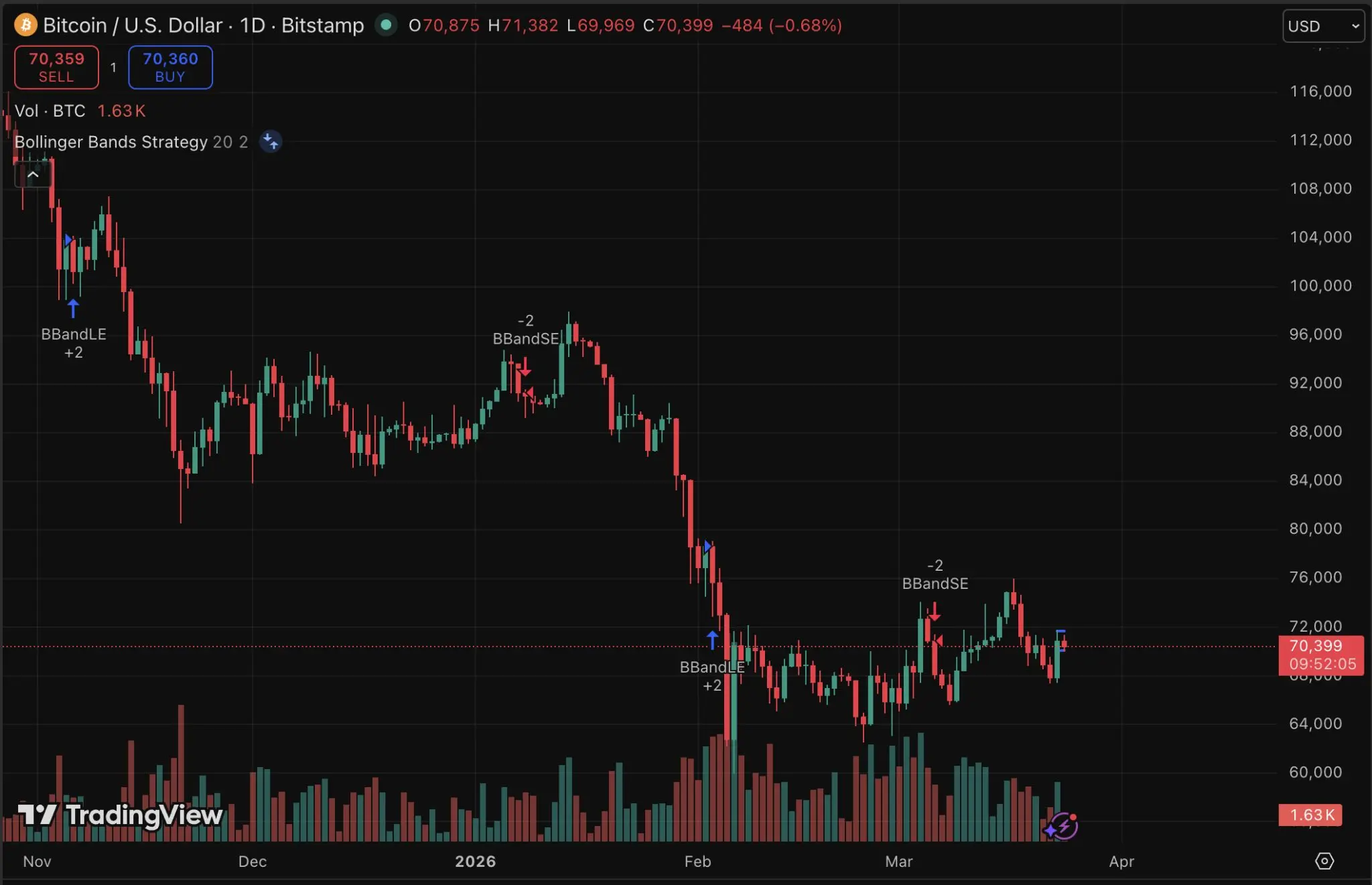
(Source: TradingView)
Bitcoin is currently trading within a corrective downtrend, facing resistance near $70,000. The Fear & Greed Index reads 26 (Fear). Implied volatility indicators show panic sentiment has peaked temporarily, with some analysts suggesting the short-term bottom may be in.
Data indicates that if bulls can hold the critical support at $68,230, a rebound toward $76,000 by the end of the month is possible, with an approximate 9% gain. If support fails, Bitcoin could test $55,500, representing a 21% decline from current levels. Sellers still dominate the overall trend below $77,500, and a full trend reversal requires clearer breakout confirmation.
Frequently Asked Questions
Why did the Israel-Iran ceasefire news push Bitcoin higher today?
The emergence of a ceasefire plan reduced market fears of escalating Middle East conflict, improving global risk sentiment. As a high-beta asset, Bitcoin tends to react more strongly to risk appetite shifts. Therefore, with oil prices plunging and stock futures rising, Bitcoin also rebounded.
Does the 15-point US-Iran plan mean the conflict is about to end?
There are no definitive signs yet. Iran denies in-depth negotiations, and several diplomats suggest the plan may follow the old 2025 framework. Analysts generally see the current market reaction as a phase adjustment of war risk premiums rather than confirmation of a true conflict reversal. More specific implementation details are needed for sustained progress.
Can Bitcoin return to $76,000 by the end of the month?
If bulls can defend the key support at $68,230, technical analysis suggests a rebound to $76,000 is possible, with about a 9% gain. However, if support is broken, the downside risk could extend to $55,500. The Fear & Greed Index reading of 26 indicates that a short-term bottom may be in place, but ongoing market confidence recovery needs to be monitored.
Disclaimer: The information on this page may come from third parties and does not represent the views or opinions of Gate. The content displayed on this page is for reference only and does not constitute any financial, investment, or legal advice. Gate does not guarantee the accuracy or completeness of the information and shall not be liable for any losses arising from the use of this information. Virtual asset investments carry high risks and are subject to significant price volatility. You may lose all of your invested principal. Please fully understand the relevant risks and make prudent decisions based on your own financial situation and risk tolerance. For details, please refer to
Disclaimer.


