GateUser-505646d6

vip
Age 1.2 Year
Peak Tier 0
No content yet
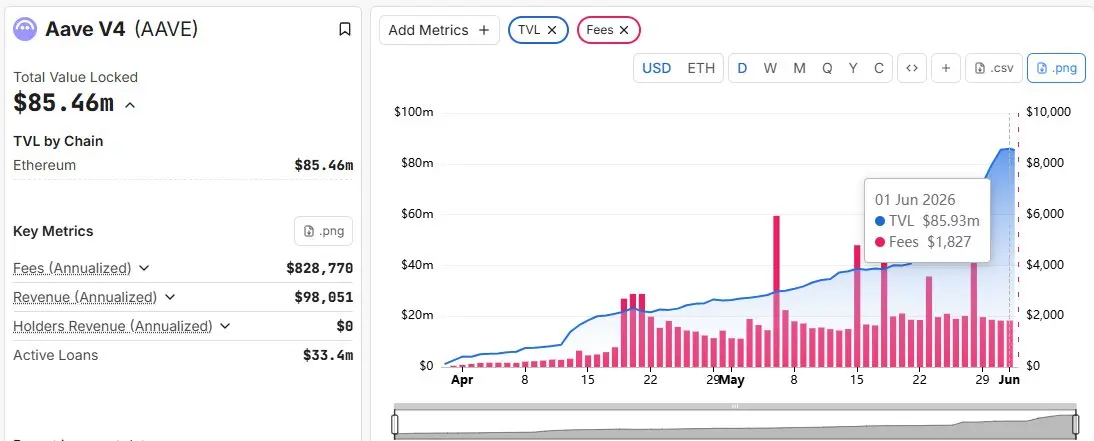
Aave V4 has seen strong growth over the past 30D, with deposits and borrowing activity steadily increasing as more users explore its unified liquidity model.
The growth is clearly not being driven by hype alone. Users are actively putting capital to work, which shows growing confidence in V4's infrastructure.
It’s still early, though the recent traction shows Aave V4 is gaining real adoption and could become a key piece of DeFi's next growth phase.
AAVE-4.62%
post-image
  • Reward
  • Comment
  • Repost
  • Share
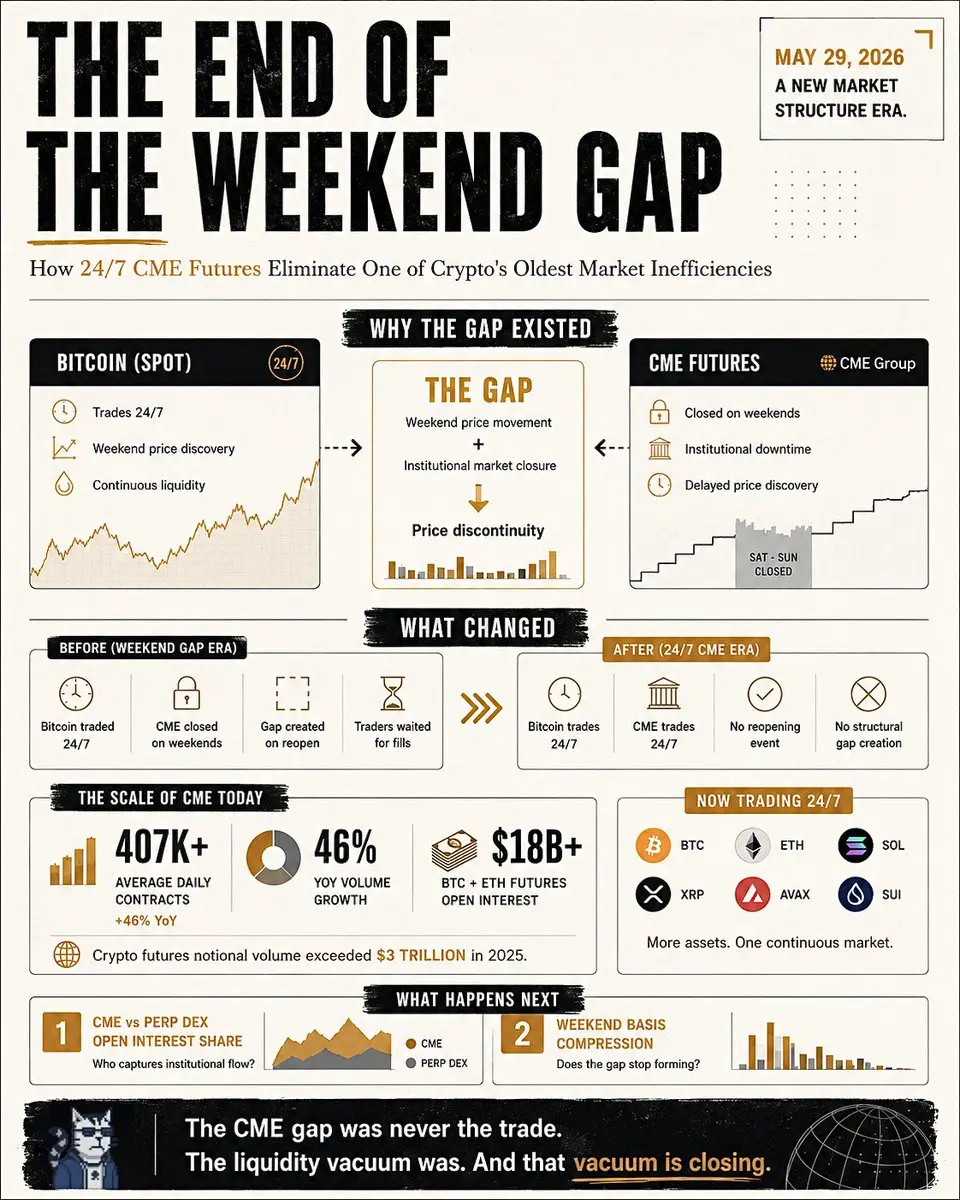
The CME gap trade is dying.
And with it, one of crypto’s longest-running market structure quirks.
Three major CME Bitcoin gaps remain open today.
They may be among the last meaningful gaps the market ever trades.
For more than six years, the setup was simple:
Bitcoin traded 24/7.
CME did not.
Crypto moved over the weekend.
CME reopened.
Price discovery caught up.
The difference became the gap.
Entire trading systems emerged around the assumption that price would eventually revisit it.
But the gap itself was never the opportunity.
The opportunity came from a liquidity vacuum.
Institutional capi
BTC-4.39%
HYPE-1.1%
post-image
  • Reward
  • Comment
  • Repost
  • Share
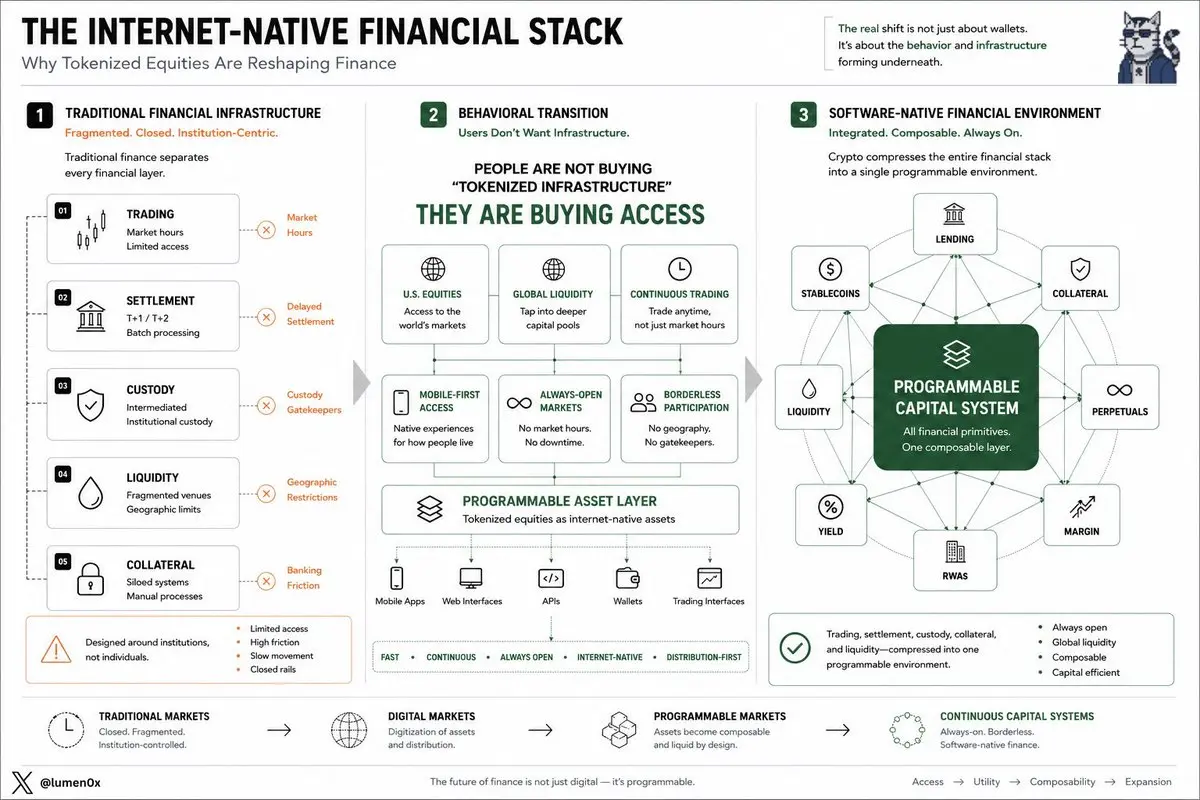
Everybody is focused on Solana capturing tokenized stock wallets.
I think the more interesting part is the type of behavior forming underneath it.
Because tokenized equities are not onboarding like traditional finance products.
They are onboarding like internet-native trading products.
Fast.
Continuous.
Mobile-first.
Always open.
Always accessible.
That changes the environment around the asset itself.
The average user is not thinking:
“I want exposure to tokenized settlement infrastructure.”
They are thinking:
“I want access.”
Access to:
▸ U.S. equities
▸ global liquidity
▸ continuous trading
SOL-2.53%
post-image
  • Reward
  • 1
  • 1
  • Share
GateUser-9ca73a3f:
2026 GOGOGO 👊
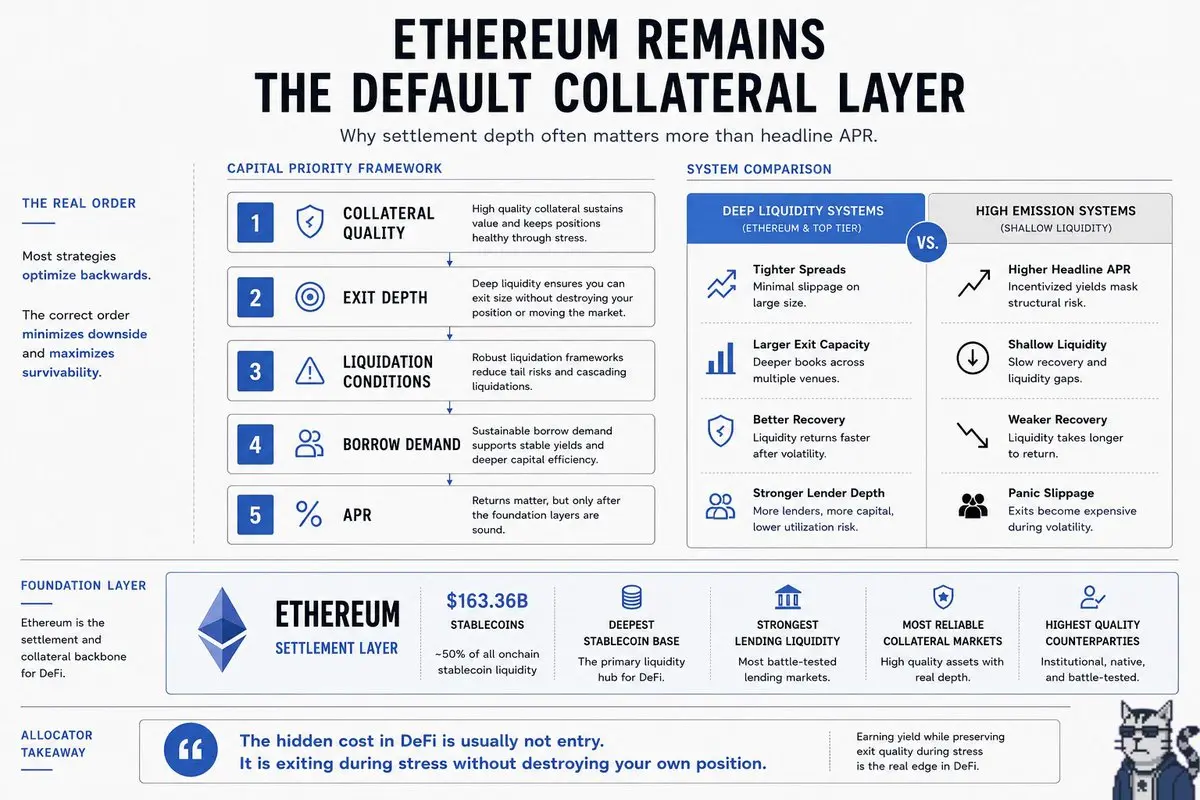
Ethereum remains the default collateral layer, not because it is exciting, but because exits are deepest.
That distinction becomes more important once volatility rises.
Ethereum now holds roughly $163.36B in stablecoins.
Nearly half of all stablecoin liquidity onchain.
Most people still evaluate yield strategies backwards.
They optimize for APR first.
Then think about liquidity later.
In practice, the order should probably be:
1. collateral quality
2. exit depth
3. liquidation conditions
4. borrow demand
5. then APR
Because a 22% farm on shallow liquidity can become a much worse trade than a 1
ETH-0.79%
post-image
  • Reward
  • Comment
  • Repost
  • Share
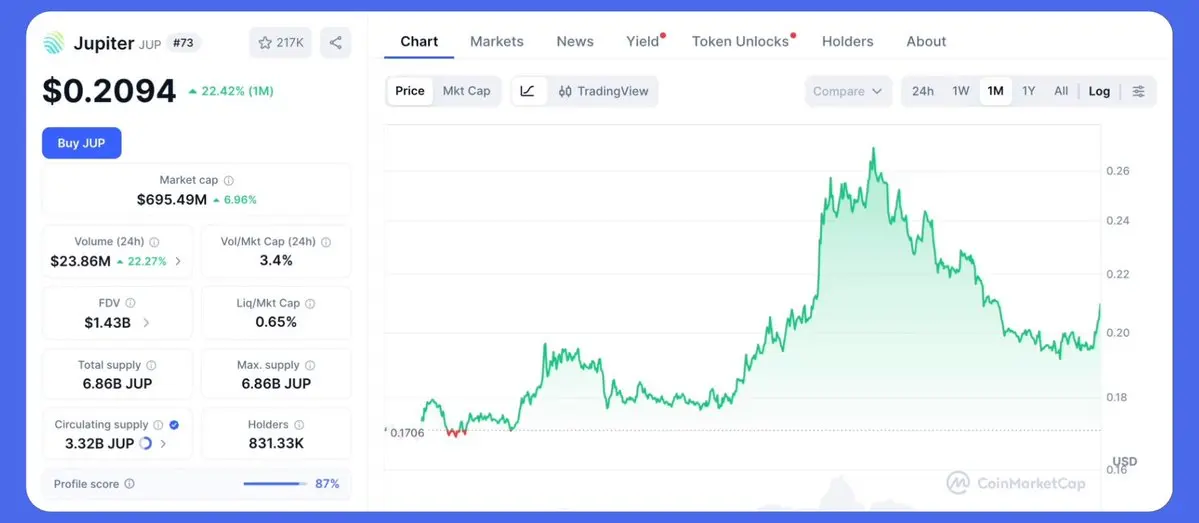
$JUP at $695M market cap with $154.7M annualized fees is either:
▸ the cheapest DeFi blue chip in crypto right now
or
▸ proof that governance tokens without direct fee flow structurally deserve lower multiples.
There’s probably no middle ground.
Jupiter now sits at roughly:
▸ $2.0B TVL
▸ $154.7M annualized fees
▸ $49.4M annualized revenue
▸ $1.069B cumulative fees generated
▸ $5.47B monthly aggregator volume
▸ 95% Solana DEX aggregator dominance
At face value, the valuation looks absurd.
A $695M market cap against $154.7M annualized fees implies roughly 4.5x P/F.
That would look extraordinaril
JUP5.56%
SOL-2.53%
post-image
  • Reward
  • 1
  • Repost
  • Share
NexaCrypto:
To The Moon 🌕
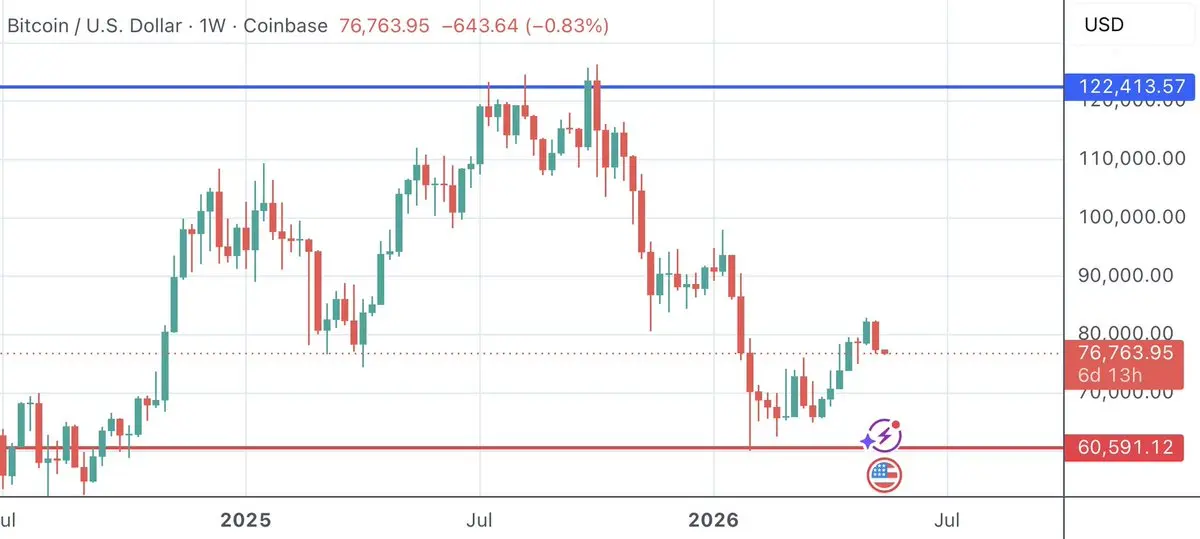
Bitcoin reached $122K.
The reflexive mania never fully arrived.
That may be the most important structural development of this cycle.
Previous Bitcoin cycle peaks looked very different.
Price expansion itself became the marketing engine.
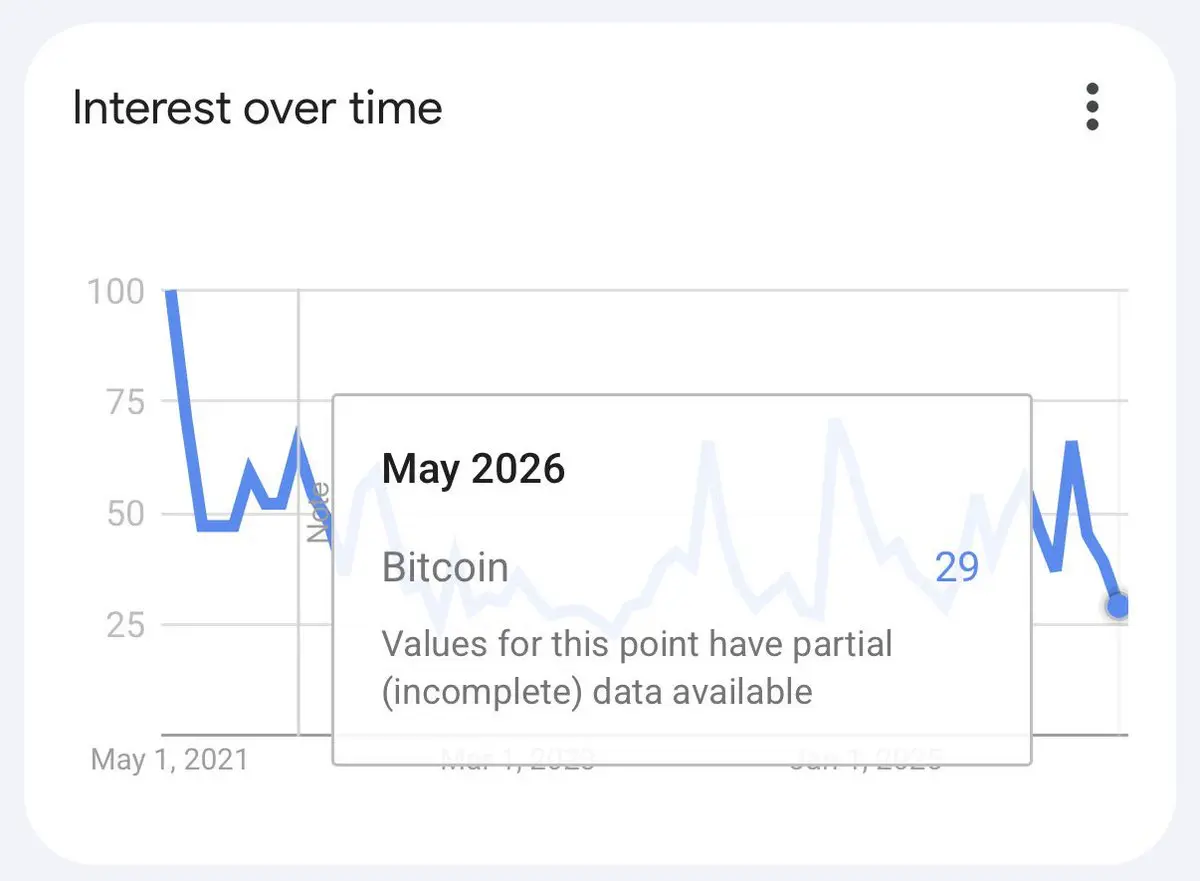
1. Retail onboarding accelerated aggressively
2. Google search interest went vertical
3. Perpetual leverage expanded rapidly
4. $BTC regularly produced 1,000%+ yearly appreciation phases
This cycle looked materially different.
Bitcoin peaked closer to roughly 240% year-over-year appreciation.
More importantly:
$BTC reached a new ATH and later corrected toward r
BTC-4.3%
post-image
post-image
post-image
post-image
  • Reward
  • Comment
  • Repost
  • Share
RWA stopped being “one sector” a while ago.
The market now splits into four completely different infrastructure layers:
1. Asset issuance
2. Distribution & composability
3. Structured credit
4. Onchain consumption
Each layer operates differently:
- different business models
- different risk profiles
- different winners
- different liquidity dynamics
RWA is no longer one market.
Issuance, distribution, credit, and consumption now function as separate infrastructure layers with completely different economics.
RWA-0.26%
  • Reward
  • Comment
  • Repost
  • Share
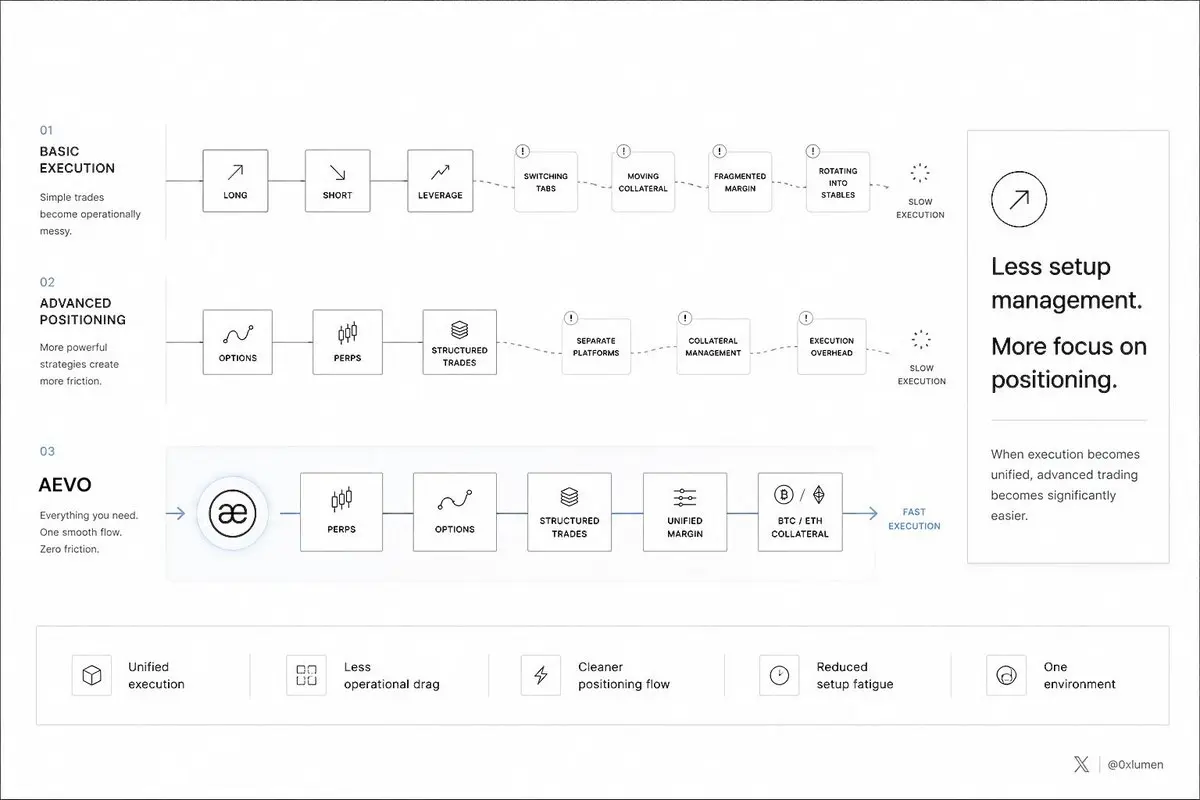
.@aevoxyz is one of the few trading platforms I’ve used where the workflow actually feels thought through.
Instead of separating everything, the platform keeps:
1. perps
2. options
3. structured trades
4. unified margin
5. BTC/ETH collateral
inside one trading platform.
That removes a lot of friction.
Especially for traders who want to move beyond basic longs and shorts without turning execution into a full-time task.
I think people underestimate how much easier advanced positioning becomes once collateral, margin, and execution stop feeling fragmented.
Working with Aevo on this post. The inte
4-1.67%
BTC-4.3%
ETH-0.79%
LOT-3.31%
post-image
  • Reward
  • Comment
  • Repost
  • Share
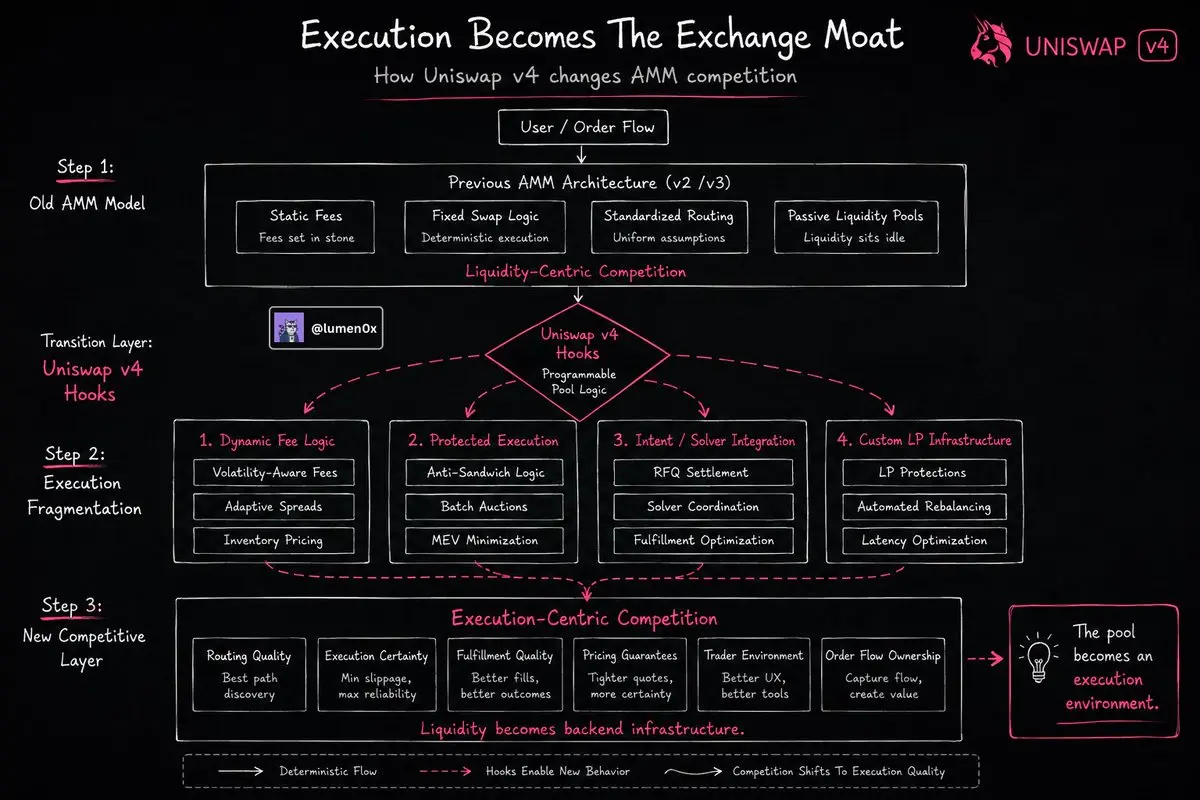
Liquidity is becoming increasingly interchangeable across DeFi.
Execution is not.
That is probably the clearest way to understand why hooks exist.
Uniswap v4 is probably the clearest sign that exchange infrastructure is fragmenting around execution itself.
Not liquidity.
Execution.
Hooks change what a pool fundamentally is.
Before v4, AMMs mostly behaved like passive liquidity systems.
Liquidity sat inside predefined logic:
- static fee behavior
- fixed swap execution
- predetermined routing assumptions
- standardized pool mechanics
v3 improved capital efficiency.
But execution itself remained
post-image
  • Reward
  • Comment
  • Repost
  • Share
Most AI discussions focus on models.
What’s getting less attention is how AI agents will actually pay, transact, and interact onchain.
That’s partly why the WorldClaw and WLFI move stands out to me.
WorldClaw is building a system where AI agents can use tools, move funds between wallets, and settle payments with USD1 across Solana and BNB Chain.
Instead of keeping USD1 limited to trading and DeFi, this pushes it toward real usage tied to AI activity.
Another interesting part is the $WLFI utility.
According to WLFI, users who lock $WLFI get access to higher tiers with lower costs and better rou
WLFI-1.17%
USD10.01%
SOL-2.53%
BNB-2.43%
post-image
  • Reward
  • Comment
  • Repost
  • Share
Hyperliquid is not a perp DEX anymore.
It is the first vertically integrated onchain trading stack.
Most people still haven’t internalized what that means for capital flows.
Here’s the architecture:
Each HIP is not a feature drop. It’s a deliberate layer of the stack:
- HIP-1: Native token standard + spot order books. Tokens live and trade natively onchain.
- HIP-2: Automated liquidity mechanism embedded directly into HyperCore. Solves the cold-start problem for new token launches without external bootstrapping.
- HIP-3: Perpetual futures deployment made permissionless for any qualified builde
HYPE-1.08%
post-image
  • Reward
  • Comment
  • Repost
  • Share
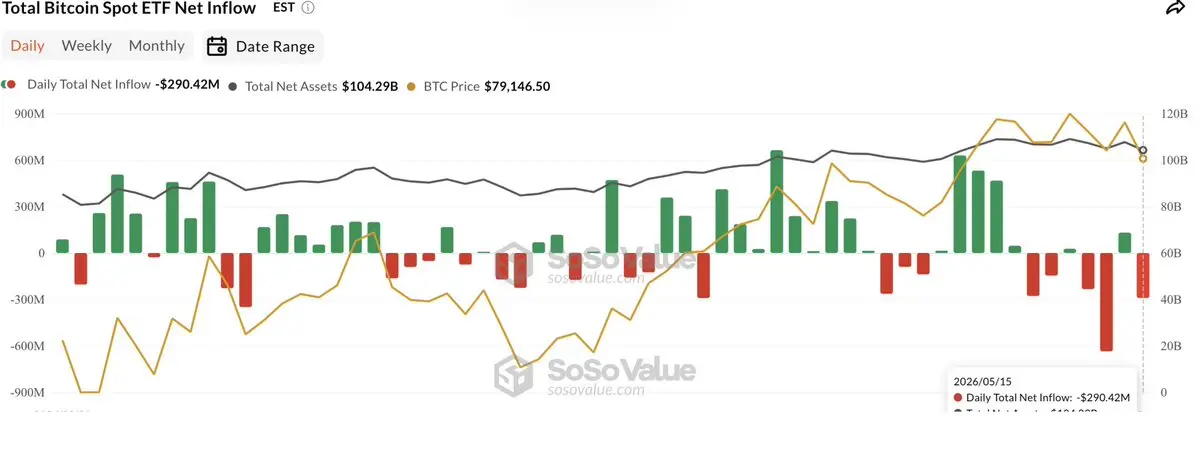
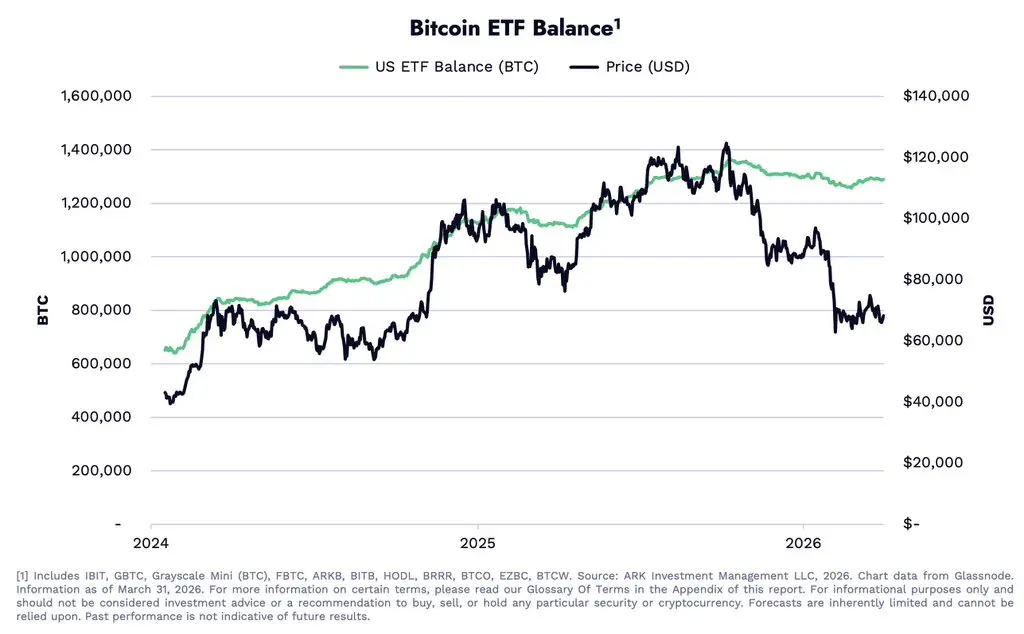
The impressive Q1 stat:
Despite Bitcoin dropping 23%, US spot ETF balances barely budged.
- Tight range: 1.26M to 1.31M $BTC
- Ended the quarter at 1.29M $BTC, almost unchanged
No big outflows. No retail style panic.
The new wave of Bitcoin holders through ETFs is showing real backbone. These aren’t the weak hands we used to see. They absorbed the pain and stayed put. That resilience is building a stronger foundation for the asset.
When big money holds steady through volatility, it changes the game; less supply shock on the way back up.
Respect to those who didn’t flinch.
BTC-4.3%
post-image
  • Reward
  • Comment
  • Repost
  • Share
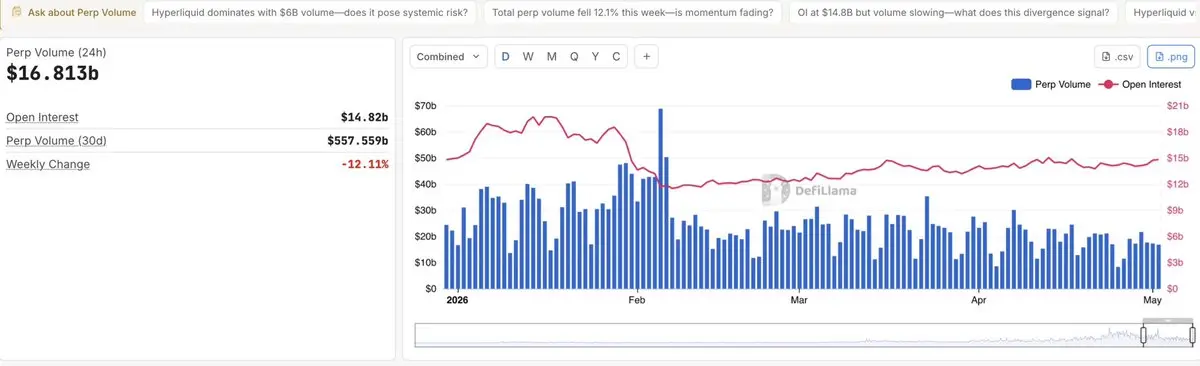
We’ve become addicted to the “Volume” metric. We see $16.8B flowing through perp DEXs and think the perp market is thriving.
But if you look under the hood at the Spot-to-Perp Ratio, the engine is actually running on fumes.
• Spot ($4.4B): Actual accumulation. Real assets leaving exchanges. The floor of the market.
• Perps ($16.8B): Synthetic bets. No assets change hands. Pure price exposure.
Currently, for every $1 of actual buying/selling, there are $4 of side-bets. We are essentially a $16.8B casino sitting on top of a $4B warehouse. When the warehouse is empty, the casino has no foundation
BTC-4.3%
post-image
  • Reward
  • Comment
  • Repost
  • Share
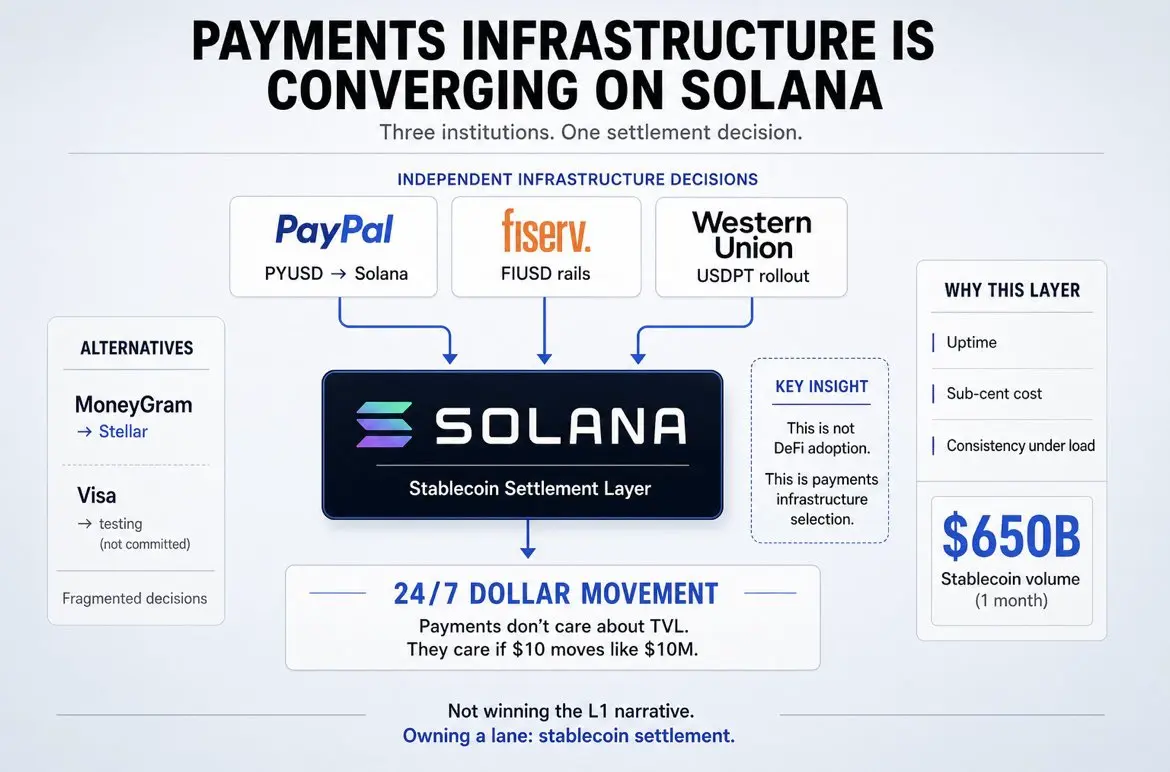
Solana has three payment institutions choosing it as stablecoin infrastructure in six months. No other chain has one.
In 6 months:
• PayPal brought PYUSD over.
• Fiserv is working on FIUSD rails.
• Western Union is exploring USDPT rollout.
That’s not DeFi chasing yield. That’s payments looking for infrastructure that actually works day to day.
Things like low fees, speed, and not breaking under load matter way more here than TVL.
Stablecoin volume is already massive, around $650B in monthly flow, and it’s only going one direction. What matters is whether the network can handle real usage co
SOL-2.53%
PYUSD-0.01%
XLM-12.58%
post-image
  • Reward
  • Comment
  • Repost
  • Share
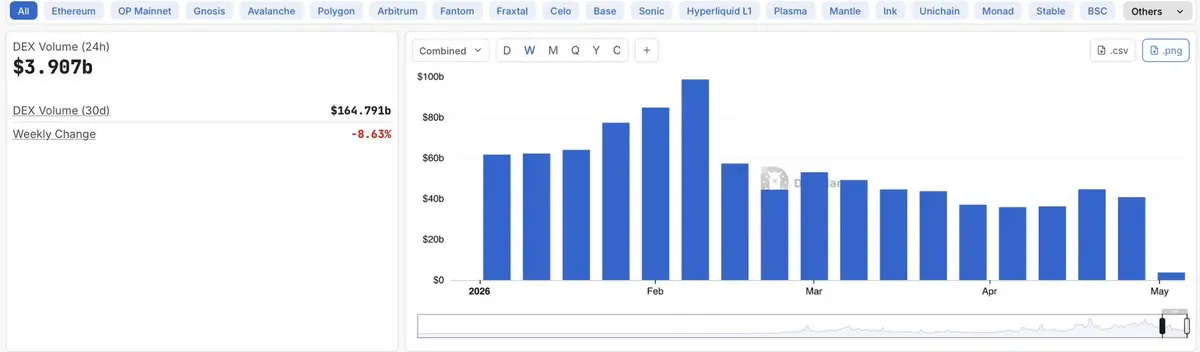
DEX volume down 8.6% WoW while $BTC holds.
$3.85B 24h.
Feels like flow is staying parked more than anything else.
BTC gets bids, but alts aren’t really following through, and DEX activity reflects that.
Not seeing much rotation yet. Capital still sitting in:
• BTC
• majors
• stables
Altseason probably needs both BTC strength and some actual rotation.
Right now it’s mostly just the first.
A lot of “alts next” talk, but the volume isn’t really backing it up yet.
Until DEX activity picks up again, this still looks like a majors market.
BTC-4.3%
post-image
  • Reward
  • Comment
  • Repost
  • Share
Solana is no longer just scaling activity. It is beginning to look like a system designed to absorb institutional capital.
Three signals are converging within the same window:
• Stablecoin supply expanding rapidly, including non-USDC/USDT growth
• Transaction volume surpassing Ethereum in February
• A pending execution upgrade targeting sub-second finality
Taken together, this points to a structural shift: Solana moving from a high-throughput network to a viable settlement layer.
———-
Market Overview
The surface-level read is straightforward: Solana is processing more transactions than ever.
SOL-2.53%
USDC0.04%
ETH-0.79%
  • Reward
  • Comment
  • Repost
  • Share
  • Pinned