Kumar_Sanu

vip
Age 0.2 Year
Peak Tier 0
No content yet
#SocialFiSectorUp5.9%
The digital economy is rapidly evolving, and SocialFi has become a strong emerging narrative within the Web3 ecosystem. Today, an important market update is being highlighted — a 5.9% upward move in the SocialFi sector, which clearly signals that interest in decentralized social platforms and creator-driven economies is steadily growing.
The concept of SocialFi is simple but powerful. It is a combination of social media and decentralized finance where users not only consume content but can also earn direct economic rewards through their activity, en
DESO-0.28%
Ai_Power
#SocialFiSectorUp5.9%
The digital economy is rapidly evolving, and SocialFi has become a strong emerging narrative within the Web3 ecosystem. Today, an important market update is being highlighted — a 5.9% upward move in the SocialFi sector, which clearly signals that interest in decentralized social platforms and creator-driven economies is steadily growing.
The concept of SocialFi is simple but powerful. It is a combination of social media and decentralized finance where users not only consume content but can also earn direct economic rewards through their activity, engagement, and contributions. This model is fundamentally different from traditional social platforms, where value is mostly captured by the platforms, not the users.
The recent 5.9% growth reflects not just price movement but also sentiment and adoption. When a sector shows consistent green movement, it indicates that both investors and users are taking that space seriously.
The biggest advantage of SocialFi is transparency and ownership. In traditional social media, data is centralized, but in the SocialFi ecosystem, users own their identity, content, and engagement. This shift represents a major transformation in the digital economy.
The rise of the creator economy has made SocialFi even stronger. Today, creators rely not only on likes and followers but can also generate income directly through token-based rewards, engagement incentives, and decentralized monetization models.
Blockchain technology is the backbone of SocialFi. Through smart contracts and tokenization, every interaction can be converted into value. This system turns passive consumers into active participants.
From an investor’s perspective, SocialFi is a high-potential but early-stage sector. There is volatility in this space, but with innovation and adoption, the potential for long-term growth is also strong. That’s why early attention is important.
The rise of Web3 social platforms is challenging traditional social media models. Users now prioritize privacy, ownership, and fair monetization. This demand is driving the adoption of SocialFi.
Community governance is also an important part of SocialFi. Many platforms give users voting rights, allowing them to participate directly in platform decisions and development. This decentralized structure increases trust and engagement.
The shift in data ownership is a major revolution in the digital world. SocialFi gives users control over their data and identity, which was not possible in traditional internet models.
A 5.9% growth may be a short-term number, but it signals a long-term trend. It shows that the SocialFi narrative is gradually gaining strength in the market.
In the future, SocialFi could evolve further with AI integration, NFT-based identity systems, and cross-platform decentralized ecosystems. This combination could define the next generation of internet structure.
The conclusion is simple: SocialFi is not just a trend but part of the evolution of the internet. This sector is still in its early stages, but with adoption and innovation, it can become a strong pillar of the future digital economy.

  • Reward
  • Comment
  • Repost
  • Share
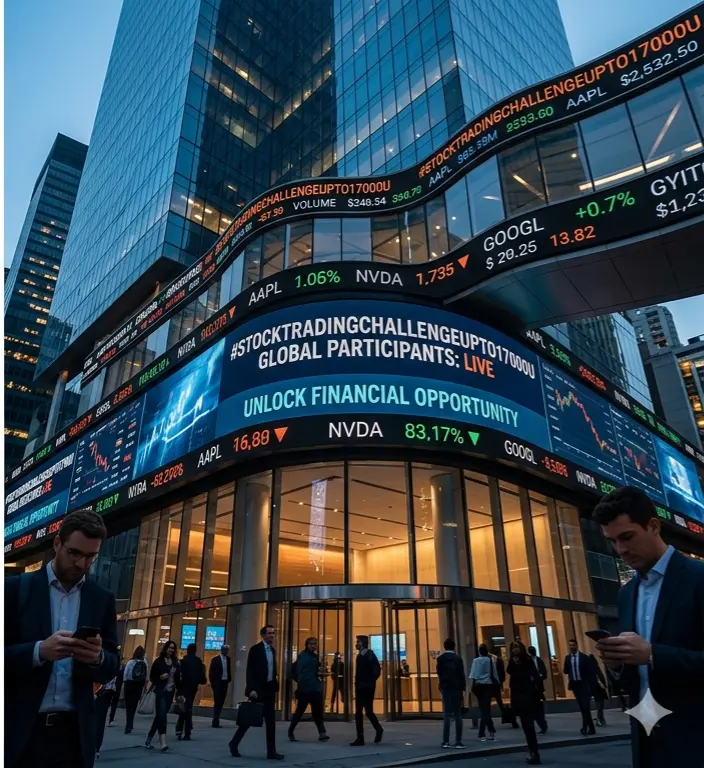
#StockTradingChallengeUpTo17000U #StockTradingChallengeUpTo17000U
INTRODUCTION TO THE BIGGEST STOCK TRADING CHALLENGE
The financial market is entering a new era where traders are no longer satisfied with small gains. Everyone wants consistency, discipline, strategy, and massive portfolio growth. is not just a normal trading campaign — it is a mission for traders who want to prove their skills in the real market. From beginners to advanced traders, everyone is trying to climb the ladder of profits while managing risk like professionals. This challenge represents patience, market understanding
Ai_Power
#StockTradingChallengeUpTo17000U #StockTradingChallengeUpTo17000U
INTRODUCTION TO THE BIGGEST STOCK TRADING CHALLENGE
The financial market is entering a new era where traders are no longer satisfied with small gains. Everyone wants consistency, discipline, strategy, and massive portfolio growth. is not just a normal trading campaign — it is a mission for traders who want to prove their skills in the real market. From beginners to advanced traders, everyone is trying to climb the ladder of profits while managing risk like professionals. This challenge represents patience, market understanding, emotional control, technical analysis, and smart execution. Traders from all around the world are participating to test their knowledge and transform small capital into powerful returns. The stock market is full of opportunities, but only disciplined traders can survive volatility and achieve long-term success. Every candle, every breakout, every support and resistance zone matters in this challenge. Success belongs to those who study trends, control emotions, and follow proper risk management. SHAININGMOON
IMPORTANCE OF RISK MANAGEMENT IN STOCK TRADING
One of the biggest reasons traders fail is poor risk management. In survival is more important than fast profits. Professional traders never risk their entire portfolio on one trade. Instead, they divide capital carefully and use stop-loss strategies to protect funds. A successful trader understands that losses are part of the game, but controlling losses is the real secret. Smart traders focus on risk-to-reward ratios, entry timing, position sizing, and emotional discipline. Fear and greed destroy portfolios faster than market crashes. Traders must avoid revenge trading and overtrading. Proper capital allocation helps traders stay alive during volatile market conditions. Long-term winners are those who preserve capital and remain patient during uncertain situations. The challenge teaches participants how to become emotionally strong and financially smart. SHAININGMOON
TECHNICAL ANALYSIS STRATEGIES FOR SUCCESS
Technical analysis plays a major role in Traders use candlestick patterns, moving averages, RSI, MACD, Fibonacci retracement, support zones, resistance zones, trend lines, and volume indicators to predict market movement. Understanding chart psychology helps traders identify market sentiment before major breakouts happen. Bullish momentum usually appears when buyers dominate volume and price action confirms strength. Bearish trends appear when sellers control momentum and support levels break. Smart traders combine multiple indicators instead of depending on one signal. Confirmation is extremely important before opening a position. Timing is everything in trading. Entering too early or too late can destroy potential profits. Patience and chart reading skills are key weapons for successful traders. SHAININGMOON
MARKET PSYCHOLOGY AND TRADER EMOTIONS
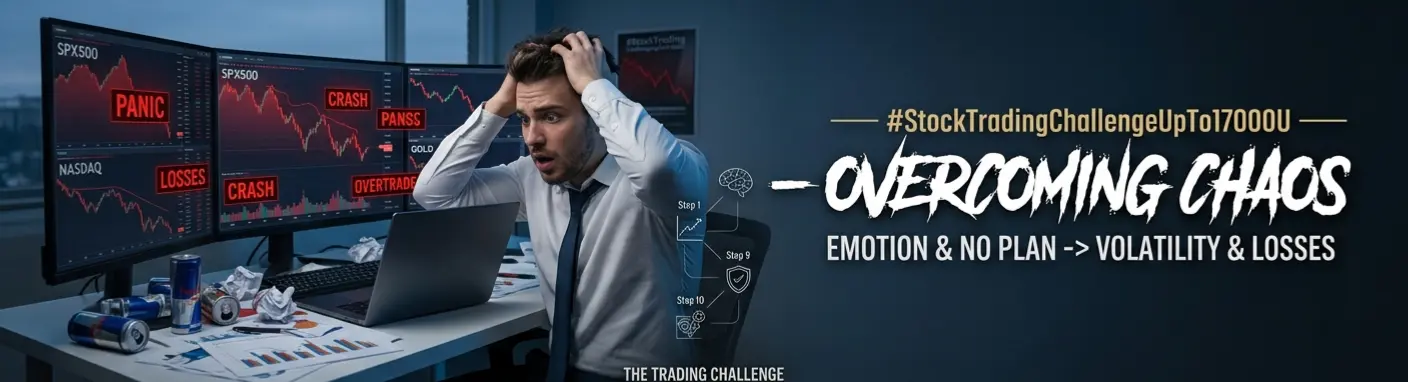
The stock market is driven by emotions. Fear, greed, panic, and excitement move prices every day. In #StockTradingChallengeUpTo17000U, traders learn that controlling emotions is more important than predicting the market. Many traders panic sell during corrections and buy emotionally during pumps. Professional traders remain calm and focus on strategy instead of noise. Emotional discipline allows traders to make rational decisions under pressure. FOMO causes many traders to enter trades at the wrong time, while fear prevents them from taking profitable opportunities. Winners think long term and trust their analysis instead of following the crowd blindly. Building confidence through education and experience is essential for success in trading. SHAININGMOON
BEST TRADING SETUPS USED BY PROFESSIONALS
Professional traders participating in often use high-probability setups that increase consistency. Breakout trading, trend continuation setups, pullback entries, reversal patterns, and momentum scalping are some of the most effective strategies. Breakouts happen when price moves strongly above resistance or below support with heavy volume confirmation. Pullback trading allows traders to enter at better prices during temporary corrections inside a trend. Reversal patterns help traders identify trend exhaustion and possible direction changes. Successful traders wait patiently for confirmation before executing trades. Chasing the market usually leads to losses. Discipline and timing separate professionals from emotional traders. SHAININGMOON
COMMON MISTAKES TRADERS MUST AVOID
Many traders enter with unrealistic expectations and poor planning. One of the most common mistakes is overleveraging. Excessive leverage increases risk and can wipe out accounts quickly. Another major mistake is ignoring stop-loss levels. Trading without protection is like driving without brakes. Emotional trading, lack of patience, poor research, and following fake signals also destroy portfolios. Traders should avoid social media hype and focus on verified analysis. Consistency comes from discipline, not gambling behavior. Successful traders keep journals, analyze mistakes, and improve continuously. Every loss should become a learning opportunity instead of emotional frustration. SHAININGMOON
GLOBAL MARKET TRENDS AND STOCK OPPORTUNITIE.
Global economic conditions strongly influence stock market performance. Interest rates, inflation, central bank policies, geopolitical events, and corporate earnings affect market direction. In traders closely monitor global trends to identify opportunities early. Technology stocks, AI companies, energy sectors, healthcare innovation, semiconductor industries, and financial markets remain major areas of interest. Smart investors diversify portfolios to reduce risk exposure during uncertain economic conditions. Understanding macroeconomic trends helps traders make informed decisions and avoid unnecessary losses. Market awareness is essential for long-term success.
DISCIPLINE AND CONSISTENCY CREATE WINNERS
The biggest difference between successful traders and failed traders is consistency. #StockTradingChallengeUpTo17000U rewards disciplined traders who follow proper systems daily. Successful trading is not about making one lucky trade — it is about repeating good habits over time. Traders must develop routines, follow strategies, and avoid emotional decisions. Consistency in analysis, execution, and risk management builds confidence and long-term profitability. Small daily improvements create massive future success. Patience is the foundation of every successful trading career. Traders who stay focused during difficult market conditions usually become long-term winners.
BUILDING A STRONG TRADING MINDSET
A strong mindset is essential for surviving market volatility. In #StockTradingChallengeUpTo17000U, mental strength often matters more than technical skills. Traders must learn how to handle losses without losing confidence. Every professional trader experiences losing trades, but successful traders recover intelligently. Confidence grows through preparation, education, and experience. Traders should focus on learning instead of chasing unrealistic profits. Maintaining a positive mindset allows better decision-making during stressful situations. Self-control, patience, and discipline are the real foundations of financial success. SHAININGMOON
FUTURE OF STOCK TRADING AND FINAL MOTIVATION
The future of stock trading is becoming more advanced with artificial intelligence, algorithmic systems, institutional participation, and global digital access. represents the next generation of competitive trading where traders continuously improve skills and adapt to changing markets. The market rewards preparation, discipline, and smart execution. Every challenge creates stronger traders and better investors. Success does not happen overnight, but consistent effort leads to powerful long-term growth. Learn from mistakes, respect the market, control emotions, and stay disciplined. Traders who remain patient during volatility often achieve the greatest rewards
  • Reward
  • Comment
  • Repost
  • Share
#TradeCFDWinGold Explosion
A new wave is being seen in global financial markets where traders are aggressively moving towards Gold CFDs. Due to inflation pressure, central bank uncertainty, geopolitical tensions, and weakening fiat confidence, gold has once again become a spotlight safe haven asset. Now, not only traditional investors but also crypto and forex traders are entering the gold market through CFD trading. This trend has also provided retail traders with massive opportunities.
Step 2: What is CFD Trading?
CFD, or Contract For Difference, is a trading model where you trade based on p
XAU-0.99%
ShainingMoon
#TradeCFDWinGold Explosion
A new wave is being seen in global financial markets where traders are aggressively moving towards Gold CFDs. Due to inflation pressure, central bank uncertainty, geopolitical tensions, and weakening fiat confidence, gold has once again become a spotlight safe haven asset. Now, not only traditional investors but also crypto and forex traders are entering the gold market through CFD trading. This trend has also provided retail traders with massive opportunities.
Step 2: What is CFD Trading?
CFD, or Contract For Difference, is a trading model where you trade based on price movements of the underlying asset without owning it. Gold CFDs mean you can profit from both rising and falling gold prices. If the market goes up, a buy position profits, and if the market goes down, a sell position can also become an earning opportunity. This flexibility has made CFDs a powerful tool for modern traders.
Step 3: Why is Gold Important?
Gold has been considered a wealth preservation asset for centuries. During times of economic uncertainty, banking stress, and currency devaluation, investors move towards gold. That’s why, when stock markets crash or inflation rises, gold demand often increases. Now, digital trading platforms have made access to gold even easier, where trading is possible with just a mobile phone.
Step 4: Smart Traders’ Strategy
Professional traders do not blindly enter. They monitor technical analysis, support and resistance zones, moving averages, and macroeconomic data. In gold trading, the US Dollar Index, Federal Reserve policies, and bond yields have a very strong impact. Smart money always prioritizes patience and risk management. That’s why disciplined traders survive long-term, while emotional traders exit the market.
Step 5: Risk Management is Most Important
CFD trading offers high rewards but also involves high risk. Leverage can multiply profits but also increase losses. Successful traders always use stop loss and risk only a small percentage of their capital. Revenge trading driven by emotions can destroy an account. Discipline is the most powerful weapon to survive in the market.
Step 6: Global Events and Gold Rally
Recent global tensions, oil price volatility, and recession fears have boosted gold demand. Investors prefer safe assets in uncertain environments. That’s why, when geopolitical headlines hit the market, gold prices react aggressively. This volatility creates a major opportunity for CFD traders.
Step 7: Rise of Retail Traders
Previously, only institutions and hedge funds dominated the gold market, but now retail participation is rapidly increasing. Mobile apps, fast execution, and educational content have brought the new generation closer to markets. Social trading and online communities are also providing traders with strategies and insights.
Step 8: The Psychology Game
Trading is not just about charts but also about mindset. Fear and greed are the trader’s biggest enemies. When the market moves quickly, inexperienced traders make emotional decisions. A professional mindset means following a plan, maintaining patience, and avoiding overtrading.
Step 9: Future Outlook
Analysts believe that if inflation remains elevated and central banks maintain a cautious stance, gold can continue its long-term bullish momentum. The digital trading ecosystem is also expanding, where CFDs and commodities trading may become even more mainstream. Innovation and liquidity in this sector are rapidly growing.
Step 10: Final Thoughts
#TradeCFDWinGold is not just a hashtag but has become a symbol of modern trading culture. Gold CFDs provide traders with flexibility, fast execution, and global market exposure. But success is only for those traders who enter the market with knowledge, patience, and strong risk management. Markets are full of opportunities, but survival without a smart strategy is difficult. Gold’s movement remains a center of attention for investors and traders worldwide today.
repost-content-media
  • Reward
  • Comment
  • Repost
  • Share
#DailyPolymarketHotspot 1. Market Heat Is Rising 🔥
The prediction market industry is once again capturing global attention as traders, investors, and crypto communities closely monitor the latest movements on Polymarket. From politics to sports, crypto to global economics, prediction markets are becoming one of the fastest-growing sectors in Web3. Every day, millions of dollars are flowing into trending events, creating opportunities for both experienced traders and newcomers looking to profit from market sentiment.
2. Why Polymarket Is Trending
Polymarket has become a hotspot because it allo
BTC-1.5%
ETH-2.42%
ShainingMoon
#DailyPolymarketHotspot 1. Market Heat Is Rising 🔥
The prediction market industry is once again capturing global attention as traders, investors, and crypto communities closely monitor the latest movements on Polymarket. From politics to sports, crypto to global economics, prediction markets are becoming one of the fastest-growing sectors in Web3. Every day, millions of dollars are flowing into trending events, creating opportunities for both experienced traders and newcomers looking to profit from market sentiment.
2. Why Polymarket Is Trending
Polymarket has become a hotspot because it allows users to trade on real-world outcomes using decentralized technology. Instead of simply guessing future events, traders put real value behind their predictions. This creates a dynamic market where probabilities constantly shift based on news, social sentiment, and investor behavior. As more users join the platform, liquidity increases and opportunities become even larger.
3. Crypto Traders Are Watching Closely
Bitcoin, Ethereum, and major altcoin movements are now heavily connected with prediction markets. Traders use Polymarket to estimate the chances of ETF approvals, regulatory decisions, price milestones, and macroeconomic developments. Many investors now treat prediction markets as an additional trading indicator because they reflect collective market intelligence in real time.
4. Political Markets Are Dominating
One of the biggest attractions on Polymarket remains political forecasting. Election-related markets often generate huge trading volume because global audiences want insight into possible outcomes before official polls are released. Traders analyze debates, public sentiment, economic performance, and breaking news to position themselves early before odds shift dramatically.
5. Sports Prediction Markets Continue Growing ⚽🏀
Sports categories are also attracting massive attention. Football, basketball, cricket, and combat sports markets are becoming extremely active as fans participate in live prediction trading. The combination of entertainment and financial opportunity is helping prediction markets reach mainstream audiences beyond the crypto industry.
6. The Role Of Smart Money 💰
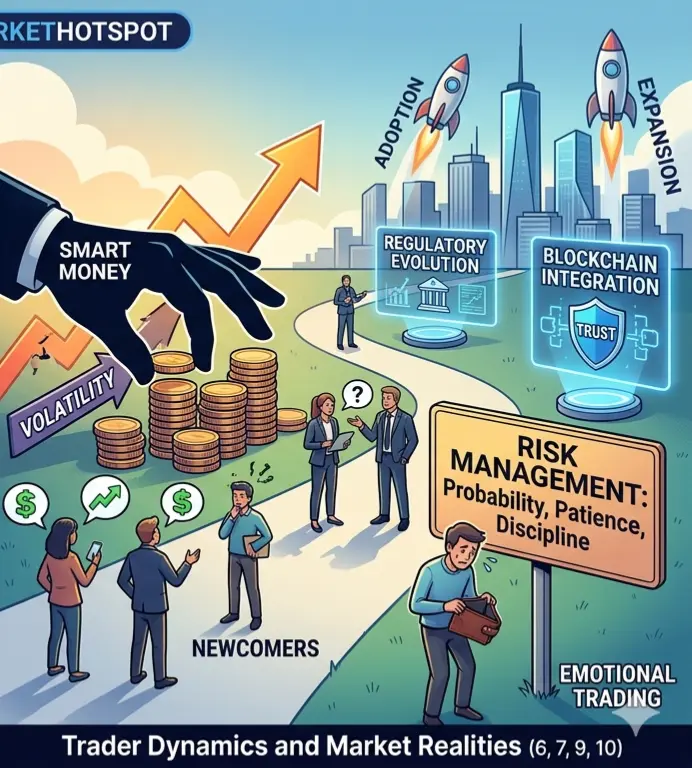
Large investors, often referred to as “smart money,” are influencing many trending markets. When whales place significant positions, smaller traders closely monitor their activity to understand possible market direction. This behavior creates intense volatility and rapid changes in probability percentages throughout the day.
7. Risks Every Trader Should Understand
Although prediction markets offer exciting opportunities, they also carry risks. Market sentiment can change within minutes after breaking news or unexpected developments. Emotional trading, lack of research, and overexposure can lead to major losses. Successful traders focus on probability, patience, and disciplined risk management instead of hype alone.
8. Why Web3 Communities Love Prediction Markets
Prediction markets combine social interaction, analytics, finance, and decentralized technology into one ecosystem. Communities discuss trends, share strategies, and debate outcomes across social platforms every day. This constant engagement keeps the ecosystem highly active and creates a strong network effect around major events.
9. Future Of The Prediction Market Industry 🚀
Experts believe prediction markets could become a major part of global finance in the coming years. As regulations evolve and adoption increases, platforms like Polymarket may expand into broader categories including economics, technology, entertainment, and even AI forecasting. Increased transparency and blockchain integration could make decentralized forecasting more trusted worldwide.
10. Final Thoughts
#DailyPolymarketHotspot continues to showcase how fast the prediction market sector is evolving. With rising trading volume, growing user adoption, and nonstop global events, the industry remains one of the most exciting areas in crypto today. Whether traders are following politics, sports, or digital assets, prediction markets are transforming the way people interact with information, probabilities, and financial opportunities in the modern Web3 economy.
repost-content-media
  • Reward
  • Comment
  • Repost
  • Share
#BitMineAdds111942ETHInOneWeek The crypto market is once again showing why institutional interest in digital assets continues to grow at an incredible pace. This week, BitMine shocked the industry after reports revealed that the company added a massive 111,942 ETH to its holdings within just seven days. This aggressive accumulation has immediately sparked discussions across the crypto community, with traders, investors, and analysts all trying to understand what this move could mean for the future of Ethereum and the broader market.
Ethereum has already been one of the strongest-performing maj
ETH-2.42%
BTC-1.5%
ShainingMoon
#BitMineAdds111942ETHInOneWeek The crypto market is once again showing why institutional interest in digital assets continues to grow at an incredible pace. This week, BitMine shocked the industry after reports revealed that the company added a massive 111,942 ETH to its holdings within just seven days. This aggressive accumulation has immediately sparked discussions across the crypto community, with traders, investors, and analysts all trying to understand what this move could mean for the future of Ethereum and the broader market.
Ethereum has already been one of the strongest-performing major cryptocurrencies of the current cycle. With growing adoption in decentralized finance, tokenization, AI integrations, Web3 infrastructure, gaming, and staking, ETH continues to establish itself as more than just a cryptocurrency. It has become the backbone of the decentralized internet. Because of this, large-scale ETH accumulation by institutional players is often viewed as a major signal of long-term confidence.
BitMine’s latest purchase is important not only because of the size but because of the timing. The crypto market has recently experienced periods of volatility, uncertainty around macroeconomic conditions, and shifting investor sentiment. Despite all of that, BitMine decided to increase exposure to Ethereum in a dramatic way. This suggests the company may believe ETH is significantly undervalued compared to where it could trade in the future.
Adding over 111,000 ETH in a single week requires substantial capital and strategic planning. Such accumulation cannot happen without careful analysis of liquidity, market conditions, and long-term positioning. Many analysts believe this type of buying activity reflects expectations of stronger institutional inflows into Ethereum-based products over the coming months.
Several factors may be contributing to this growing confidence in Ethereum. First, the Ethereum ecosystem continues to dominate decentralized applications and smart contract activity. Developers continue building on Ethereum because of its security, network effects, and massive user base. Second, the Ethereum staking ecosystem has reduced available circulating supply, creating stronger scarcity dynamics over time. Third, increasing interest in tokenized real-world assets and decentralized financial infrastructure has made Ethereum the preferred blockchain for institutional experimentation.
Another important factor is the broader narrative surrounding crypto ETFs and institutional adoption. Bitcoin ETFs already changed the landscape for digital assets, bringing billions of dollars into the market. Many investors now believe Ethereum could follow a similar path with even more institutional participation ahead. Large treasury-style ETH purchases may be early positioning before another major expansion phase in the market.
Market sentiment around Ethereum has also strengthened because of increasing on-chain activity. Transaction volumes, staking participation, and Layer-2 ecosystem growth continue to rise. Ethereum scaling solutions are improving efficiency while maintaining the security of the main network. This creates a stronger long-term foundation for adoption across finance, gaming, payments, and AI-powered applications.
BitMine’s move may also influence other companies and institutional investors. In previous market cycles, large treasury purchases often created momentum that encouraged additional buyers to enter the market. When institutions observe other firms aggressively accumulating assets, it can increase confidence and reduce hesitation about entering the space.
Social media platforms and crypto communities reacted quickly after the news surfaced. Many traders described the purchase as a bullish signal for Ethereum’s medium and long-term outlook. Some analysts even compared the move to earlier Bitcoin accumulation phases that occurred before major rallies. While short-term volatility remains possible, institutional buying trends are usually watched closely because they can reveal where smart money expects future growth.
At the same time, investors should remember that the crypto market always carries risks. Prices can remain volatile, and market sentiment can shift rapidly due to economic data, regulation, or geopolitical developments. However, strong accumulation by major entities often reflects deep research and long-term conviction rather than short-term speculation.
One of the biggest questions now is whether this is only the beginning. If more institutions start adding ETH to their balance sheets, Ethereum could experience a major supply squeeze over time. Since large amounts of ETH are already locked in staking contracts, additional institutional demand may significantly reduce liquid supply available on exchanges.
This development also strengthens the narrative that Ethereum is evolving into a strategic digital reserve asset alongside Bitcoin. While Bitcoin is often described as digital gold, Ethereum is increasingly being viewed as the infrastructure layer powering decentralized finance and the tokenized economy of the future.
For retail traders, this news serves as a reminder to monitor institutional behavior carefully. Large-scale accumulation often reveals where major capital expects opportunity. Whether Ethereum continues higher immediately or consolidates in the short term, one thing is clear: institutional confidence in ETH is growing rapidly.
The crypto market is entering a phase where adoption, infrastructure, and long-term utility matter more than hype alone. Moves like BitMine adding 111,942 ETH in one week show that major players are positioning themselves for what they believe could be the next major chapter in blockchain growth.
Ethereum continues to stand at the center of that transformation. 🔥
repost-content-media
  • Reward
  • Comment
  • Repost
  • Share
#USIranNegotiation Step 1: A New Wave of Global Attention
The topic of #USIranNegotiation has once again become one of the most discussed geopolitical issues across global financial markets, energy sectors, and diplomatic circles. Investors, traders, political analysts, and crypto communities are all closely watching every statement coming from Washington and Tehran. The reason is simple: any progress or failure in negotiations between the United States and Iran can create massive reactions in oil prices, stock markets, gold, and even cryptocurrencies.
Step 2: Why These Negotiations Matter
The
BTC-1.5%
ShainingMoon
#USIranNegotiation Step 1: A New Wave of Global Attention
The topic of #USIranNegotiation has once again become one of the most discussed geopolitical issues across global financial markets, energy sectors, and diplomatic circles. Investors, traders, political analysts, and crypto communities are all closely watching every statement coming from Washington and Tehran. The reason is simple: any progress or failure in negotiations between the United States and Iran can create massive reactions in oil prices, stock markets, gold, and even cryptocurrencies.
Step 2: Why These Negotiations Matter
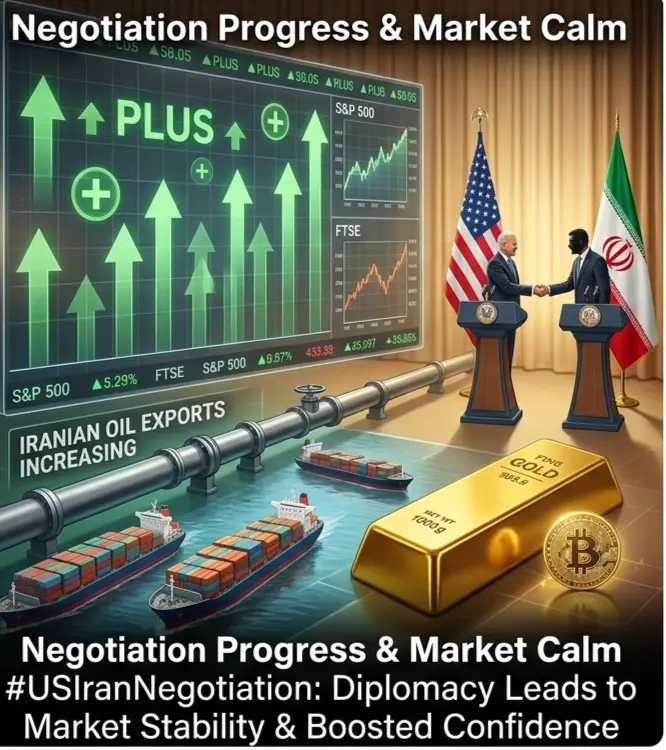
The relationship between the US and Iran has remained tense for decades due to sanctions, nuclear concerns, military conflicts, and regional influence. Whenever negotiations restart, markets begin pricing in possible outcomes. If talks improve, global markets often react positively because investors expect stability in the Middle East. If talks fail, fears of conflict increase, pushing oil and gold prices higher.
Step 3: Impact on Oil Markets
Iran is one of the world’s major oil producers. Sanctions have heavily limited its ability to export oil freely. If negotiations succeed and sanctions are reduced, Iran could increase oil exports significantly. This would increase global supply and potentially lower oil prices. However, if tensions rise, supply fears could push crude oil prices sharply upward. Energy traders are therefore monitoring every headline carefully.
Step 4: Effect on Financial Markets
Global stock markets usually prefer stability. Positive diplomatic progress between the US and Iran can boost investor confidence, especially in sectors connected to transportation, manufacturing, and technology. On the other hand, rising tensions often trigger fear in the market, causing investors to move toward safer assets like gold, the US dollar, and government bonds.
Step 5: Gold and Safe Haven Assets
Gold prices traditionally rise during geopolitical uncertainty. If negotiations collapse or military tensions increase, traders may rush into gold as a protective asset. This pattern has repeated many times throughout history. Investors use gold as a hedge against uncertainty, inflation, and geopolitical risk.
Step 6: Crypto Market Reactions
The cryptocurrency market also reacts strongly to global political uncertainty. During periods of tension, Bitcoin and other digital assets sometimes experience increased volatility. Some investors see crypto as an alternative financial system outside traditional geopolitical control, while others treat it as a high-risk asset that moves with market sentiment.
Step 7: Political Stakes for Both Sides
For the United States, negotiations are linked to regional security, nuclear policies, and global diplomatic influence. For Iran, sanctions relief is extremely important for economic recovery, currency stability, and trade expansion. Both sides face internal political pressure, making negotiations highly sensitive and difficult.
Step 8: Possible Outcomes
There are several possible scenarios:
A partial agreement that reduces tensions temporarily
A full diplomatic breakthrough with sanctions relief
Continued deadlock without major progress
Escalation leading to stronger sanctions or military tensions
Each scenario would have different consequences for global markets and investor sentiment.
Step 9: What Traders Are Watching
Traders are closely monitoring:
Official government statements
Oil inventory reports
Military activity in the Middle East
Currency market movements
Gold price momentum
Bitcoin volatility
International diplomatic meetings
Fast reactions to geopolitical headlines have become a major part of modern trading strategies.
Step 10: Final Market Perspective
#USIranNegotiation is not just a political story — it is a global financial catalyst. The outcome of these discussions could influence oil supply chains, inflation trends, central bank policies, stock market sentiment, and crypto volatility worldwide. Whether negotiations move toward peace or renewed tension, one thing is certain: global markets will continue reacting rapidly to every development.
Smart investors understand that geopolitical events are no longer separate from financial markets. In today’s interconnected world, diplomacy, energy, economics, and digital assets all move together. This is why #USIranNegotiation remains one of the most important global stories to watch right now.
repost-content-media
  • Reward
  • Comment
  • Repost
  • Share
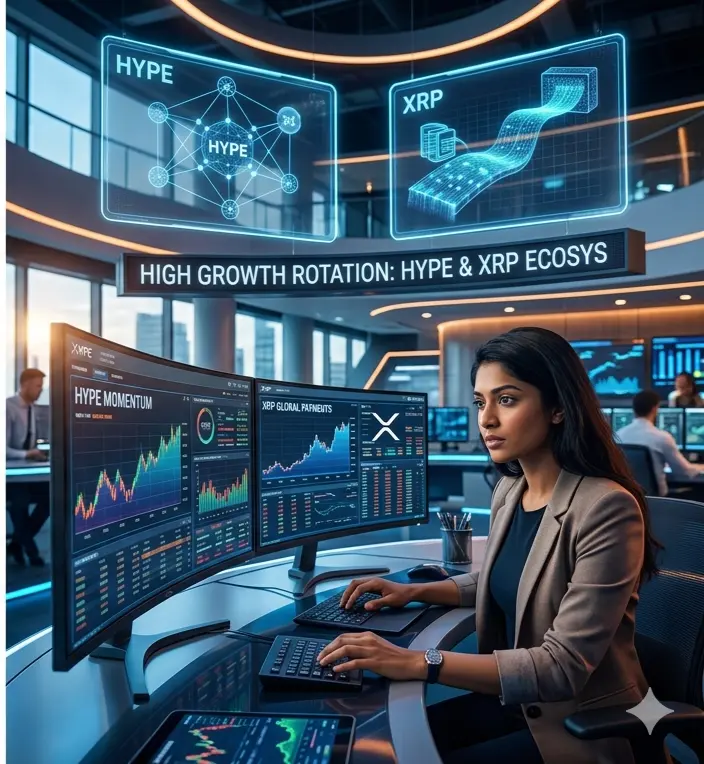
#InstitutionalCapitalRotatesFromBTCToHYPEAndXRP Step 1: The Market Rotation Has Started
Institutional capital is no longer focused only on Bitcoin. A new rotation phase is emerging across the crypto market as major investors begin allocating funds into high-growth assets like XRP and HYPE. While Bitcoin remains the foundation of the digital asset industry, large funds are now searching for stronger upside opportunities, faster ecosystems, and projects with expanding utility.
This shift does not mean Bitcoin is weak. Instead, it signals that smart money is entering the next phase of the market
BTC-1.5%
XRP-2.36%
HYPE4.79%
ETH-2.42%
ShainingMoon
#InstitutionalCapitalRotatesFromBTCToHYPEAndXRP Step 1: The Market Rotation Has Started
Institutional capital is no longer focused only on Bitcoin. A new rotation phase is emerging across the crypto market as major investors begin allocating funds into high-growth assets like XRP and HYPE. While Bitcoin remains the foundation of the digital asset industry, large funds are now searching for stronger upside opportunities, faster ecosystems, and projects with expanding utility.
This shift does not mean Bitcoin is weak. Instead, it signals that smart money is entering the next phase of the market cycle where capital spreads into selected altcoins with strong narratives, liquidity, and institutional interest.
BTC created the foundation. Now institutions are looking for the next major growth wave.
Step 2: Why Institutions Still Respect Bitcoin
Bitcoin remains the safest and most trusted crypto asset in the world. Spot ETF inflows, long-term holders, and macro investors continue treating BTC as digital gold. Large financial firms still consider Bitcoin the primary reserve asset of crypto markets.
Key reasons institutions still hold BTC:
• Strong liquidity
• Global recognition
• Limited supply
• ETF adoption
• Hedge against inflation
• Long-term value storage
• Strong security and decentralization
However, once Bitcoin stabilizes after strong rallies, institutions often rotate partial profits into higher-risk, higher-reward assets.
That is exactly what appears to be happening now.
Step 3: Why XRP Is Attracting Institutional Attention
XRP has returned to the spotlight because of its strong legal progress, banking partnerships, and cross-border payment infrastructure. Institutions are beginning to view XRP as a serious blockchain solution for international finance.
Reasons behind the XRP momentum:
• Faster transaction speed
• Low transfer costs
• Banking integrations
• Expanding global adoption
• Regulatory clarity improving
• Strong community support
• High liquidity across exchanges
Many analysts believe XRP could benefit massively if institutional payment systems continue integrating blockchain technology into global settlements.
The market is reacting to the possibility that XRP may become one of the key assets for financial infrastructure in the future.
Step 4: The Rise of HYPE
HYPE is becoming one of the most discussed assets among traders because of explosive momentum, rapid ecosystem growth, and strong speculative demand. Institutions and large traders are paying attention because assets with strong narratives often outperform during bullish cycles.
Why HYPE is trending:
• Rapid market cap expansion
• Strong trading volume
• Viral market attention
• Aggressive community growth
• Exchange visibility increasing
• Speculative momentum attracting traders
In crypto, narrative drives liquidity. Liquidity drives price action. Institutions understand this better than anyone.
When smart money notices a fast-growing ecosystem early, it often enters before retail traders fully recognize the opportunity.
Step 5: Capital Rotation Is a Bull Market Signal
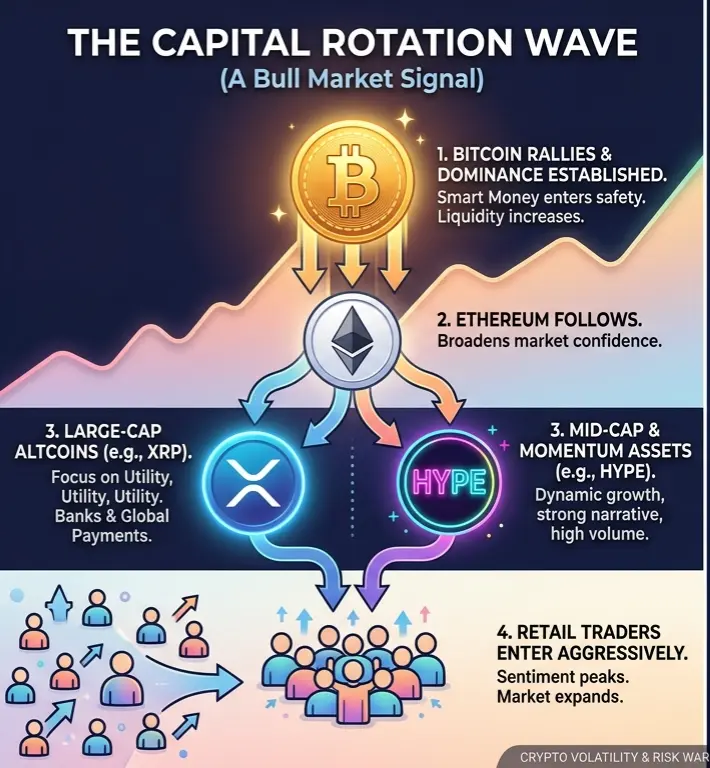
Historically, market cycles begin with Bitcoin rallies. After BTC establishes dominance and confidence returns, capital flows into large-cap altcoins and then smaller ecosystems.
This rotation structure has appeared in previous cycles:
Bitcoin rallies first
Ethereum follows
Large-cap altcoins move next
Mid-cap assets gain momentum
Retail traders enter aggressively
The current shift toward XRP and HYPE may indicate that the market is entering a broader expansion phase.
That is why many traders are closely monitoring institutional wallets and exchange flows.
Step 6: What Smart Money Is Looking For
Institutional investors do not buy random assets. They focus on specific factors before allocating capital.
Main areas institutions analyze:
• Liquidity depth
• Regulatory outlook
• Community growth
• Real-world utility
• Trading volume consistency
• Ecosystem development
• Risk-to-reward potential
Bitcoin already satisfies most of these conditions. XRP is strengthening its institutional case. HYPE is gaining attention because of growth momentum and speculative opportunities.
The combination of stability and growth potential is attracting large-scale investors.
Step 7: Risks Traders Must Understand
Even during bullish rotations, crypto markets remain extremely volatile. Rapid gains can quickly reverse if sentiment changes or macroeconomic pressure increases.
Major risks include:
• Sudden corrections
• Whale manipulation
• Regulatory uncertainty
• Market overleveraging
• Profit-taking events
• Bitcoin dominance reversals
Many traders chase hype without proper risk management. Smart investors always protect capital first before seeking profits.
A strong strategy matters more than emotional trading.
Step 8: What This Means for Retail Traders
Retail investors are now watching institutional activity more closely than ever. Wallet tracking, ETF flows, and exchange data have become major indicators for predicting market direction.
If institutions continue rotating capital into XRP and HYPE, retail traders may follow aggressively.
Possible outcomes include:
• Higher altcoin momentum
• Increased volatility
• Larger trading volumes
• Faster trend acceleration
• Broader market participation
But retail traders should avoid entering blindly after major pumps. Patience and timing remain critical in every market cycle.
Step 9: The Bigger Crypto Narrative
The broader story is no longer just about Bitcoin surviving. The conversation has evolved toward blockchain adoption, financial integration, decentralized infrastructure, and institutional expansion.
Bitcoin represents security and scarcity.
XRP represents payment efficiency and institutional utility.
HYPE represents market momentum and speculative expansion.
Together, they show how different sectors of crypto are evolving simultaneously.
This is why institutional diversification inside crypto is becoming more important.
Step 10: Final Market Outlook
Institutional capital rotation from BTC into XRP and HYPE could become one of the defining trends of this market cycle. Bitcoin remains the king of crypto, but investors are increasingly searching for assets capable of delivering stronger percentage growth.
The market is entering a phase where utility, narrative, liquidity, and adoption all matter together.
If institutional momentum continues building:
• Bitcoin may remain the market foundation
• XRP could strengthen its role in finance
• HYPE could continue attracting aggressive traders
• Altcoin markets may experience broader expansion
The next few months could shape the direction of the entire crypto industry.
Smart money is already positioning itself.
Now the market is watching what happens next.
repost-content-media
  • Reward
  • Comment
  • Repost
  • Share
#PlatinumCardCreatorExclusive Introduction: The Rise of Exclusive Creator Economies
The digital creator economy is evolving faster than ever before. Influencers, traders, educators, streamers, analysts, and online entrepreneurs are no longer just content creators — they are becoming full-scale brands. In this new era, exclusivity matters. That is exactly why the #PlatinumCardCreatorExclusive trend is gaining massive attention across financial, social, and creator communities worldwide.
A Platinum Creator Card is more than a payment tool. It represents status, trust, premium access, networking
BTC-1.5%
ShainingMoon
#PlatinumCardCreatorExclusive Introduction: The Rise of Exclusive Creator Economies
The digital creator economy is evolving faster than ever before. Influencers, traders, educators, streamers, analysts, and online entrepreneurs are no longer just content creators — they are becoming full-scale brands. In this new era, exclusivity matters. That is exactly why the #PlatinumCardCreatorExclusive trend is gaining massive attention across financial, social, and creator communities worldwide.
A Platinum Creator Card is more than a payment tool. It represents status, trust, premium access, networking power, and financial flexibility designed specifically for elite creators and digital professionals. Whether you are a crypto influencer, stock analyst, NFT artist, YouTuber, educator, or entrepreneur, the Platinum Creator ecosystem opens doors to opportunities previously available only to celebrities and corporate executives.
2. What Makes the Platinum Creator Card Special?
Unlike traditional bank cards, creator-exclusive platinum cards are designed around the modern digital economy. These cards often provide:
Premium cashback rewards
Crypto integration
International payment support
Exclusive creator partnerships
VIP event access
Higher spending limits
Business growth tools
Audience monetization support
Brand collaboration opportunities
Luxury lifestyle benefits
For creators working globally, these features help simplify operations while increasing prestige and credibility.
3. Financial Freedom for Digital Creators
One of the biggest problems creators face is unstable income. Some months are extremely profitable while others are slower. Platinum creator cards aim to solve this by offering:
Flexible credit systems
Advanced financial management
Fast international transactions
Multi-currency support
Reduced payment friction
Better transaction security
This allows creators to scale businesses without constantly worrying about payment limitations or financial restrictions.
4. Why Exclusivity Matters in 2026
In today’s online world, attention is currency. Exclusive memberships and premium access create stronger communities and brand value. The Platinum Creator Card symbolizes:
Elite status
Verified influence
Financial credibility
Community trust
Professional branding
For many creators, this card becomes part of their personal brand identity.
5. The Connection Between Crypto and Creator Cards
Crypto adoption has dramatically changed creator finance. Many platinum creator ecosystems now support:
Bitcoin rewards
Stablecoin spending
Web3 integrations
NFT memberships
Blockchain verification
Crypto cashback systems
This integration helps creators participate directly in the future digital economy while maintaining global financial accessibility.
6. Networking and VIP Access
One underrated advantage of creator-exclusive platinum systems is networking. Holders often gain access to:
Creator summits
Investment conferences
Luxury business events
Brand partnerships
Private online communities
Influencer collaborations
In the creator economy, relationships create opportunities. Networking can often become more valuable than direct financial rewards.
7. Security and Global Transactions
Modern creators work internationally. Payments may come from Europe, the United States, Asia, or the Middle East. Platinum creator systems are optimized for:
Secure international payments
Fraud protection
Fast verification systems
Digital wallet compatibility
AI-powered transaction monitoring
This creates smoother financial operations for creators managing global audiences.
8. The Psychology of Premium Branding
Luxury branding influences audience perception. A Platinum Creator identity signals:
Success
Authority
Professionalism
Trustworthiness
Long-term stability
Brands and followers naturally respond more positively to creators who project premium positioning.
9. The Future of the Creator Economy
The creator economy is moving toward full financial ecosystems where creators become independent digital businesses. Platinum-level systems may eventually include:
Creator banking
AI business assistants
Investment portfolios
Tokenized communities
Decentralized monetization
Creator credit scoring
This transformation could redefine online entrepreneurship over the next decade.
10. Final Thoughts
The #PlatinumCardCreatorExclusive movement represents far more than luxury. It reflects the evolution of creators into powerful global entrepreneurs. In a world driven by influence, technology, finance, and digital identity, exclusive creator ecosystems are becoming essential tools for growth and recognition.
For ambitious creators, the future belongs to those who combine creativity with financial intelligence, branding, and innovation. Platinum creator systems are not just about spending power — they are about building authority, expanding opportunities, and unlocking a premium digital lifestyle.
The next generation of successful creators will not simply produce content. They will build ecosystems, communities, and financial empires powered by exclusivity, technology, and global reach.#
repost-content-media
  • Reward
  • Comment
  • Repost
  • Share
#StockTradingChallengeUpTo17000U Step 1 — The Biggest Trading Opportunity Has Arrived
The financial markets are moving faster than ever before, and traders around the world are searching for the next massive opportunity to grow their accounts. The #StockTradingChallengeUpTo17000U is creating excitement among beginners and professional traders alike because it offers a chance to test trading skills, improve market understanding, and potentially achieve major rewards. Whether you trade stocks, indices, commodities, or crypto-related assets, this challenge is designed to push traders toward disci
ShainingMoon
#StockTradingChallengeUpTo17000U Step 1 — The Biggest Trading Opportunity Has Arrived
The financial markets are moving faster than ever before, and traders around the world are searching for the next massive opportunity to grow their accounts. The #StockTradingChallengeUpTo17000U is creating excitement among beginners and professional traders alike because it offers a chance to test trading skills, improve market understanding, and potentially achieve major rewards. Whether you trade stocks, indices, commodities, or crypto-related assets, this challenge is designed to push traders toward discipline, strategy, and consistency.
Thousands of participants are joining trading competitions every day because they understand one important truth: success in trading comes from preparation, risk management, and emotional control. This challenge is not only about profits; it is about proving your ability to survive and grow in volatile markets.
Step 2 — Why Traders Are Joining This Challenge
Many traders enter the market without a clear plan. They follow emotions, panic during volatility, and overtrade when they lose. The #StockTradingChallengeUpTo17000U changes this mindset by encouraging structured trading habits.
Participants are focusing on:
Smart risk management
Proper entry and exit planning
Technical analysis
Market psychology
Portfolio discipline
Consistent profit-taking
Long-term growth strategies
The challenge motivates traders to think professionally instead of gambling emotionally.
Step 3 — Understanding Market Momentum
Global stock markets are heavily influenced by:
Interest rate decisions
Inflation reports
Institutional investment flows
Geopolitical events
Technology sector growth
AI and semiconductor demand
Energy market volatility
Successful traders study these factors carefully before entering positions. Momentum trading, breakout trading, and swing trading are becoming increasingly popular because of rapid market movement.
Step 4 — The Importance of Risk Management
No trading strategy works without proper risk control. Smart traders never risk their entire balance on one trade. Professional traders usually risk only a small percentage of capital per position.
Important rules include:
Always use stop-loss orders
Avoid emotional revenge trading
Protect profits gradually
Never overleverage
Diversify positions wisely
Risk management is what separates long-term winners from short-term gamblers.
Step 5 — Technical Analysis Strategies
Technical analysis plays a huge role in modern trading. Traders participating in the challenge often rely on:
Support and resistance zones
RSI indicators
MACD confirmations
Moving averages
Volume analysis
Trendline breakouts
Candlestick patterns
These tools help traders identify possible market direction and improve decision-making accuracy.
Step 6 — Psychology Behind Successful Trading
One of the hardest parts of trading is controlling emotions. Fear and greed destroy more accounts than bad strategies. Successful traders stay calm during losses and remain disciplined during profits.
Key psychological principles:
Patience creates better entries
Discipline protects capital
Consistency beats luck
Emotional control improves performance
Professional traders understand that trading is a marathon, not a sprint.
Step 7 — Opportunities Across Different Markets
The challenge is attracting traders from multiple financial sectors:
US stocks
Tech companies
Gold and commodities
Forex markets
AI-related equities
Crypto-linked assets
Energy sector stocks
Diversified opportunities allow traders to adapt to changing market conditions and find profitable setups.
Step 8 — Building a Winning Strategy
Every successful trader follows a structured system:
Market research
Trend analysis
Entry confirmation
Risk calculation
Position management
Profit target planning
Trade journaling
Performance review
Emotional discipline
Continuous learning
Without a strategy, trading becomes pure speculation.
Step 9 — The Future of Competitive Trading
Online trading competitions are becoming more popular because they encourage learning, discipline, and performance improvement. Traders are now using AI tools, advanced analytics, and institutional-level indicators to gain an edge in the market.
The future belongs to traders who:
Learn continuously
Adapt quickly
Control emotions
Understand global economics
Respect risk management
This challenge represents more than rewards — it represents growth, experience, and financial education.
Step 10 — Final Thoughts
The #StockTradingChallengeUpTo17000U is a powerful opportunity for traders to test their skills in real market conditions. Success will not come from luck alone. It will come from discipline, patience, knowledge, and consistent execution.
Every trade teaches a lesson. Every market move creates opportunity. Every challenge builds experience.
The traders who survive volatility, manage risk wisely, and remain emotionally disciplined are the ones who achieve long-term success.
Stay focused. Trade smart. Protect your capital. And always remember — consistency is the true key to winning in financial markets.
repost-content-media
  • Reward
  • Comment
  • Repost
  • Share
#TrumpBacksCFTCAuthorityOverPredictionMarkets Introduction
The global financial landscape is rapidly evolving, and prediction markets are becoming one of the most discussed innovations in modern finance. Recently, former U.S. President Donald Trump publicly supported stronger authority for the U.S. Commodity Futures Trading Commission (CFTC) over prediction markets. This development has sparked major discussions across crypto communities, financial institutions, political analysts, and blockchain investors worldwide.
Prediction markets allow users to trade contracts based on the outcome of fut
BTC-1.5%
ShainingMoon
#TrumpBacksCFTCAuthorityOverPredictionMarkets Introduction
The global financial landscape is rapidly evolving, and prediction markets are becoming one of the most discussed innovations in modern finance. Recently, former U.S. President Donald Trump publicly supported stronger authority for the U.S. Commodity Futures Trading Commission (CFTC) over prediction markets. This development has sparked major discussions across crypto communities, financial institutions, political analysts, and blockchain investors worldwide.
Prediction markets allow users to trade contracts based on the outcome of future events such as elections, economic data, sports, and geopolitical developments. Platforms like these have grown significantly with the rise of blockchain technology and decentralized finance. Trump’s support for expanding CFTC authority could reshape the regulatory future of this industry.
2. What Are Prediction Markets?
Prediction markets are platforms where traders speculate on future events. Participants buy and sell shares tied to possible outcomes. Prices fluctuate depending on public sentiment and probability expectations.
Examples include:
Election outcomes
Bitcoin price predictions
Interest rate decisions
Sports events
Global conflicts
Economic indicators
These markets are often viewed as more accurate than traditional polling because they involve financial incentives.
3. Why Trump’s Statement Matters
Donald Trump remains one of the most influential political figures in the United States. Any policy-related statement from him can impact markets instantly.
His support for stronger CFTC oversight signals several important possibilities:
Greater legal clarity for prediction platforms
Increased institutional participation
Reduced regulatory uncertainty
More investor confidence
Potential mainstream adoption
The crypto market reacted positively because many traders believe regulation could legitimize prediction market platforms.
4. Role of the CFTC
The Commodity Futures Trading Commission regulates derivatives markets in the United States, including futures and options.
If prediction markets fall more directly under CFTC authority, platforms may need to follow:
Licensing requirements
Anti-money laundering standards
Customer verification rules
Market manipulation prevention measures
Transparent reporting systems
Supporters believe this would protect investors while encouraging innovation.
5. Impact on Crypto and Blockchain
Blockchain-based prediction markets are growing rapidly. Many decentralized platforms allow users worldwide to trade predictions using cryptocurrencies.
Trump’s support may benefit:
Decentralized finance projects
Crypto exchanges
Blockchain prediction platforms
Institutional crypto adoption
Stablecoin ecosystems
Some analysts believe regulated prediction markets could become a trillion-dollar industry in the future.
6. Institutional Interest Is Rising
Large financial firms have recently shown interest in alternative financial products. Prediction markets combine finance, data analysis, public sentiment, and technology into a single ecosystem.
Institutional investors are attracted because prediction markets can:
Provide hedging opportunities
Improve forecasting models
Generate trading volume
Increase market efficiency
Offer new speculative instruments
If regulations become clearer, Wall Street participation may accelerate dramatically.
7. Possible Challenges
Despite optimism, several concerns remain:
Political manipulation risks
Gambling-related criticism
Regulatory conflicts
Cross-border legal issues
Market abuse concerns
Ethical debates regarding sensitive events
Critics argue that excessive speculation on political or social outcomes may create moral and legal complications.
8. Market Reaction
Following discussions surrounding Trump’s support, many crypto traders began monitoring prediction-market-related tokens and blockchain projects.
The market saw:
Increased social media engagement
Higher trading volume
Greater interest in decentralized applications
More discussions around regulation
Investors are now watching closely for future policy developments and official statements from U.S. regulators.
9. Future Outlook
The future of prediction markets may depend on how governments balance innovation with investor protection.
Possible future developments include:
Clear federal regulations
Expansion of blockchain prediction platforms
Institutional partnerships
AI-powered forecasting systems
Global prediction trading ecosystems
Integration with traditional finance
Increased retail participation
Stablecoin-based settlements
Real-time geopolitical forecasting
Broader crypto adoption
Prediction markets may eventually become a core component of the digital economy.
10. Conclusion
Trump’s backing of stronger CFTC authority over prediction markets represents a potentially major shift in financial regulation. Supporters view it as a positive step toward legitimacy, transparency, and institutional growth. Critics remain cautious about ethical and regulatory concerns.
Regardless of political opinions, one thing is clear: prediction markets are becoming increasingly important in the future of finance and blockchain technology. As crypto adoption grows and financial innovation accelerates, the relationship between regulators, governments, and decentralized platforms will continue shaping the next generation of global markets.
The coming years could determine whether prediction markets evolve into a mainstream financial tool or remain a niche sector within the broader crypto ecosystem.
repost-content-media
  • Reward
  • Comment
  • Repost
  • Share
#StockTradingChallengeUpTo17000U
Step 1:
The world of stock trading has changed dramatically over the last few years, and trading challenges are now becoming one of the biggest trends in online finance. The hashtag represents more than just a competition because it reflects the growing ambition of retail traders who want to test their skills in real market conditions. With smartphones, advanced trading apps, and instant market access, people from around the world can now participate in financial opportunities that were once limited to professional institutions. These challenges create excitem
ShainingMoon
#StockTradingChallengeUpTo17000U
Step 1:
The world of stock trading has changed dramatically over the last few years, and trading challenges are now becoming one of the biggest trends in online finance. The hashtag represents more than just a competition because it reflects the growing ambition of retail traders who want to test their skills in real market conditions. With smartphones, advanced trading apps, and instant market access, people from around the world can now participate in financial opportunities that were once limited to professional institutions. These challenges create excitement, motivation, and a strong learning environment where traders aim to improve discipline, consistency, and strategic thinking while competing for major rewards.
Step 2:
One of the biggest realities traders discover during these challenges is that psychology matters more than most beginners expect. Many people enter the market believing trading is only about buying and selling stocks, but emotional control quickly becomes the real challenge. Fear, greed, impatience, revenge trading, and panic decisions destroy many accounts. The environment pushes participants to control emotions under pressure. Successful traders focus on patience, discipline, and consistency rather than emotional reactions. They understand that long-term survival in the market depends on controlling risk and maintaining a calm mindset during both profits and losses.
Step 3:
Technology has played a massive role in the rise of modern trading competitions. Traders now have access to advanced charting tools, technical indicators, artificial intelligence analysis, economic calendars, and real-time market news directly from mobile devices. This has made stock trading more accessible than ever before. Participants in the trend constantly monitor inflation reports, interest rate decisions, company earnings, geopolitical events, and investor sentiment because every major event can influence market direction. The ability to analyze information quickly and react strategically has become one of the most important skills in today’s financial markets.
Step 4:
Risk management remains the most important foundation of successful trading. Many beginners become obsessed with profits and ignore the importance of protecting their capital. Professional traders think differently because they understand survival comes first. The challenge teaches participants that reckless trading rarely produces long-term success. Traders who use stop-loss systems, controlled leverage, proper position sizing, and disciplined strategies usually perform better over time. Financial markets are unpredictable, and even strong strategies experience losing streaks. Without proper risk control, a single emotional trade can destroy weeks of progress.
Step 5:
Social media and online trading communities have also increased the popularity of stock trading challenges. Traders now share market analysis, strategies, trade setups, and educational content with global audiences in real time. The hashtag benefits from this digital environment because competition naturally creates engagement and visibility. Participants motivate each other through shared experiences, while beginners gain exposure to new ideas and different trading styles. However, experienced traders understand the importance of avoiding hype and unrealistic expectations created by social media excitement. Sustainable success requires education and discipline, not emotional gambling.
Step 6:
Market volatility creates both opportunity and danger for traders participating in these challenges. Economic reports, inflation data, central bank decisions, energy prices, and geopolitical tensions can rapidly move stock markets within minutes. During volatile conditions, emotional pressure increases significantly. Successful participants learn how to stay calm during uncertainty and avoid impulsive decisions driven by fear or greed. Volatility can produce strong profit opportunities, but it can also destroy accounts when traders ignore discipline. This is why emotional control becomes one of the most valuable skills developed through competitive trading environments.
Step 7:
Technical analysis is widely used among challenge participants because it helps traders identify trends and market behavior patterns. Traders study support and resistance zones, candlestick formations, moving averages, volume activity, and momentum indicators to improve decision-making. The movement encourages participants to sharpen their analytical abilities and better understand how markets react under different conditions. However, experienced traders know that technical indicators alone are not enough. Market sentiment, global news, and risk management all play important roles in determining success.
Step 8:
The rise of artificial intelligence and automated trading systems has also transformed modern trading culture. AI-powered tools can now analyze large amounts of market data, identify patterns, and provide trading signals within seconds. Challenges like encourage traders to explore these advanced technologies while improving their understanding of financial markets. However, successful traders know that no algorithm guarantees profits. Human psychology, unexpected news, and market sentiment still influence price movements heavily. Traders who combine technology with disciplined decision-making often achieve better long-term results.
Step 9:
Economic uncertainty has pushed many individuals toward trading opportunities in recent years. Inflation concerns, rising living costs, and unstable economic conditions have motivated people to search for alternative income sources. The possibility of earning large rewards through trading competitions creates strong interest, especially among younger generations connected to digital finance. However, experienced participants understand that trading is not guaranteed income. The challenge can create valuable opportunities, but long-term success requires patience, education, emotional stability, and realistic expectations. Traders who focus only on quick money often struggle to survive difficult market conditions.
Step 10:
Discipline remains the biggest difference between profitable traders and emotional participants. Many traders fail because they abandon their strategies during stressful situations. Overtrading, excessive leverage, panic exits, and revenge trading are common mistakes that destroy performance. Challenges expose these weaknesses quickly because traders operate under pressure. Participants who follow structured routines, maintain trading journals, and stick to clear rules usually perform better over time. The trend highlights an important truth about financial markets: consistency matters more than excitement.
Step 11:
Another major benefit of trading challenges is the educational experience they provide. Real market participation teaches lessons that cannot be fully learned through books or tutorials alone. Traders begin understanding how institutional investors influence price action, how economic events affect sentiment, and how different market cycles repeat over time. The practical experience gained during the journey helps participants improve confidence, analytical thinking, and strategic planning. Even traders who experience losses often gain valuable knowledge that improves future decision-making.
Step 12:
The globalization of financial markets has made trading competitions accessible to people from different countries and economic backgrounds. Digital platforms allow traders worldwide to participate within the same ecosystem regardless of location. This has created a highly competitive environment where strategies, ideas, and perspectives are constantly exchanged. The movement reflects how financial technology is breaking traditional barriers and expanding opportunities for ordinary individuals. Access to global markets is no longer limited to large institutions because modern technology has made participation easier than ever before.
Step 13:
Psychological resilience becomes one of the greatest strengths developed through trading challenges. Markets constantly test confidence and emotional stability through unexpected price movements and uncertain conditions. Winning streaks can create overconfidence, while losses can create frustration and fear. Successful participants learn how to remain balanced regardless of short-term outcomes. They understand that losses are natural in trading and that long-term consistency matters more than perfection. This emotional maturity becomes valuable not only in trading but also in business and financial decision-making.
Step 14:
The future of trading challenges looks increasingly powerful as technology continues evolving rapidly. Artificial intelligence, blockchain systems, social trading platforms, and advanced analytics are expected to reshape the future of digital finance. Challenges may become even more competitive and globally connected in the coming years. Traders who continue learning, adapting, and improving risk management skills will remain in stronger positions for long-term success. The financial industry is evolving quickly, and adaptability is becoming one of the most important qualities for modern traders.
Step 15:
Ultimately, the phenomenon represents more than just a trading competition. It symbolizes ambition, discipline, education, and the modern pursuit of financial growth in a digital world. While rewards attract attention, the real value lies in the skills participants develop throughout the journey. Traders learn patience, emotional control, market analysis, strategic thinking, and risk management under pressure. In the rapidly changing world of online finance, those who combine knowledge, discipline, adaptability, and consistency will likely become the true long-term winners of the modern trading revolution.
repost-content-media
  • Reward
  • Comment
  • Repost
  • Share
#TradeCFDWinGold
Step 1:
The global trading industry is rapidly evolving, and one of the fastest-growing areas attracting traders worldwide is CFD trading. The hashtag represents more than just a promotional trend because it reflects the increasing interest in trading gold and other financial assets through Contracts for Difference. Modern traders are no longer limited to traditional investing methods because digital platforms now allow instant access to global markets directly from mobile devices and computers. Gold has always been considered a symbol of stability, wealth, and financial secu
ShainingMoon
#TradeCFDWinGold
Step 1:
The global trading industry is rapidly evolving, and one of the fastest-growing areas attracting traders worldwide is CFD trading. The hashtag represents more than just a promotional trend because it reflects the increasing interest in trading gold and other financial assets through Contracts for Difference. Modern traders are no longer limited to traditional investing methods because digital platforms now allow instant access to global markets directly from mobile devices and computers. Gold has always been considered a symbol of stability, wealth, and financial security, but CFD trading has transformed how traders interact with this precious metal. Instead of physically owning gold, traders can now speculate on price movements and potentially profit from both rising and falling markets. This flexibility has made gold CFDs extremely attractive among retail traders looking for opportunities in volatile economic conditions.
Step 2:
One of the main reasons gold remains highly popular among traders is its historical role as a safe-haven asset. During periods of inflation, geopolitical conflict, banking instability, or economic uncertainty, investors often shift capital toward gold because it is viewed as a store of value. The trend has gained attention because traders understand that gold prices react strongly to global economic developments. Inflation reports, central bank policies, interest rate decisions, recession fears, and currency fluctuations all influence gold markets significantly. Traders participating in CFD environments constantly monitor these macroeconomic factors to predict market direction and identify trading opportunities before major price movements occur.
Step 3:
CFD trading itself has become increasingly popular because it offers flexibility and accessibility. Unlike traditional investing, CFDs allow traders to speculate on price movements without owning the underlying asset. This means traders can potentially profit when gold prices rise or when they decline. The movement reflects how modern financial technology is making advanced trading methods available to ordinary individuals worldwide. Online platforms now provide real-time charts, technical indicators, economic calendars, and mobile trading applications that allow users to execute trades instantly. This accessibility has dramatically increased retail participation in global financial markets.
Step 4:
Risk management is one of the most important factors in successful CFD trading. Many beginners become attracted by the possibility of fast profits but underestimate the dangers associated with leveraged trading. CFDs can amplify gains, but they can also magnify losses if trades move against expectations. The trend highlights the importance of discipline, controlled position sizing, and strategic planning. Professional traders understand that protecting capital is more important than chasing aggressive profits. Successful participants usually apply stop-loss systems, risk-reward calculations, and emotional discipline to survive volatile market conditions. Without proper risk management, even strong trading strategies can fail during periods of uncertainty.
Step 5:
Gold markets are heavily influenced by central bank decisions and monetary policy developments. Interest rate changes by major central banks such as the Federal Reserve often create significant volatility in gold prices. When interest rates rise, gold can face pressure because investors move toward interest-bearing assets. On the other hand, lower rates and economic uncertainty often increase demand for gold as a protective asset. Traders following the trend pay close attention to inflation data, employment reports, and monetary policy statements because these events frequently trigger major price swings. Understanding the relationship between economic data and gold sentiment becomes a critical skill for long-term trading success.
Step 6:
Technical analysis plays a major role in gold CFD trading because price action often reacts strongly around key support and resistance levels. Traders study chart patterns, trend lines, moving averages, candlestick formations, momentum indicators, and volume activity to identify potential trading opportunities. The environment encourages participants to improve analytical abilities and understand market structure more deeply. However, experienced traders know that technical analysis alone is not enough. Successful decision-making also requires understanding global sentiment, economic conditions, and psychological behavior within financial markets.
Step 7:
Psychology remains one of the biggest challenges in CFD trading. Financial markets constantly test patience, emotional stability, and discipline. Fear and greed are responsible for many trading mistakes, especially during highly volatile conditions. Traders often close profitable positions too early because of fear or hold losing trades too long because of emotional attachment. The movement indirectly teaches traders the importance of emotional control and consistency. Successful traders focus on following structured plans rather than reacting emotionally to every market fluctuation. Over time, psychological discipline becomes one of the strongest advantages a trader can develop.
Step 8:
The rise of artificial intelligence and advanced trading technology has also transformed the gold CFD market. Retail traders now have access to AI-powered market scanners, automated alerts, algorithmic analysis, and real-time sentiment tracking systems. These tools help traders process large amounts of market information quickly and improve decision-making efficiency. The trend reflects how technology is leveling the playing field between retail participants and larger institutions. However, experienced traders understand that technology should support decision-making rather than replace human judgment completely. Unexpected economic events and emotional market reactions still require strategic thinking and adaptability.
Step 9:
Economic uncertainty has become one of the biggest drivers behind gold market activity. Inflation concerns, global debt levels, geopolitical conflicts, energy crises, and recession fears continue influencing investor behavior worldwide. During uncertain periods, gold often experiences increased volatility as investors seek protection against financial instability. The movement benefits from these conditions because active traders attempt to capitalize on rapid price fluctuations. However, volatility creates both opportunity and danger. Traders who fail to control emotions or manage risk properly can experience significant losses during sudden market swings.
Step 10:
Social media and online trading communities have also accelerated the popularity of gold CFD trading. Traders now share live analysis, technical setups, economic forecasts, and educational content across digital platforms. The hashtag has become part of a broader online financial culture where information spreads rapidly and market discussions remain highly active. These communities can provide valuable educational insights, but they can also create hype and unrealistic expectations. Experienced traders understand the importance of independent analysis and disciplined thinking instead of blindly following market rumors or emotional crowd behavior.
Step 11:
Another major advantage of CFD trading is flexibility. Traders can access gold markets almost instantly and react quickly to changing economic conditions. Unlike traditional long-term investing, CFD trading allows short-term speculation based on market momentum and volatility. This flexibility attracts traders who prefer active participation rather than passive investing strategies. The trend demonstrates how digital finance is reshaping the modern trading experience by giving individuals faster access to global opportunities. However, with greater flexibility also comes greater responsibility because emotional overtrading can quickly damage trading accounts.
Step 12:
Discipline separates successful CFD traders from emotional gamblers. Many traders fail not because their strategies are completely wrong but because they abandon discipline under pressure. Overleveraging, revenge trading, emotional entries, and lack of patience are among the biggest reasons trading accounts collapse. The environment highlights the importance of maintaining structure, consistency, and strategic thinking regardless of market conditions. Traders who follow strict routines, maintain trading journals, and evaluate performance objectively usually improve faster over time. Long-term profitability depends more on behavioral consistency than on chasing unrealistic short-term gains.
Step 13:
The educational value of CFD trading challenges and competitions is often underestimated. Real market participation forces traders to apply theoretical knowledge under emotional pressure. Participants learn how gold reacts to economic data, investor sentiment, institutional positioning, and geopolitical developments. They begin understanding how volatility, liquidity, and momentum influence price behavior in different environments. The journey helps traders improve analytical thinking, confidence, and market awareness. Even losses can become valuable learning experiences when traders analyze mistakes objectively and continue refining their strategies.
Step 14:
The future of gold CFD trading appears increasingly dynamic as financial technology continues evolving rapidly. Artificial intelligence, blockchain integration, advanced analytics, and social trading ecosystems are likely to reshape how traders interact with global markets in the coming years. Competition will become more intense as educational resources and advanced tools become widely accessible. Traders who continuously adapt, improve risk management skills, and remain emotionally disciplined will likely maintain stronger positions in the future trading landscape. The financial world is evolving quickly, and adaptability is becoming one of the most valuable qualities for modern traders.
Step 15:
Ultimately, the movement represents far more than a simple trading trend. It symbolizes the transformation of modern finance where technology, accessibility, education, and ambition are creating new opportunities for retail participants worldwide. Gold remains one of the most respected assets in global financial history, while CFD trading provides modern flexibility for active market participation. The real success in trading does not come from luck alone but from discipline, patience, emotional control, and continuous learning. In an increasingly digital financial world, traders who combine strong risk management with strategic thinking and adaptability will likely become the long-term winners of the evolving global trading revolution.
repost-content-media
  • Reward
  • Comment
  • Repost
  • Share
#DailyPolymarketHotspot 1️⃣ Overall Market Sentiment
Today was another explosive session for Polymarket traders as political predictions, crypto speculation, global tensions, and economic uncertainty pushed market activity to a higher level. Volatility dominated nearly every major contract while traders rushed to position themselves ahead of potential market-moving events. Smart money appears to be entering quietly while retail traders continue reacting emotionally to headlines and social media narratives.
2️⃣ Bitcoin And Crypto Narratives
Crypto-related prediction markets remained among the h
BTC-1.5%
ETH-2.42%
MEME3.33%
ShainingMoon
#DailyPolymarketHotspot 1️⃣ Overall Market Sentiment
Today was another explosive session for Polymarket traders as political predictions, crypto speculation, global tensions, and economic uncertainty pushed market activity to a higher level. Volatility dominated nearly every major contract while traders rushed to position themselves ahead of potential market-moving events. Smart money appears to be entering quietly while retail traders continue reacting emotionally to headlines and social media narratives.
2️⃣ Bitcoin And Crypto Narratives
Crypto-related prediction markets remained among the hottest sectors of the day. Traders closely watched Bitcoin momentum, ETF inflows, Federal Reserve expectations, and institutional buying activity. Many market participants believe that if macroeconomic pressure weakens, Bitcoin could attempt another major breakout. Ethereum, Layer-2 ecosystems, and meme coin speculation also contributed heavily to overall crypto sentiment across prediction markets.
3️⃣ Political Markets Continue Heating Up
US political contracts experienced strong volume as election speculation intensified. Odds shifted rapidly based on campaign narratives, debate expectations, policy rumors, and public sentiment. Short-term traders attempted to capitalize on volatility while long-term bettors focused on building positions before major political events. As election season approaches, liquidity and engagement across prediction markets continue expanding aggressively.
4️⃣ Inflation And Economic Concerns
Inflation data and interest rate expectations remained key drivers behind market behavior. Traders monitored Federal Reserve commentary, bond yields, and economic indicators for clues about future monetary policy. Higher inflation expectations continue creating uncertainty for risk assets, while any sign of easing economic pressure could support bullish momentum across crypto and prediction markets alike.
5️⃣ Geopolitical Tensions Influencing Markets
Global geopolitical developments once again impacted market sentiment significantly. Middle East tensions, trade conflicts, military developments, and international negotiations all influenced prediction probabilities throughout the day. Traders increasingly recognize that geopolitical uncertainty can trigger sudden spikes in volatility, creating both risk and opportunity inside fast-moving prediction markets.
6️⃣ Whale Activity And Institutional Interest
Large-volume traders and institutional participants appeared highly active during today’s session. Whale wallets reportedly accumulated positions across several high-profile contracts, suggesting that experienced market participants are preparing for larger moves ahead. Prediction markets are slowly evolving into serious hedging instruments for sophisticated investors rather than remaining purely speculative entertainment platforms.
7️⃣ AI And Technology Predictions Trending
Artificial Intelligence-related markets continued attracting strong attention. Traders speculated on AI regulation, tech company dominance, automation growth, and the long-term impact of advanced machine learning systems. Many investors now believe AI forecasting tools could eventually reshape how prediction markets operate, making technology-focused contracts one of the fastest-growing sectors in the ecosystem.
8️⃣ Importance Of Risk Management
Today’s market action served as another reminder that emotional trading can be extremely dangerous. Successful prediction market traders rely heavily on discipline, calculated entries, controlled risk exposure, and proper capital management. Prediction markets are built around probabilities, not certainties, meaning even high-confidence positions can reverse unexpectedly within minutes during periods of extreme volatility.
9️⃣ Social Media And Crowd Psychology
Social media platforms including X, Telegram, Discord, and crypto communities played a major role in driving momentum today. Viral narratives, influencer opinions, breaking headlines, and trending hashtags accelerated market reactions across multiple contracts. Crowd psychology continues becoming one of the strongest forces shaping short-term prediction market behavior in the digital trading era.
🔟 Final Outlook – What Could Happen Next?
Current momentum suggests that Polymarket activity may continue intensifying over the coming weeks. Crypto, politics, artificial intelligence, global economics, and geopolitical events are becoming increasingly interconnected inside prediction markets. Experienced traders see this environment as a massive opportunity, while inexperienced participants face growing risks due to extreme volatility. If liquidity inflows remain strong and macroeconomic conditions stabilize, prediction markets could experience another major wave of growth. Today’s hotspot clearly proves that the future of trading is evolving into a battle of information, probability, and strategic positioning.
repost-content-media
  • Reward
  • Comment
  • Repost
  • Share
#TrumpBacksCFTCAuthorityOverPredictionMarkets
#TrumpBacksCFTCAuthorityOverPredictionMarkets represents a major inflection point in the global evolution of prediction markets, digital derivatives, and blockchain-based financial infrastructure, as political influence, regulatory clarity, and technological innovation begin to converge into a single accelerating narrative that could redefine how event-based trading systems operate in the United States and beyond. The reported alignment of political leadership with the Commodity Futures Trading Commission (CFTC) as the primary regulatory authority
Vortex_King
#TrumpBacksCFTCAuthorityOverPredictionMarkets
#TrumpBacksCFTCAuthorityOverPredictionMarkets represents a major inflection point in the global evolution of prediction markets, digital derivatives, and blockchain-based financial infrastructure, as political influence, regulatory clarity, and technological innovation begin to converge into a single accelerating narrative that could redefine how event-based trading systems operate in the United States and beyond. The reported alignment of political leadership with the Commodity Futures Trading Commission (CFTC) as the primary regulatory authority signals a potential structural shift in how prediction markets are classified, supervised, and integrated into the broader financial system, moving them away from fragmented legal interpretations and toward a more unified federal framework that could unlock significant institutional participation.
At the core of this debate lies a fundamental question that has persisted for years without a definitive resolution: should prediction markets be treated as regulated financial derivatives under federal commodities law, or should they be categorized as gambling instruments subject to state-level gaming regulations? This distinction is not merely technical or legal in nature; it directly determines the scalability, liquidity access, and institutional legitimacy of the entire sector. If prediction markets are classified under federal derivatives oversight, they gain access to standardized compliance structures, institutional onboarding pathways, and cross-border financial integration. If they remain fragmented under state gambling laws, their growth remains constrained by jurisdictional inconsistencies, regulatory friction, and limited institutional adoption.
The significance of this moment becomes clearer when viewed through the lens of the rapid expansion of prediction-based financial instruments across both traditional and crypto-native ecosystems. Prediction markets have evolved far beyond simple speculative tools and now function as real-time probability engines that allow participants to trade on the outcomes of future events, including elections, macroeconomic data releases, corporate earnings, sports outcomes, geopolitical developments, and cryptocurrency price movements. This transformation has turned prediction markets into hybrid instruments that combine elements of derivatives trading, information aggregation, and behavioral finance modeling, making them increasingly relevant to both retail traders and institutional allocators.
Within the broader digital asset landscape, platforms such as Gate Square and other Web3-native ecosystems have contributed to the mainstreaming of event-based trading by introducing accessible interfaces for users to express directional views on real-world outcomes. This has accelerated the convergence between traditional financial markets and decentralized prediction systems, where market participants are no longer limited to trading price movements alone but can instead take positions on the likelihood of specific events occurring. As a result, prediction markets are becoming a critical layer in the emerging financial architecture of Web3, where information, speculation, and liquidity interact continuously in real time.
The involvement of the Commodity Futures Trading Commission (CFTC) in this narrative is particularly important because it represents the only federal-level regulatory body in the United States with established jurisdiction over derivatives markets, including futures, swaps, and certain event-based contracts. If prediction markets are formally recognized under CFTC authority, it would effectively place them within the same regulatory umbrella as traditional financial instruments used by hedge funds, asset managers, and institutional trading desks. This would create a pathway for large-scale capital inflows, as institutional investors typically require regulatory clarity, standardized risk frameworks, and legal certainty before engaging with new asset classes.
The reported political support for CFTC oversight adds momentum to a long-standing institutional debate that has divided regulators, lawmakers, and market participants. On one side, proponents of federal oversight argue that prediction markets are fundamentally financial instruments that derive value from probabilistic pricing of future outcomes, similar to options or futures contracts. They emphasize that these markets provide valuable economic signals, enhance price discovery, and improve information efficiency across financial systems. On the other side, critics argue that many prediction market contracts resemble gambling products, particularly when tied to entertainment, sports outcomes, or non-financial events, and therefore should remain under state-level gaming regulation to protect consumers and prevent systemic misuse.
This regulatory tension has created a complex environment where innovation often moves faster than legal classification. As a result, prediction market platforms have operated in varying degrees of regulatory uncertainty, often adjusting product offerings, geographic availability, and contract structures to comply with differing legal interpretations. The possibility of unified federal oversight under the CFTC could resolve many of these inconsistencies and establish a standardized operational framework that enables global scalability and institutional participation.
From a market structure perspective, prediction markets are increasingly being recognized as powerful tools for aggregating collective intelligence. Unlike traditional financial markets, which reflect asset valuation based on discounted cash flows or macroeconomic expectations, prediction markets directly encode probability distributions of future events. This makes them uniquely valuable for traders, analysts, and institutions seeking to understand sentiment dynamics in real time. When participants allocate capital to specific outcomes, they are effectively pricing belief itself, transforming subjective expectations into quantifiable market data.
The growth trajectory of prediction markets has been accelerated by the broader expansion of digital assets, decentralized finance, and AI-driven analytics. As financial systems become more interconnected and data-driven, the demand for real-time sentiment indicators has increased significantly. Prediction markets fulfill this demand by providing continuous feedback loops between information flow and market pricing, allowing participants to adjust positions based on evolving narratives, macroeconomic developments, and behavioral shifts.
Another critical dimension of this evolution is the increasing institutional interest in event-based trading. Hedge funds, proprietary trading firms, and quantitative investment strategies are increasingly exploring prediction markets as alternative data sources and hedging instruments. The ability to gain exposure to macro events, policy decisions, and economic outcomes through structured contracts provides a new layer of diversification beyond traditional equity, bond, and commodity markets. This institutional interest is a key driver behind the push for clearer regulatory frameworks, as large-scale capital allocation requires legal certainty and operational standardization.
However, despite the optimism surrounding regulatory clarity, significant risks and challenges remain. Regulatory fragmentation across different jurisdictions continues to create uncertainty for platform operators and users. Concerns around market manipulation, low-liquidity distortions, and information asymmetry remain central issues that regulators must address. Additionally, the classification debate between gambling and financial derivatives is unlikely to be resolved quickly, as it involves not only legal interpretation but also political considerations, consumer protection frameworks, and economic policy alignment.
From a global perspective, the implications of this regulatory shift extend far beyond the United States. Many international regulators are closely monitoring the evolution of prediction markets, particularly as they intersect with blockchain technology, decentralized protocols, and AI-powered forecasting systems. If the United States establishes a clear federal framework under the CFTC, it could serve as a regulatory benchmark for other jurisdictions, potentially influencing global standards for event-based financial instruments.
The broader narrative surrounding #TrumpBacksCFTCAuthorityOverPredictionMarkets ultimately reflects a deeper transformation in how modern financial systems are structured. It highlights the increasing convergence of politics, regulation, technology, and market innovation in shaping the future of digital finance. Prediction markets are no longer niche experimental tools confined to crypto communities; they are rapidly evolving into foundational components of a new financial paradigm where probabilities, outcomes, and collective intelligence are directly tradable assets.
As this ecosystem continues to mature, the key question is no longer whether prediction markets will become mainstream, but rather how they will be integrated into existing financial infrastructures and regulatory frameworks. The direction of policy decisions, particularly those involving federal oversight versus fragmented state control, will play a decisive role in determining whether this sector scales into a fully institutionalized global market or remains a semi-decentralized experimental financial layer operating at the edges of traditional systems. Either outcome will significantly shape the future of digital assets, derivatives trading, and the broader evolution of Web3 financial ecosystems.
repost-content-media
  • Reward
  • Comment
  • Repost
  • Share
##RichmondFederalReserveServiceIncomeIndexRises 📊
The latest rise in the Richmond Federal Reserve Service Sector Revenue and Income Index is becoming an important macroeconomic signal for financial markets, especially for traders watching inflation, consumer activity, bond yields, Federal Reserve policy expectations, and the future direction of risk assets including Bitcoin and the broader crypto market. While many investors focus heavily on CPI, nonfarm payrolls, and GDP reports, regional Federal Reserve service indexes often provide early insight into shifts inside the real economy before b
Vortex_King
##RichmondFederalReserveServiceIncomeIndexRises 📊
The latest rise in the Richmond Federal Reserve Service Sector Revenue and Income Index is becoming an important macroeconomic signal for financial markets, especially for traders watching inflation, consumer activity, bond yields, Federal Reserve policy expectations, and the future direction of risk assets including Bitcoin and the broader crypto market. While many investors focus heavily on CPI, nonfarm payrolls, and GDP reports, regional Federal Reserve service indexes often provide early insight into shifts inside the real economy before broader national data fully reflects those changes.
The recent improvement in the Richmond Federal Reserve’s service income metrics suggests that parts of the US service economy remain stronger than many analysts previously expected. This matters because the modern American economy is heavily dominated by services rather than manufacturing. Areas such as finance, hospitality, healthcare, logistics, consulting, transportation, technology services, entertainment, and consumer-facing digital businesses now represent the majority of economic activity in the United States. When service income indicators rise, markets begin reassessing assumptions around consumer resilience, inflation persistence, wage pressure, and monetary policy timing.
The Richmond Federal Reserve district covers a broad regional economic zone including Maryland, Virginia, North Carolina, South Carolina, Washington DC, and most of West Virginia. Because this region contains diverse economic sectors ranging from government contracting and finance to logistics and consumer services, its surveys are often treated as useful forward-looking indicators by institutional traders and macro hedge funds. When the Richmond Fed reports stronger service revenues or business income activity, it implies businesses are still generating demand despite elevated interest rates and tighter financial conditions.
The most important implication of a rising service income index is its connection to inflation persistence. Goods inflation has cooled substantially over the past year as supply chains normalized and global shipping conditions stabilized, but services inflation has remained significantly more stubborn. Central banks worldwide, especially the Federal Reserve, continue to monitor services inflation closely because it is deeply connected to labor costs and wage growth. Unlike manufactured goods prices, service prices are harder to reduce quickly because businesses rely heavily on employee compensation and operational expenses.
A stronger service income environment may indicate that consumers are still spending aggressively on travel, restaurants, healthcare, digital subscriptions, professional services, and entertainment. If businesses continue reporting strong revenues, they may also maintain pricing power. That creates concern among policymakers that inflation could remain above the Federal Reserve’s long-term 2% target for a prolonged period. This directly affects interest rate expectations across global financial markets.
Bond traders immediately react to these types of reports because stronger economic activity can reduce the probability of near-term Federal Reserve rate cuts. If the economy remains resilient, policymakers have less urgency to stimulate growth through monetary easing. As a result, Treasury yields may rise as markets adjust expectations for “higher-for-longer” interest rate conditions. Rising yields are extremely important because they influence capital allocation across all asset classes including equities, commodities, forex, and cryptocurrencies.
The relationship between Treasury yields and crypto markets has become increasingly important during the current macroeconomic cycle. Higher yields strengthen the attractiveness of fixed-income assets and reduce liquidity appetite for speculative markets. When bond yields rise sharply, Bitcoin and altcoins often experience pressure because institutional capital becomes more cautious toward risk assets. On the other hand, if service sector strength is interpreted as supporting a soft-landing economic scenario rather than runaway inflation, equities and crypto can sometimes react positively in the short term.
One critical aspect of the current macro environment is that markets are trying to determine whether the United States economy is heading toward recession, stagflation, or a soft landing. Every regional Federal Reserve report contributes to this larger narrative battle. The rise in the Richmond Fed service income index strengthens the argument that the economy may still possess enough momentum to avoid an immediate recession. Consumer demand has not fully collapsed despite elevated borrowing costs, tighter credit conditions, and declining pandemic-era savings buffers.
However, stronger service income data also creates a policy dilemma for the Federal Reserve. If economic activity remains robust while inflation remains sticky, the central bank may hesitate to cut rates aggressively. Markets over the past several years became heavily dependent on liquidity injections and accommodative monetary policy. Risk assets including technology stocks and cryptocurrencies benefited enormously from ultra-low interest rates during the post-pandemic cycle. Any indication that rates may remain elevated for longer periods changes valuation assumptions across the entire financial system.
The service sector itself has become the dominant battlefield for inflation control. Housing-related services, medical expenses, insurance costs, hospitality pricing, and labor-intensive business operations continue contributing to inflationary pressure. Even when energy prices fall or goods inflation slows, persistent service inflation can keep overall CPI elevated. This is why Federal Reserve officials repeatedly emphasize labor market tightness and wage growth when discussing monetary policy.
Another important factor is employment resilience. Rising service income usually means companies are still hiring, maintaining payrolls, or at least avoiding significant layoffs. Strong employment conditions support household consumption because workers continue earning wages and spending money. This feedback loop keeps economic activity alive but also complicates inflation reduction efforts. If unemployment remains historically low while service demand stays healthy, inflation could stabilize above target rather than collapsing quickly.
Currency markets also pay close attention to regional economic strength indicators. A stronger US economy relative to other major economies can support the US Dollar Index (DXY). Dollar strength influences commodity prices, emerging markets, and crypto liquidity conditions globally. Historically, strong dollar periods have often created pressure on Bitcoin and altcoins because global liquidity tightens and capital flows toward safer dollar-denominated assets.
Equity markets interpret strong service sector reports differently depending on broader macro context. Cyclical stocks such as banks, travel companies, payment processors, and consumer discretionary sectors may benefit if investors believe economic growth remains stable. Meanwhile, high-growth speculative assets may face volatility if traders expect interest rates to remain elevated. This dynamic creates complex cross-market reactions where some sectors rally while others struggle.
For crypto traders, understanding macroeconomic reports like the Richmond Fed Service Income Index is becoming increasingly essential. The digital asset market is no longer isolated from traditional finance. Bitcoin now trades within a global macro framework influenced by liquidity conditions, Treasury yields, Federal Reserve expectations, institutional positioning, ETF flows, and economic data releases. Regional economic indicators that once mattered only to bond traders are now directly impacting crypto market sentiment.
Institutional adoption has accelerated this integration between crypto and macroeconomics. Hedge funds, asset managers, family offices, and algorithmic trading firms increasingly use macroeconomic models to manage crypto exposure. As Bitcoin becomes more intertwined with broader financial markets, economic reports such as employment data, inflation surveys, purchasing manager indexes, and Federal Reserve regional surveys gain greater importance for digital asset traders.
The current macro cycle is especially sensitive because markets are balancing between two opposing fears. On one side is recession risk driven by restrictive monetary policy and slowing global growth. On the other side is inflation persistence caused by resilient consumer spending and labor markets. Every economic report shifts probabilities between these outcomes, creating volatility across stocks, bonds, forex, gold, and cryptocurrencies.
The Richmond Fed service income data therefore acts as more than a simple regional report. It becomes part of the larger puzzle shaping expectations around Federal Reserve policy direction in 2026. If multiple regional surveys continue showing economic resilience, markets may further delay expectations for aggressive rate cuts. Conversely, if future reports weaken sharply, recession fears could return rapidly.
Looking ahead, investors will closely monitor upcoming CPI releases, labor market reports, wage growth metrics, retail sales numbers, ISM services data, and Treasury yield movements to determine whether the recent service sector strength represents sustainable momentum or temporary resilience. The interaction between inflation trends and economic growth remains the defining macroeconomic narrative driving global financial markets.
For crypto markets specifically, the path forward may depend heavily on whether strong economic data translates into controlled soft-landing optimism or renewed concerns about prolonged tight monetary policy. If inflation moderates while growth remains stable, Bitcoin could benefit from improving risk appetite and institutional confidence. But if service strength keeps inflation elevated and forces the Federal Reserve into maintaining restrictive policy for longer, liquidity-sensitive assets may face periodic volatility.
Ultimately, the rise in the Richmond Federal Reserve Service Income Index reinforces a critical reality of the current market environment: macroeconomic data now drives nearly every major asset class simultaneously. Understanding these indicators is no longer optional for traders and investors navigating modern financial markets.
repost-content-media
  • Reward
  • Comment
  • Repost
  • Share
#WarehouseFireBreaksOutInMoscowOblast 🔥
A major warehouse fire reportedly broke out in the Moscow Oblast region on May 27, adding to the growing number of industrial and infrastructure-related fire incidents occurring across Russia during a period of heightened geopolitical tension, intensified drone warfare concerns, and increasing pressure on logistics and industrial supply networks. Early reports circulating through regional media channels and emergency monitoring networks indicate that large volumes of smoke were visible from the affected area while emergency response units were deployed
Vortex_King
#WarehouseFireBreaksOutInMoscowOblast 🔥
A major warehouse fire reportedly broke out in the Moscow Oblast region on May 27, adding to the growing number of industrial and infrastructure-related fire incidents occurring across Russia during a period of heightened geopolitical tension, intensified drone warfare concerns, and increasing pressure on logistics and industrial supply networks. Early reports circulating through regional media channels and emergency monitoring networks indicate that large volumes of smoke were visible from the affected area while emergency response units were deployed to contain the blaze.
Although full operational details surrounding the latest warehouse fire are still emerging, the event highlights a broader trend that has become increasingly important for analysts monitoring Russian infrastructure resilience, industrial risk exposure, supply chain stability, and wartime economic vulnerabilities. Over the past several years, Russia has experienced repeated incidents involving warehouses, oil depots, industrial facilities, logistics hubs, chemical plants, and energy infrastructure. These events have ranged from accidental industrial fires to incidents allegedly linked to drone attacks, sabotage concerns, electrical failures, or wartime operational stress.
Moscow Oblast itself is one of the most strategically important industrial and logistics regions in Russia. The area surrounding Moscow contains major warehousing infrastructure, transportation corridors, manufacturing facilities, distribution centers, fuel storage locations, construction material depots, and critical commercial supply networks supporting both civilian and state operations. Because of this concentration of infrastructure, any significant warehouse fire immediately raises questions regarding operational disruption, insurance exposure, logistics continuity, and possible economic ripple effects.
The timing of the incident is especially notable because Russia continues facing escalating drone-related security pressures connected to the ongoing conflict environment surrounding Ukraine. Recent weeks have seen repeated reports of drone attacks, explosions, fires, and infrastructure disruptions in various Russian regions including fuel terminals, chemical facilities, logistics hubs, and industrial sites. Several Russian authorities and media channels have increasingly linked some fires to falling drone debris or air defense interceptions.
In recent days alone, reports described fires affecting fuel infrastructure in Novorossiysk and industrial sites in Perm Krai following drone-related incidents. Ukrainian military sources have openly discussed targeting Russian energy and logistics infrastructure as part of broader strategic pressure campaigns aimed at reducing Russia’s operational and export capacity.
While there is currently no confirmed evidence publicly connecting the May 27 Moscow Oblast warehouse fire to military action or drone strikes, the broader security backdrop inevitably shapes how markets and geopolitical observers interpret these incidents. Even when industrial fires are accidental, repeated infrastructure emergencies contribute to perceptions of systemic vulnerability within logistics and industrial networks.
Warehouse facilities represent a particularly sensitive component of modern economic infrastructure because they function as critical nodes within supply chains. A large warehouse may store construction materials, consumer goods, machinery, fuel products, chemicals, electronics, manufacturing inputs, or transportation equipment. When such sites experience major fires, consequences can extend far beyond localized physical damage.
Potential impacts include:
Disruption of regional supply chains
Delays in transportation and logistics operations
Inventory losses for manufacturers and distributors
Rising insurance costs
Increased operational security spending
Temporary shortages of industrial materials
Environmental contamination risks from toxic smoke or chemicals
In large industrial economies, warehouse networks are deeply integrated into transportation corridors and commercial activity. Moscow Oblast in particular acts as a major gateway connecting domestic Russian logistics routes with rail, trucking, industrial distribution, and export systems.
Another important dimension is the increasing strain on emergency response and industrial safety systems during prolonged geopolitical stress periods. Sustained wartime conditions can place pressure on maintenance standards, staffing quality, infrastructure inspection routines, equipment replacement cycles, and security coordination. Analysts monitoring Russia’s economy have repeatedly highlighted that industrial resilience becomes more difficult to maintain under sanctions pressure, technological import restrictions, labor shortages, and heightened military spending demands.
The broader pattern of industrial fires and infrastructure incidents inside Russia has also generated extensive discussion among geopolitical analysts regarding economic attrition strategies. Infrastructure-related disruptions may not individually alter macroeconomic conditions immediately, but cumulative pressure over time can affect productivity, logistics efficiency, repair costs, investor confidence, and regional operational stability.
Energy infrastructure remains especially vulnerable in this environment. Recent months have seen multiple reported attacks or fires involving refineries, oil depots, fuel terminals, and chemical plants. These incidents matter globally because Russia remains one of the world’s largest exporters of oil, refined petroleum products, and industrial commodities. Even localized disruptions can influence energy markets, shipping routes, and commodity pricing expectations.
For financial markets, industrial fire incidents inside Russia are increasingly analyzed through three separate lenses:
1. Geopolitical escalation risk
2. Energy and commodity supply implications
3. Infrastructure resilience and wartime sustainability
Commodity traders closely watch whether infrastructure damage affects fuel exports, refinery operations, transportation hubs, or storage capacity. If repeated disruptions begin affecting production or export flows, oil and gas markets could experience heightened volatility.
Insurance markets also pay close attention to warehouse and industrial fire frequency. Large-scale fires involving logistics facilities can significantly increase underwriting risk assessments for commercial infrastructure. As geopolitical uncertainty rises, insurers may demand higher premiums for industrial facilities operating in elevated-risk regions.
Environmental concerns are another critical issue. Major warehouse fires can release hazardous smoke containing chemicals, plastics, solvents, industrial particles, and toxic combustion byproducts. Depending on what materials were stored at the site, local environmental agencies may need to monitor air quality, water contamination risks, and public health impacts.
Images and videos circulating online from similar Russian warehouse fires in recent months have frequently shown thick black smoke clouds visible across large distances. Such visual scenes often amplify public concern and create strong psychological effects even when casualty figures remain limited.
The frequency of fires and explosions reported across Russia since the beginning of the broader wartime escalation has also fueled speculation on social media regarding sabotage, infrastructure fatigue, covert operations, industrial negligence, and security vulnerabilities. However, many incidents remain officially unexplained or attributed to technical causes, making verification difficult in real time.
For markets connected to crypto and global macro trading, geopolitical infrastructure incidents increasingly influence sentiment around safe-haven assets, energy markets, and risk appetite. Escalating geopolitical instability can sometimes strengthen demand for gold, oil volatility hedging, defense-related equities, and decentralized financial assets perceived as alternatives to traditional systems.
Bitcoin traders specifically have become highly sensitive to geopolitical headlines because global instability often affects liquidity conditions, dollar strength, inflation expectations, and cross-border capital movement narratives. While warehouse fires alone rarely move crypto markets directly, broader escalation concerns can contribute to volatility across risk assets.
Another important factor is information warfare and media amplification. In modern conflict environments, infrastructure incidents rapidly become part of larger narratives involving economic resilience, military capability, state security, and public morale. Social media platforms accelerate the spread of videos and reports long before official investigations are completed, increasing uncertainty and speculation.
As of now, emergency response operations and damage assessments connected to the Moscow Oblast warehouse fire are still developing. Authorities are expected to continue investigating the cause, extent of destruction, potential casualties, and possible operational consequences for nearby logistics or industrial systems.
Ultimately, the May 27 warehouse fire serves as another reminder that infrastructure stability has become a central element of modern geopolitical and economic competition. Whether caused by accident, operational strain, or external pressure, repeated industrial incidents contribute to a larger picture of rising infrastructure risk in an increasingly unstable global environment.
repost-content-media
  • Reward
  • Comment
  • Repost
  • Share
#USIranMemorandumShockwave 🌍📉
Global financial markets reacted sharply after the disclosure of an unofficial preliminary framework document linked to possible negotiations between the United States and Iran. Although the document is not a finalized agreement, markets immediately interpreted it as a signal of potential geopolitical easing in the Middle East, especially around the Strait of Hormuz, one of the world’s most critical oil transit routes.
The reaction across traditional markets was fast. Oil prices dropped sharply as traders removed part of the geopolitical risk premium that had be
BTC-1.5%
Vortex_King
#USIranMemorandumShockwave 🌍📉
Global financial markets reacted sharply after the disclosure of an unofficial preliminary framework document linked to possible negotiations between the United States and Iran. Although the document is not a finalized agreement, markets immediately interpreted it as a signal of potential geopolitical easing in the Middle East, especially around the Strait of Hormuz, one of the world’s most critical oil transit routes.
The reaction across traditional markets was fast. Oil prices dropped sharply as traders removed part of the geopolitical risk premium that had been supporting energy markets for months. Brent crude fell toward the $97 region while U.S. crude moved near $92–93 per barrel. At the same time, gold prices weakened toward the $4,400 level as safe-haven demand cooled.
The Strait of Hormuz is extremely important because nearly one-fifth of global oil supply passes through this narrow shipping corridor. Any fears of military escalation, tanker disruption, or naval conflict immediately increase energy prices because markets begin pricing potential supply shortages. For months, tensions involving Iran, U.S. military positioning, and regional security concerns had added a “war premium” to oil markets.
The leaked memorandum reportedly includes preliminary arrangements involving restoration of commercial vessel transit, reduced regional military pressure, and a possible pathway toward a future formal agreement. Even without official confirmation, markets viewed the development as a meaningful de-escalation signal.
This is why oil prices declined rapidly.
Importantly, the drop in crude oil is not being driven by collapsing economic demand. Instead, it reflects easing supply-risk fears. This distinction matters because oil falling due to lower geopolitical tension is very different from oil collapsing because of recession fears.
When energy prices fall due to improving geopolitical stability, markets often see it as supportive for economic activity because lower fuel and transportation costs reduce inflationary pressure without necessarily damaging growth.
Gold reacted differently but for related reasons.
Gold usually benefits during periods of geopolitical uncertainty because investors seek safety during conflict risks. The possibility of easing tensions between the United States and Iran reduced short-term demand for safe-haven positioning. As a result, gold gave back part of its earlier gains.
However, gold’s decline does not necessarily confirm a long-term bearish trend. Markets still remain uncertain about whether a final agreement can actually be achieved and implemented. Investors understand that negotiations involving Iran historically face delays, political complications, sanctions disputes, and verification challenges.
This explains why gold still appears supported around the $4,400 region despite recent weakness.
One of the most important macroeconomic effects of lower oil prices involves inflation expectations and Federal Reserve policy.
Energy prices directly influence transportation, manufacturing, logistics, aviation, and industrial costs worldwide. If oil prices remain lower for an extended period, inflation pressure across multiple sectors may ease. This has led some investors to speculate that geopolitical stabilization could eventually provide additional room for future Federal Reserve rate cuts.
Still, the Federal Reserve does not make policy decisions based solely on oil prices. Policymakers focus more heavily on:
- Core inflation
- Wage growth
- Employment data
- Consumer spending
- Financial conditions
This means a short-term geopolitical oil decline alone is unlikely to trigger immediate monetary easing. However, if energy prices remain structurally lower over time, inflation expectations could gradually soften, influencing future policy discussions.
Bond markets are already reacting to this possibility. Lower inflation expectations can reduce Treasury yields because investors begin pricing greater probability of future rate cuts. This dynamic becomes especially important for technology stocks, growth sectors, and cryptocurrencies, which are highly sensitive to liquidity conditions and interest-rate expectations.
The crypto market occupies a unique position inside this macro environment.
Unlike oil and gold, cryptocurrencies are not directly tied to physical commodity supply chains or traditional safe-haven flows. Instead, digital assets react through liquidity expectations, institutional positioning, dollar strength, ETF flows, and global risk appetite.
This explains why Bitcoin and crypto markets did not move in perfect sync with oil and gold after the memorandum leak.
Historically, when geopolitical tensions ease without triggering recession fears, crypto assets can sometimes benefit because investors become more comfortable taking risk exposure. Lower inflation expectations may also improve long-term liquidity outlooks for speculative and growth-sensitive assets.
However, crypto markets still depend heavily on internal factors such as:
- Stablecoin growth
- Exchange inflows
- ETF demand
- Regulatory developments
- On-chain activity
This means geopolitical easing alone cannot guarantee bullish momentum for digital assets.
At the same time, the event highlights how deeply crypto has become integrated into the global macro-financial system. Bitcoin increasingly trades alongside broader narratives involving Federal Reserve policy, inflation expectations, Treasury yields, and geopolitical developments rather than moving independently like in earlier crypto cycles.
Another important aspect of the leaked framework is the proposed verification timeline.
Reports suggest the memorandum includes milestones such as:
- Restoration of commercial vessel traffic within 30 days
- Partial military de-escalation measures
- Potential final agreement discussions within 60 days
Markets are therefore pricing expectations rather than confirmed implementation.
This distinction is critical because financial markets frequently react ahead of actual outcomes. If negotiations fail, military tensions return, or verification breaks down, oil and gold could rapidly reverse their moves as geopolitical risk premiums return.
Shipping data through the Strait of Hormuz may become one of the most closely watched indicators in coming weeks. Analysts will monitor tanker traffic, export flows, maritime insurance costs, and regional military deployments for evidence that de-escalation is genuinely progressing.
From a broader perspective, this event demonstrates how interconnected modern financial markets have become. A single diplomatic leak influenced oil, gold, inflation expectations, bond yields, and crypto market outlooks simultaneously.
For crypto investors especially, the situation reinforces the growing importance of macroeconomic understanding. Digital assets are no longer driven only by blockchain narratives or halving cycles. They are increasingly shaped by:
- Global liquidity conditions
- Central bank policy
- Geopolitical stability
- Energy markets
- Institutional capital flows
The next 60 days could become extremely important for determining whether the current repricing develops into a larger structural macro shift or proves temporary.
If diplomatic progress continues and oil prices stabilize at lower levels, inflation pressure may ease further, potentially supporting broader risk assets over time. But if negotiations collapse or tensions escalate again, geopolitical premiums could rapidly return across commodities and safe-haven markets.
Ultimately, the unofficial U.S.-Iran memorandum has become far more than a diplomatic headline. It has evolved into a major macro catalyst reshaping how global markets price geopolitical risk, inflation expectations, liquidity conditions, and capital flows across traditional and digital financial systems.
repost-content-media
  • Reward
  • Comment
  • Repost
  • Share
#StockTradingChallengeUpTo17000U
#STX
🚀 STX (Stacks) Total Market Analysis 2026
The crypto market is entering a new phase where Bitcoin-native ecosystems are becoming one of the strongest narratives in the industry, and STX (Stacks) is positioned directly at the center of that transformation. While Ethereum continues dominating smart contracts, Stacks is building something different — bringing smart contracts, DeFi, NFTs, and decentralized applications directly onto Bitcoin security.
Many traders now consider STX one of the most important Bitcoin Layer-2 projects because it allows developer
STX-0.25%
BTC-1.5%
ETH-2.42%
SBTC-1.22%
Vortex_King
#StockTradingChallengeUpTo17000U
#STX
🚀 STX (Stacks) Total Market Analysis 2026
The crypto market is entering a new phase where Bitcoin-native ecosystems are becoming one of the strongest narratives in the industry, and STX (Stacks) is positioned directly at the center of that transformation. While Ethereum continues dominating smart contracts, Stacks is building something different — bringing smart contracts, DeFi, NFTs, and decentralized applications directly onto Bitcoin security.
Many traders now consider STX one of the most important Bitcoin Layer-2 projects because it allows developers to build applications secured by Bitcoin itself. This unique positioning gives STX long-term strategic importance in the crypto ecosystem.
📌 INTRODUCTION
Stacks is a Bitcoin Layer for smart contracts and decentralized applications. Instead of competing against Bitcoin, STX expands Bitcoin’s utility. The network uses Bitcoin finality and enables developers to build apps without changing Bitcoin’s original protocol.
The biggest advantage of STX is its connection with Bitcoin liquidity, Bitcoin security, and the growing Bitcoin DeFi narrative. As institutional interest in Bitcoin grows globally, projects connected directly to Bitcoin infrastructure are attracting increasing attention from traders and investors.
📌 COIN OVERVIEW
🔹 Coin Name: Stacks
🔹 Ticker: STX
🔹 Sector: Bitcoin Layer-2
🔹 Blockchain Type: Smart Contract Layer on Bitcoin
🔹 Main Utility:
• Smart contracts
• Bitcoin DeFi
• NFT ecosystem
• BTC yield generation
• Decentralized applications
Stacks became especially popular because it introduced the idea of Bitcoin-based DeFi before most competitors entered the market. The ecosystem also supports sBTC, which many traders believe could become a major catalyst in future adoption.
📌 CURRENT MARKET PRICE
As of May 2026:
🔹 Current STX Price: Around $0.23 – $0.24
🔹 Market Structure: Recovery phase
🔹 Volatility: High
🔹 Trend: Short-term bullish recovery but long-term resistance still active
Recent market data shows STX recovering from major lows while trying to establish higher support zones above $0.22.
📌 MARKET TREND ANALYSIS
The broader crypto market remains highly dependent on Bitcoin dominance and macroeconomic liquidity conditions. STX performance is strongly connected to:
• Bitcoin price action
• Bitcoin Layer-2 adoption
• BTC DeFi narrative
• Institutional attention toward Bitcoin ecosystems
Currently, the market structure shows:
✅ Increasing attention on Bitcoin DeFi
✅ Traders rotating into selective altcoins
✅ Growing Layer-2 competition
✅ Higher volatility across mid-cap crypto assets
However, STX still faces challenges:
❌ Weak overall altcoin liquidity
❌ Delayed ecosystem expectations
❌ Heavy resistance from previous market cycle losses
Despite this, traders are watching STX carefully because Bitcoin-native DeFi is becoming a stronger narrative again in 2026.
📌 TECHNICAL STRUCTURE
Current market behavior suggests STX is trading inside a recovery channel after a long correction phase.
Short-term momentum:
🟢 Mildly bullish
Mid-term momentum:
🟡 Neutral to bearish
Long-term trend:
🔴 Still recovering from macro downtrend
Technical indicators currently show mixed signals:
• RSI approaching overbought zone
• Volume inconsistent
• Price above some short-term EMAs
• Strong resistance overhead
Analysts suggest the market may remain volatile until Bitcoin confirms stronger direction.
📌 SUPPORT LEVELS
Important support zones:
🔹 First Support: $0.24
🔹 Major Support: $0.23
🔹 Strongest Support: $0.21
If STX successfully holds above $0.23, traders may continue accumulating positions for another upward attempt.
A breakdown below $0.21 could trigger stronger selling pressure toward lower liquidity zones.
📌 RESISTANCE LEVELS
Major resistance areas:
🔸 Immediate Resistance: $0.26
🔸 Strong Resistance: $0.31
🔸 Macro Resistance: $0.44
The $0.31 region is extremely important because previous rejections happened near that zone. A breakout above it could completely change short-term market sentiment.
📌 SL & TP STRATEGY
For short-term traders:
✅ Entry Zone:
$0.23 – $0.24
🛑 Stop Loss:
$0.20
🎯 Take Profit 1:
$0.26
🎯 Take Profit 2:
$0.31
🎯 Take Profit 3:
$0.44
Aggressive traders may use trailing stop-loss methods because volatility inside STX remains elevated.
📌 TRADERS THOUGHTS
Crypto traders currently remain divided on STX.
Bullish traders believe:
✅ Bitcoin Layer-2 narrative is still early
✅ sBTC ecosystem can drive future demand
✅ Bitcoin DeFi may become huge
✅ STX remains undervalued compared to previous cycle highs
Bearish traders believe:
❌ Altcoin liquidity remains weak
❌ Adoption growth slower than expected
❌ Ecosystem competition increasing
❌ Previous momentum failed multiple times
Reddit and community discussions show mixed but cautiously optimistic sentiment around STX’s future potential. Some traders continue accumulating during weakness, while others are waiting for stronger confirmation above resistance levels.
📌 LONG-TERM OUTLOOK
Long-term success for STX depends heavily on:
• Bitcoin ecosystem expansion
• Real DeFi adoption on Bitcoin
• Institutional involvement
• User activity growth
• Successful execution of ecosystem upgrades
If Bitcoin DeFi becomes a major industry trend over the next cycle, STX could benefit significantly because it already has infrastructure, developer activity, and ecosystem recognition.
But traders should also remember:
⚠️ STX remains a high-risk asset
⚠️ Volatility is extremely high
⚠️ Market sentiment changes rapidly
⚠️ Bitcoin dominance controls most altcoin direction
📌 FINAL VERDICT
STX is currently one of the most interesting Bitcoin Layer-2 projects in the market. The project has strong long-term fundamentals tied directly to Bitcoin innovation, but price performance still depends heavily on broader market liquidity and adoption growth.
Short-term:
Neutral to mildly bullish above $0.23
Mid-term:
Needs breakout above $0.31 for stronger trend reversal
Long-term:
Potentially very strong if Bitcoin DeFi adoption accelerates globally
For traders, STX remains a high-volatility opportunity with strong narrative potential, especially during periods when Bitcoin-related ecosystems outperform the broader altcoin market.
Always manage risk carefully because crypto market conditions can shift rapidly.
repost-content-media
  • Reward
  • Comment
  • Repost
  • Share
#PlatinumCardCreatorExclusive
The global financial system is entering a completely new phase where digital creators, online entrepreneurs, traders, freelancers, and Web3 professionals are becoming one of the fastest-growing economic forces in the world. Traditional banking was originally built for salaried employees and conventional businesses, but the rise of the creator economy has changed how money moves across the internet. Today, millions of people earn income through online platforms, digital communities, streaming services, remote work, content creation, social media, e-commerce, and d
Vortex_King
#PlatinumCardCreatorExclusive
The global financial system is entering a completely new phase where digital creators, online entrepreneurs, traders, freelancers, and Web3 professionals are becoming one of the fastest-growing economic forces in the world. Traditional banking was originally built for salaried employees and conventional businesses, but the rise of the creator economy has changed how money moves across the internet. Today, millions of people earn income through online platforms, digital communities, streaming services, remote work, content creation, social media, e-commerce, and decentralized finance ecosystems.
As this transformation accelerates, financial companies are developing premium financial products specifically designed for the modern digital economy. One of the strongest emerging trends is the rise of creator-exclusive platinum cards. These premium financial products are designed to provide creators and digital professionals with flexible global payment systems, advanced financial management tools, lifestyle benefits, and seamless integration with modern online businesses.
The creator economy is no longer a small internet trend. It has evolved into a multi-billion-dollar global industry influencing finance, technology, advertising, digital commerce, and entertainment markets worldwide. Platforms supporting creators continue expanding rapidly while online monetization opportunities increase every year. This growth has created demand for financial systems that support international transactions, subscription-based income, digital payments, online advertising revenue, and modern business operations.
A platinum creator card represents a new category of premium financial services tailored for individuals operating in digital-first industries. Unlike traditional banking products focused mainly on physical businesses and local payments, creator-focused financial tools are designed for global accessibility, flexible spending, digital security, and fast online transactions.
Many modern creator-focused cards now provide advanced features such as higher transaction limits, international payment support, premium cashback systems, airport lounge access, subscription-related rewards, expense tracking systems, digital wallet integration, and enhanced customer support. These services are especially useful for creators managing multiple income streams from various online platforms and global audiences.
The rapid growth of remote work and digital entrepreneurship has increased the importance of financial flexibility. Creators and online professionals often operate across different countries, currencies, and payment networks. As a result, modern financial tools must support international business activities efficiently while maintaining security and convenience.
One of the biggest changes happening inside modern finance is the integration of technology with banking systems. Financial technology companies are increasingly combining mobile banking, AI-powered analytics, blockchain infrastructure, and digital payment systems into unified financial ecosystems. Premium creator cards are becoming part of this larger transformation.
Digital finance is no longer limited to simple online banking applications. Modern financial ecosystems now include real-time transaction monitoring, multi-currency support, contactless payments, advanced fraud detection, automated financial tracking, and seamless integrations with e-commerce platforms and subscription services.
For creators, these developments provide more control over revenue management and business operations. Many digital professionals now rely entirely on internet-based income. This includes advertising revenue, affiliate marketing, brand partnerships, subscription communities, online stores, freelance services, digital assets, and educational platforms.
As the digital economy expands, the need for reliable and flexible payment systems becomes increasingly important. Premium financial cards help creators manage spending, organize business expenses, access global services, and simplify financial operations across multiple platforms.
Another major trend influencing the financial industry is the increasing role of blockchain technology and Web3 systems. Financial institutions and fintech companies are exploring ways to connect traditional banking infrastructure with digital assets and decentralized technologies. Some platforms are introducing crypto-related features such as digital asset rewards, stablecoin support, blockchain-based loyalty systems, and Web3 integrations.
The combination of traditional finance and digital innovation is creating entirely new financial experiences for internet-based professionals. This trend is attracting attention from investors, fintech companies, payment processors, and technology developers worldwide.
Security also plays a critical role in modern financial systems. As online business activity increases, creators face growing risks related to fraud, identity theft, phishing attacks, and unauthorized transactions. Premium financial products increasingly focus on advanced security features including multi-factor authentication, spending controls, virtual card systems, transaction monitoring, and encrypted payment systems.
For digital entrepreneurs handling international transactions and multiple revenue sources, financial protection is becoming just as important as convenience. Modern creator-focused financial products aim to balance accessibility with strong security infrastructure.
The expansion of social commerce and creator monetization is another factor driving demand for advanced financial services. Millions of users now earn income directly through social platforms, live streaming, digital memberships, online education, and independent content businesses. This shift is gradually changing how financial institutions view online creators.
In the past, many creators faced difficulties accessing premium financial products because traditional systems often prioritized conventional employment structures. However, the rise of digital entrepreneurship has forced the financial industry to adapt to changing economic realities.
Today, fintech companies are increasingly targeting creators, freelancers, remote workers, and online businesses as important customer groups. This has created a new competitive environment where financial platforms focus on speed, flexibility, user experience, and digital integration.
Artificial intelligence is also beginning to reshape personal finance management. Many modern financial platforms now include AI-powered expense analysis, automated budgeting tools, predictive financial insights, and personalized spending recommendations. These technologies help users better understand cash flow, business performance, and long-term financial planning.
As financial technology evolves further, creator-focused banking systems may become even more personalized. Future systems could include automated tax management, integrated revenue tracking across multiple platforms, AI-driven business analytics, decentralized identity systems, and blockchain-secured payment verification.
The rise of creator-exclusive platinum cards also reflects a broader cultural shift. Digital creators are no longer viewed only as social media personalities. Many now operate large-scale businesses with global audiences, advertising partnerships, subscription platforms, digital products, and online communities generating significant economic activity.
This transformation is changing how financial institutions define professional success and customer value. Online creators, traders, developers, and digital entrepreneurs are increasingly becoming central participants in the global economy.
The luxury aspect of premium creator cards also continues gaining attention. Many high-tier financial products now combine financial services with lifestyle-oriented benefits such as premium travel access, exclusive memberships, business networking opportunities, and personalized customer experiences.
However, the long-term importance of these financial products extends beyond lifestyle branding. Their real significance lies in how they support the growing digital economy and modern forms of global business activity.
The fintech industry continues investing heavily in creator-focused financial ecosystems because the long-term growth potential remains extremely strong. The expansion of online commerce, remote work, blockchain infrastructure, AI systems, and creator monetization platforms is expected to increase demand for advanced digital finance solutions over the coming years.
At the same time, competition between financial technology companies is becoming more intense. Platforms are constantly introducing new tools, payment systems, and digital integrations designed to attract online professionals and modern entrepreneurs.
This competitive environment benefits users by encouraging innovation, improving user experience, and expanding access to premium financial services previously limited to traditional corporate structures.
The creator economy itself continues evolving rapidly. New monetization models appear regularly as digital platforms introduce subscription systems, virtual products, digital memberships, tokenized communities, and direct audience engagement tools. These developments further increase the importance of flexible financial infrastructure.
Many industry analysts believe the next decade will see a major convergence between banking systems, blockchain technology, artificial intelligence, and creator-focused digital platforms. Financial products will likely become more integrated, automated, and personalized than ever before.
The modern financial landscape is gradually shifting away from rigid traditional structures toward more adaptive and technology-driven ecosystems capable of supporting global online business models.
#PlatinumCardCreatorExclusive represents this transformation. It symbolizes the growing connection between digital entrepreneurship, premium finance, financial technology, and the future of online business systems.
As creators, traders, developers, and digital entrepreneurs continue expanding their influence across the global economy, financial systems will continue evolving to support their needs. The future of finance is becoming increasingly digital, borderless, technology-driven, and creator-focused.
The rise of creator-exclusive financial products is not simply a temporary trend. It is part of a larger transition reshaping global finance, digital commerce, online entrepreneurship, and the structure of modern economic activity itself.
repost-content-media
  • Reward
  • Comment
  • Repost
  • Share
#InstitutionalCapitalRotatesFromBTCToHYPEAndXRP
The cryptocurrency market is entering a new phase where institutional capital is no longer flowing only toward Bitcoin. While Bitcoin continues holding its position as the dominant digital asset globally, recent market activity shows that large-scale investors are increasingly exploring alternative opportunities with stronger short-term growth potential, ecosystem expansion, and higher volatility-driven returns. Among the biggest names attracting institutional attention during this period are HYPE and XRP.
This rotation of institutional capital
Vortex_King
#InstitutionalCapitalRotatesFromBTCToHYPEAndXRP
The cryptocurrency market is entering a new phase where institutional capital is no longer flowing only toward Bitcoin. While Bitcoin continues holding its position as the dominant digital asset globally, recent market activity shows that large-scale investors are increasingly exploring alternative opportunities with stronger short-term growth potential, ecosystem expansion, and higher volatility-driven returns. Among the biggest names attracting institutional attention during this period are HYPE and XRP.
This rotation of institutional capital reflects a broader transformation happening across the digital asset industry. Over the past several years, Bitcoin served as the primary gateway for institutional investors entering crypto markets. Large funds, asset managers, hedge funds, and corporate investors initially focused on Bitcoin because of its liquidity, market dominance, brand recognition, and growing acceptance as a digital store of value.
However, as the crypto market matures, institutional strategies are evolving. Investors are now searching for assets capable of generating higher percentage returns while also benefiting from strong narratives, expanding ecosystems, and growing utility within blockchain infrastructure.
The current market environment is creating conditions where selective altcoins are beginning to outperform Bitcoin in certain periods. This does not necessarily mean institutions are abandoning Bitcoin. Instead, it suggests that capital is rotating into assets perceived as having stronger momentum opportunities during specific market cycles.
One of the strongest narratives currently attracting attention is ecosystem expansion combined with liquidity growth. Institutions are increasingly evaluating blockchain projects based on utility, network activity, adoption potential, infrastructure development, and community strength rather than relying solely on market capitalization.
HYPE has rapidly emerged as one of the most discussed assets in the market because of its strong trading activity, expanding visibility, and aggressive market participation. The project has generated significant attention across crypto communities, trading platforms, and social sentiment analytics. Many traders believe HYPE represents the new generation of high-momentum digital assets capable of capturing speculative capital quickly during bullish conditions.
The rapid increase in trading volume surrounding HYPE reflects how quickly narratives can evolve within crypto markets. Institutional traders often monitor liquidity growth, exchange activity, derivatives participation, and social momentum before increasing exposure to emerging assets. HYPE has managed to attract attention across several of these areas simultaneously.
One major reason institutions explore assets like HYPE is volatility. While retail traders often fear volatility, institutional firms frequently view controlled volatility as an opportunity for higher returns. Assets capable of generating rapid momentum can become attractive for short-term capital rotation strategies, particularly during periods when Bitcoin consolidates within stable trading ranges.
At the same time, XRP continues maintaining its position as one of the most recognized digital assets in the global crypto industry. Despite years of regulatory challenges and legal uncertainty, XRP has consistently retained strong market relevance, deep liquidity, and international visibility.
Institutional interest in XRP is closely connected to its long-standing role within payment infrastructure discussions and cross-border transaction technology. Ripple’s continued expansion of partnerships, payment systems, and blockchain-based financial solutions has helped XRP remain highly relevant even during difficult market periods.
Many institutional participants view XRP differently from speculative meme-driven assets because it maintains one of the largest historical infrastructures within the digital payment sector. XRP also benefits from strong brand recognition among both retail and institutional participants worldwide.
Another important factor influencing institutional capital rotation is liquidity diversification. As crypto markets expand, institutions seek exposure across multiple sectors rather than concentrating entirely in Bitcoin. This includes exposure to:
• Payment infrastructure
• DeFi ecosystems
• Layer-1 blockchains
• AI-related crypto sectors
• Exchange ecosystems
• High-growth speculative assets
This diversification strategy helps institutions balance risk while maintaining access to different areas of market growth.
The broader macroeconomic environment also plays an important role in capital rotation. As global liquidity conditions shift and interest rate expectations evolve, investors continuously reassess risk exposure across all financial markets, including digital assets.
When Bitcoin experiences slower momentum periods, institutional traders often rotate portions of capital toward higher-beta assets capable of stronger short-term price expansion. This behavior has historically occurred during multiple crypto cycles where altcoins temporarily outperform Bitcoin during periods of increased speculative activity.
Market psychology is another major factor influencing capital movement. Bitcoin remains the most stable and institutionally accepted crypto asset, but many investors eventually search for higher growth opportunities after Bitcoin establishes strong market support zones.
This creates conditions where alternative assets begin attracting increasing attention from both retail and institutional participants simultaneously. As liquidity enters altcoin markets, momentum can accelerate rapidly due to lower market capitalizations compared to Bitcoin.
The rise of derivatives markets has further intensified this process. Institutions now have access to advanced trading infrastructure including perpetual futures, options markets, leveraged exposure, algorithmic trading systems, and structured crypto investment products. These tools allow sophisticated investors to actively rotate capital between sectors based on momentum, volatility, and market structure.
Social sentiment and digital media visibility also influence institutional strategies more than many people realize. Modern trading firms increasingly monitor online engagement, social trends, search activity, and community growth as part of market analysis systems. Strong community momentum can contribute to liquidity growth and short-term price acceleration.
At the same time, institutional capital rotation does not eliminate market risk. High-volatility assets can experience rapid corrections, aggressive liquidations, and sudden shifts in sentiment. While assets like HYPE may generate significant momentum during bullish phases, they can also experience stronger downside volatility compared to Bitcoin.
XRP also continues facing challenges despite renewed institutional interest. Regulatory developments, legal frameworks, and global policy changes still influence long-term investor confidence within the XRP ecosystem.
For institutional investors, risk management remains central to every allocation decision. Capital rotation strategies are often highly dynamic and can change rapidly depending on market conditions, macroeconomic events, liquidity flows, and technical market structure.
The current market environment suggests that institutional participants are becoming increasingly sophisticated in how they approach digital assets. Instead of viewing crypto as a single unified sector, institutions are now treating it as a multi-sector financial ecosystem containing various categories of opportunity.
Bitcoin still remains the foundation of institutional crypto exposure. However, the growing attention toward assets like HYPE and XRP highlights how market participants are expanding beyond traditional strategies in search of stronger growth potential and diversified exposure.
This shift may become even more important as the crypto industry continues maturing. Future institutional strategies will likely focus more heavily on ecosystem utility, blockchain adoption, infrastructure relevance, trading liquidity, and narrative strength.
The digital asset market is no longer driven solely by retail speculation. Institutional behavior increasingly shapes liquidity flows, momentum cycles, and sector rotations across the entire industry.
#InstitutionalCapitalRotatesFromBTCToHYPEAndXRP reflects a larger transformation happening within crypto markets. Capital is becoming more selective, more strategic, and increasingly focused on identifying emerging sectors capable of outperforming during evolving market conditions.
As blockchain adoption expands and digital finance infrastructure grows globally, institutional participation will likely continue driving the next phase of crypto market evolution.
repost-content-media
  • Reward
  • Comment
  • Repost
  • Share
  • Pinned