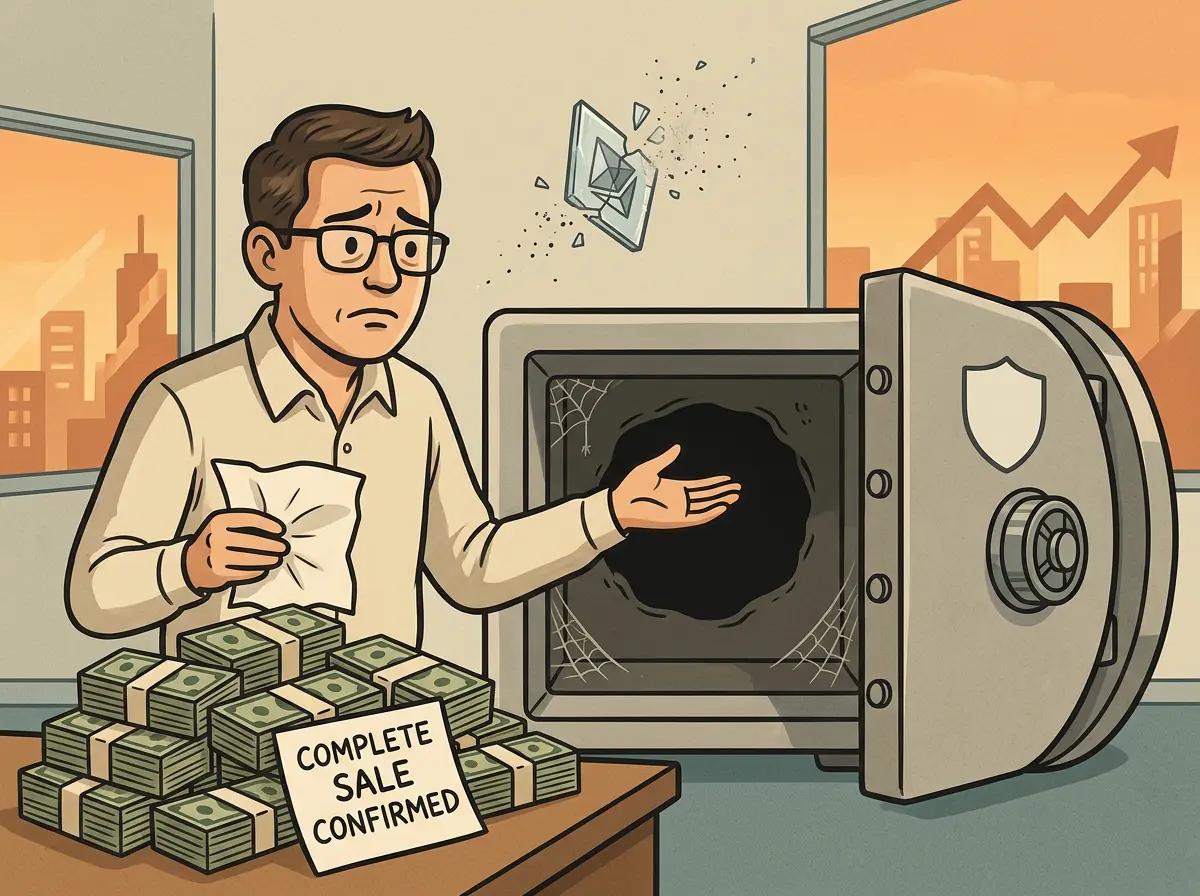
Bankless co-founder David Hoffman confirmed on May 21 on X that he has fully cleared all of his ETH holdings; Hoffman previously publicly stated that 99% of his personal wealth is held in Ethereum rather than in the traditional financial system. On-chain data also shows that roughly 60 whale addresses holding more than 10,000 ETH have emptied or consolidated their remaining balances within the past two months.
Bankless leadership transition: Hoffman takes full control, Adams confirms he is still bullish on ETH
Adams’ official statement on X confirmed that Bankless is entering its second phase: he will step back from the lead role in content direction and guest interviews, continuing to host the podcast weekly, while decisions regarding where the Bankless brand goes will be fully steered by Hoffman. This handover happened in parallel with Hoffman’s announcement that he cleared his ETH. Adams also stated clearly: “I’m still bullish on ETH, and I’m still bullish on Bankless.” The disagreement between the two co-founders on their ETH holdings stance is the biggest focus of attention from the crypto community in this statement.
Hoffman’s clearing of ETH carries special symbolic meaning: as one of Ethereum’s best-known public advocates, he has long positioned ETH as a core asset of personal wealth in his podcast and public appearances. This clearing did not come with detailed public explanation.
Binance on-chain data: the confirmed figures for exchange inflows and the futures order-taking buy/sell ratio
In May 2026, Binance recorded the following confirmed on-chain ETH figures: the daily ETH exchange inflow peak was 225,500 ETH (at the time, ETH was about 2,100 Dollars), the highest single-day level since May 2023; the 7-day moving average net inflow reached 64,900 ETH, the highest since September 2022. Rising exchange inflows usually indicate that holders are transferring tokens to places where they can be sold immediately.
In the futures market, Binance’s ETH futures order-taking buy/sell ratio (Taker Buy/Sell Ratio) this week fell to 0.91, the lowest value since September 2023; during May, the overall ratio remained continuously below 1 in the 0.96 to 0.97 range, with both the 7-day and 30-day moving averages trending down in sync. CryptoQuant’s analysis pointed out that in extreme cases, the signal significance of this ratio is stronger than in intermediate states. It suggests the seller’s dominant position in Binance’s futures market has shown persistent characteristics; it also notes that when market positions are highly concentrated in a single direction, the structural conditions for sharp upside/downside reversals in the short term increase accordingly—this is a market mechanism reality in the futures market and is unrelated to the market’s actual trajectory.
Divergence in whale data: 60 addresses clear out vs some large holders accumulate in the same period
Data from crypto analyst @alicharts on X shows that over the past two months, about 60 whale addresses holding more than 10,000 ETH have cleared out or consolidated balances, which is corroborated by the simultaneous rise in exchange inflows. @alicharts characterizes this as “institutional profit-taking and asset transfers,” not panic selling.
However, on-chain data from the same period also records institutional actions in the opposite direction. In the 96-hour window in early May 2026, the whale cohort accumulated more than 140,000 ETH in total (about $322 million), and the address cohort holding between 10,000 and 100,000 ETH saw their collective holdings rise to a historical high, exceeding 19.5 million ETH. Address cohorts holding between 1 million and 10 million ETH additionally increased holdings by about 390,000 ETH between May 1 and May 20. Both sets of data are confirmed on-chain records, pointing to a structural divergence between holder groups of different scales and behavioral patterns.
FAQs
Why was David Hoffman previously viewed as one of ETH’s most representative public supporters?
Hoffman has said in multiple public settings that 99% of his personal wealth is held in Ethereum, rather than in traditional bank systems, and he has used this to express his belief in ETH as a decentralized store-of-value instrument. As Bankless’ co-founder, over the past six years he has continuously spoken for the Ethereum ecosystem through podcasting and media content, giving his personal stance changes a market-symbolic meaning beyond that of ordinary investors.
Why are Binance ETH exchange inflows viewed as an indicator of selling pressure?
Transferring ETH from personal wallets into exchanges is typically a prerequisite step for trading or selling, because off-exchange holdings usually do not need to enter exchanges. The 225,500 ETH single-day peak and the 64,900 ETH 7-day average—both the highest levels since May 2023 and since September 2022 respectively—correspond to historical ETH drawdown ranges at both time points, which is the basis for analysts linking this metric to selling pressure. Rising inflows by themselves do not mean that selling has already occurred, but they do reflect the fact that the size of tokens entering exchanges has increased.
Is Ryan Sean Adams’ stance that he is still bullish on ETH consistent with Bankless’ brand positioning?
Bankless’ core brand narrative centers on “debanking” and the crypto ecosystem represented by Ethereum; Adams’ ongoing bullish stance on ETH continues this brand positioning. Notably, Adams’ statement (“still bullish on ETH”) and Hoffman’s clearing behavior can both be true at the same time— the former reflects a judgment about the long-term value of the asset, while the latter is a decision about personal holdings, and the two are not logically contradictory. The Bankless official account is reposting Adams’ bullish statement and has not taken an official position regarding Hoffman’s clearing.


