On June 2, 2026, U.S. equities remained steady overall. The S&P 500 and the Nasdaq Composite rose by 0.3% and 0.6%, respectively, but the space sector was hit by a fierce sell-off.
Rocket Lab (RKLB) shares fell sharply by about 14.7% on the day, closing at $122.39, down more than 16% from the 52-week high of $150.23 set in May prior. Other space-themed stocks that also suffered severe losses included Intuitive Machines (about -13%) and Redwire (about -16%).
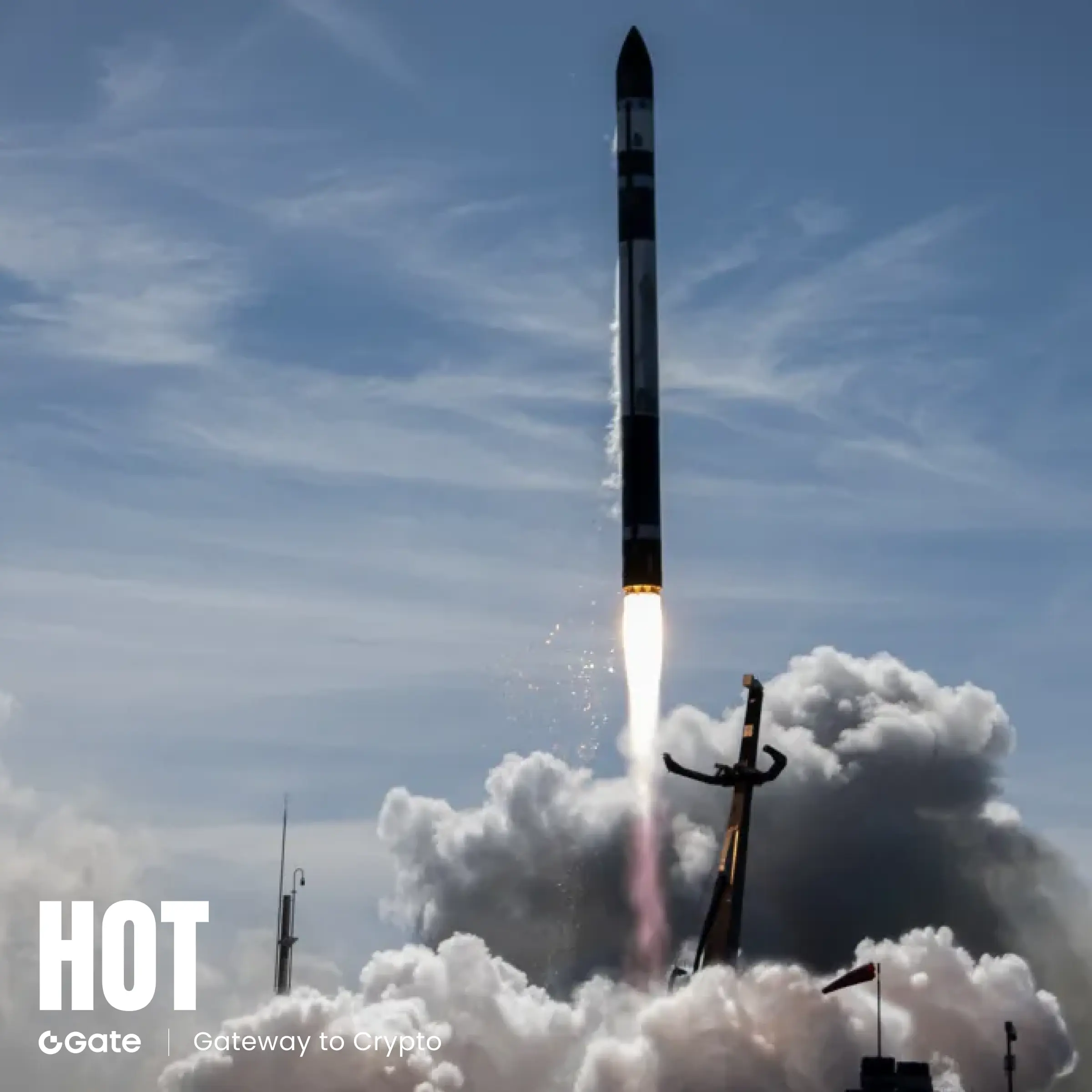
Worth noting is that the market did not release any negative operational news about RKLB that day. This pullback was not triggered by deterioration in the company’s fundamentals, but by a resonance of market sentiment caused by two external events stacking together.
Investors need to understand this: after the commercial space sector experienced a frenzied rally over the past few weeks driven by expectations for a SpaceX IPO, the valuation contradictions within the market have reached a critical point. The Blue Origin explosion accident was merely the “trigger” that set off this pressure—there was no direct link to RKLB’s own business performance.
How did the Blue Origin explosion accident ripple through the entire industry?
Around 9:00 p.m. Eastern Time on the evening of May 28, 2026, Blue Origin experienced a violent explosion during an engine static-fire test for its New Glenn heavy-lift rocket at the U.S. Space Force Base at Cape Canaveral in Florida.
The rocket, standing about 98 meters tall, turned into a massive fireball on site. The explosion’s sound traveled as far as about 24 kilometers away. The shockwave was even detected by seismographs up to 135 miles away, corresponding to a vibration intensity equivalent to a 2.5 magnitude earthquake. More importantly, the LC-36 launch facility—the only launch site currently in use for the New Glenn rocket—was severely damaged. The independent lightning-rod tower was destroyed, and the equipment used to transport and erect the rocket was also damaged.
For investors, the core impact of this event is not a technical failure by a single company, but the fact that it awakened the market’s collective memory of the high risks inherent in the space industry. The margin for error in space technology is almost zero; technical accidents often mean time costs of billions of dollars in investment and months to even more than a year. Analysts expect the New Glenn launch schedule to be delayed at least until next spring, and rebuilding the launch facilities may take a year or even longer. This further creates launch-delay risk for AST SpaceMobile, which has signed launch agreements with Blue Origin; its stock price once dropped by more than 20%.
As a chief strategist at a major brokerage firm put it, the accident “poured a bucket of cold water on a sector that was already extremely hot—almost overheated.”
Why did the “halo effect” of SpaceX’s trillion-dollar IPO expectations quickly reverse?
If the Blue Origin explosion was the fuse that sparked market panic, then expectations for SpaceX’s IPO provided the deeper structural backdrop for this sell-off.
SpaceX’s prospectus was made public to the SEC on May 20, 2026. Market-reported valuation was as high as $1.8 trillion, which could make it one of the largest IPOs in global history. It is expected to begin trading on June 12. Before that, expectations for a SpaceX IPO brought significant capital inflows to the entire space sector—shares of listed companies such as Rocket Lab and AST SpaceMobile surged rapidly over several weeks. But this rally also contained a subtle contradiction: a massive IPO of SpaceX also triggered a capital crowding-out effect. Some investors worried that large sums of money would be diverted from existing space-themed stocks to subscribe to SpaceX’s new shares.
More crucially, there was a structural shift in market sentiment. After weeks of continued gains, space-themed stocks had accumulated substantial valuation bubbles. For example, for Redwire, the enterprise value-to-sales ratio expanded from 3.8x at the start of the year to 8.8x. The Blue Origin explosion accident occurred precisely at this fragile point, becoming a signal for profit-taking. Procure Space ETF fell by about 9% over two trading days; its gains earlier in the year had once been close to 60%.
The tight time linkage between the two events created powerful combined force: Blue Origin’s technical accident caused investors to reassess the fundamental risk characteristics of the space industry, while the SpaceX IPO news led the market to re-evaluate the valuation center of gravity and capital allocation patterns for space assets.
Why does RKLB’s fundamentals still form a differentiated value anchor?
During this sell-off across the entire sector, RKLB’s decline was not due to any specific problems in company performance or business progress. Instead, it was a spillover of risk sentiment after investors’ confidence in the entire industry was hit.
From an operating-data perspective, RKLB’s fundamentals did not worsen due to external events. As of Q1 2026, RKLB’s backlog contract revenue reached about $2.2 billion, up 108% year over year. The number of backlog launch missions in the schedule exceeded 70. The company’s revenue guidance for Q2 2026 had a top-end of up to $240 million, corresponding to a year-over-year growth rate of up to 66%. These figures show that RKLB’s core launch business is still expanding on a sustained trajectory.
On the product and technology front, RKLB is at a key inflection point. The company’s medium-lift rocket Neutron is scheduled for its first flight in Q4 2026. In May this year, RKLB also announced it had secured a multi-launch agreement covering five Neutron launches and three Electron launches. This progress indicates that the market sees real commercial demand for its next-generation rocket.
Unlike some space companies that are still mostly at the concept stage, RKLB has already built end-to-end space mission service capabilities: it manufactures the Electron and photon satellite platform autonomously, and has successfully put more than 100 satellites into orbit across multiple areas, including national security, scientific research, and commercial communications. This operating model makes it, to a certain extent, different from peers that rely on a single contract or are still in R&D and validation stages.
It is worth acknowledging that the valuation pullback itself is reasonable. As of June 2, 2026, RKLB’s cumulative gain for the year still exceeded 65%, even though it had retreated by about 16% from the May peak. After the sector’s rapid rally over several weeks, the risk re-pricing process caused by external events is essentially the market’s natural adjustment toward a new price consensus.
Reshaping the valuation framework in commercial space: shifting from narrative-driven to order-validated
The deeper logic of this sell-off goes beyond a single event. It reflects a systemic restructuring of how capital values the commercial space sector.
After a surge of incremental capital entered the market driven by expectations for a SpaceX IPO, the market focus is shifting from grand industry narratives to the order visibility and earnings certainty of specific companies. The valuation framework for the space sector is undergoing a logic switch—from discounting far-dated expectations to realizing near-term performance. The Blue Origin accident accelerated this shift by forcing investors to reconsider whether the logic that previously supported high valuations still holds when industry risks are real and may persist.
From an industry chain structure perspective, today’s commercial space launch landscape is highly concentrated. SpaceX, leveraging the mature recovery and reusability technology of Falcon 9, has captured more than 80% of the global commercial launch market share and is fully pushing forward with subsequent Starship tests. Rocket Lab and Blue Origin are in the second tier, and both are in a validation window for reusability technology. This means that for second-tier companies, every technical setback by a competitor will trigger the market to re-evaluate the overall technical progress of the second tier—even if such concern does not necessarily reflect the specific R&D progress of the parties involved.
The larger uncertainty is that NASA’s Moon program—Artemis—highly depends on the technical reliability of commercial space partners. The New Glenn explosion directly caused NASA to temporarily lose a key partner for the lunar base plan, which may push NASA to rely more heavily on SpaceX’s Starship, or lead to an overall delay of related plans. This is a structural impact on major institutional cooperation projects, and its transmission effects will gradually become apparent.
Why did risk pricing surface rapidly amid the accident?
The high-risk nature of space technology was demonstrated in a very direct way in this event. Investors reacted to a Blue Origin accident with an unusually strong magnitude (there is no direct business link between RKLB and Blue Origin). The fundamental reason is that the space industry’s “margin for error” is extremely low.
The time cost of a technical failure is extremely high. The only launch site for New Glenn was destroyed. Analysts believe rebuilding may take a year or even longer. Looking at historical precedents: in 2016, a Falcon 9 launch pad test anomaly at SpaceX severely damaged Launch Complex 40, and repairs took more than a year. This kind of cycle means a single accident is enough to delay a company’s launch plan by at least a full commercial cycle.
For commercial space companies that rely on continuous and reliable launch capability to deliver on orders, time itself is the most expensive cost. Orders by themselves cannot guarantee revenue conversion; failure to meet commitments on schedule can lead to contract reallocation and customers turning to other suppliers.
This reality has been preliminarily validated in this event. New Glenn’s original plan was to launch 48 satellites on June 4 for Amazon’s low-Earth-orbit satellite program, but the mission is now postponed indefinitely. For AST SpaceMobile, which holds launch contracts with Blue Origin, the project also faces delay risk.
Investors are re-pricing a key variable: in commercial space, a company’s success depends not only on technology and orders, but also on operational ability to effectively avoid major technical accidents. When the risk premium across the whole industry is re-evaluated at once, even RKLB—which has no fundamental issues—cannot be fully separated from the sector’s valuation center-of-gravity adjustment.
The long-term meaning of short-term market clearing: RKLB’s industry positioning and potential future paths
After the chaos of broad declines across the sector, it is necessary to return to RKLB’s position within the overall competitive landscape of commercial space.
A signal to pay attention to is that after the Blue Origin explosion occurred, SpaceX CEO Elon Musk did not take a bystander stance; instead, he expressed condolences to Blue Origin. Behind this restraint is clear industry logic: risk in commercial space is systemic. Today’s bystander could very well become tomorrow’s party directly affected. SpaceX itself also had a launch-pad explosion in 2016 that forced it to suspend operations for up to 15 months.
From RKLB’s specific positioning, the company has relatively differentiated competitive barriers in small and medium launch markets. Electron rockets have built a stable customer base and reusability capability in the small commercial launch field. Neutron is scheduled for its first flight in Q4 2026 as planned, which will help RKLB enter the medium-lift launch capability market and expand into broader commercial opportunities, including constellation networking and NASA-related missions.
The long-term demand side of the industry remains in growth. Low-Earth-orbit satellite internet, direct-to-cell satellites, and military constellation networking for countries all constitute structural demand in the commercial launch market. In mid-2026, the first dense satellite launch window of the year is expected to arrive.
From a valuation perspective, the downward shift in the sector’s valuation center of gravity in the short term may be a rational correction of an overly fast rally earlier. RKLB’s prior valuation reflected the market’s combined expectations that Neutron would succeed at its first launch, backlog orders would be delivered smoothly, and that the overall market space for commercial space would keep expanding. With the risk premium rising due to external events, the market will evaluate the certainty of technology progress more cautiously.
FAQ
What business relationship is there between the Blue Origin rocket explosion and RKLB?
There is no direct business relationship. RKLB’s rocket launch business is independent of Blue Origin’s projects, with no supply-chain overlap or mission substitution relationship. RKLB’s decline was mainly driven by a shock to overall sector sentiment and a shift in the sector’s valuation center of gravity.
What role did the SpaceX IPO play in RKLB’s decline?
The trillion-dollar scale IPO expectations for SpaceX initially lifted the valuation level of the entire space sector, but they also created a capital crowding-out effect and valuation pressure. When the Blue Origin accident occurred, these fragile factors were released all at once, amplifying the magnitude of the decline.
How is RKLB’s Neutron rocket progressing?
Under the latest plan, Neutron is expected to make its first flight in Q4 2026. In May this year, RKLB announced it had secured a multi-launch agreement covering five Neutron launches and three Electron launches, showing that the market has substantive commercial demand for Neutron.
How does RKLB’s backlog look?
As of Q1 2026, RKLB’s backlog contract revenue was about $2.2 billion, up 108% year over year, with more than 70 scheduled launch missions. The Q2 2026 revenue guidance had a top-end of up to $240 million, corresponding to a year-over-year growth rate of up to 66%.
Is this space-sector sell-off a one-time adjustment or a trend shift?
It is still difficult to determine. The industry faces structural issues—high technical barriers, high capital consumption, and the irreversibility of launch time windows—that have not changed due to this event. But the market’s valuation model for commercial space companies may be shifting from being driven by grand narratives toward being driven by order visibility and the ability to realize earnings.


