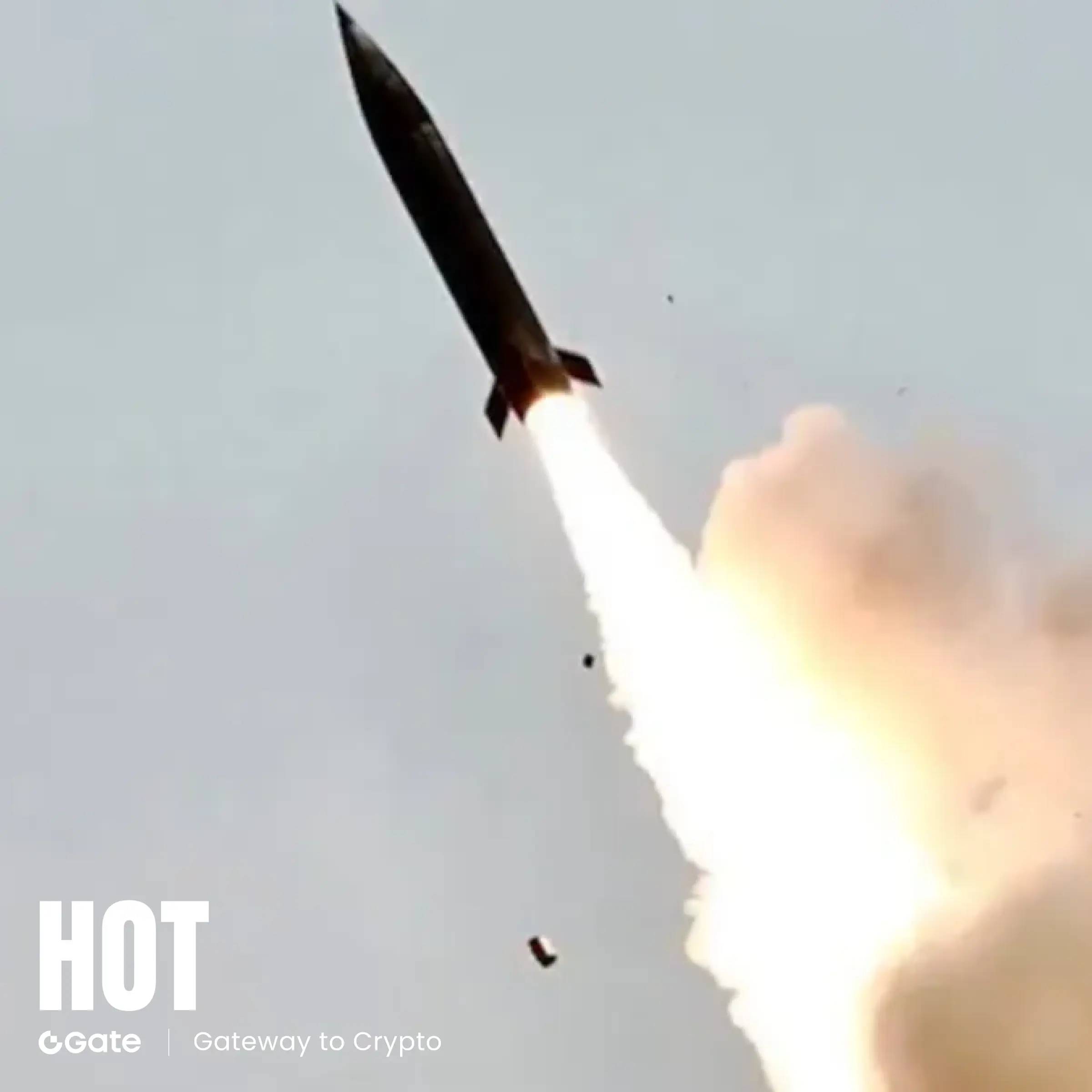
At around 2:00 a.m. Beijing time on June 8, 2026, Iran fired multiple rounds of missiles at Israel. This was Iran’s first direct military strike against Israel since the ceasefire on April 8. The immediate trigger for this attack was the Israeli military’s escalation of its military actions against Lebanon—especially the renewed airstrikes on the southern suburbs of Beirut. The Islamic Revolutionary Guard Corps defined this operation as a “direct response” to Israel’s cross-border attack.
Unlike the early stage of the April conflict, Iran’s counterstrike was more rapid this time—just a few hours after Israel’s airstrike on Beirut. Syria and Iraq then announced the closure of their airspace. The Israeli military claimed it intercepted at least 10 incoming missiles. Judging by the number of missiles and interception effectiveness, the symbolic meaning of this strike outweighed actual damage. However, its political signal was extremely clear: the ceasefire framework in the Middle East is extremely fragile, and any small-scale escalation by either side may be interpreted by the other as a signal of full-scale confrontation.
Trump’s “firefighting” intent is clear—how will the U.S.-Iran negotiations sway the situation?
U.S. President Trump moved quickly after the attack. According to U.S. media reports, Trump told Iran: “Your missiles have already been launched, that’s enough. Now you need to get back to the negotiating table and reach an agreement.” He also said he would call Israeli Prime Minister Benjamin Netanyahu right away to tell him “not to retaliate.” In an interview, Trump even said bluntly that Netanyahu “has no choice but to accept any agreement reached through negotiations between the U.S. and Iran.”
The core concern behind this stance is not merely regional stability, but the U.S.-Iran negotiations that Trump himself is driving. As he disclosed, before the attack, the U.S. and Iran were “very close” to reaching an agreement, and an original estimate was that it could be signed between June 8 and June 10. Israel’s airstrike on Beirut was not coordinated with the U.S., which displeased Trump. Therefore, Trump’s “firefighting” logic is to prioritize an agreement and suppress Israel’s impulse to retaliate. This strategy may help prevent a spiraling escalation in the short term, but it could widen strategic differences between the U.S. and Israel over the long term.
Traditional safe-haven assets diverge: oil jumps, why do gold and silver fall instead?
After a geopolitical conflict erupted, traditional safe-haven assets did not move in a uniformly consistent way. Gate TradFi Market data show WTI crude jumped 3% to $95, reflecting the market’s real concern about a disruption in Middle Eastern oil supply—specifically, a disruption in Strait of Hormuz oil supplies. The Strait of Hormuz is a key passage for about 20% of global oil transportation; any direct conflict would quickly be priced in at the spot market.
However, gold fell to around $4,300 and silver dropped to $67.4. This trend appears to contradict the traditional view that “geopolitical risk boosts gold,” but it can be explained from three angles:
- Expected real interest rates. Recent U.S. economic data have shown resilience. Market expectations of the Federal Reserve maintaining high rates have strengthened, increasing the opportunity cost of holding gold.
- Gains already priced in. In the months prior, gold’s rally had already incorporated a large amount of geopolitical premium. When the conflict actually broke out but did not cause large-scale oil supply to be cut, the market saw “buy the expectation, sell the fact” profit-taking.
- Liquidity squeeze effect. Some investors may need to sell gold to cover margin demands for other assets (such as Korean equities or derivatives positions). Silver’s industrial attributes can make it perform worse when risk appetite contracts.
This divergence suggests the market’s current pricing logic is not simply “safe-haven versus risk,” but the combined result of multiple factors (rate expectations, prior overcrowding, and liquidity conditions).
Tech-sector tailwinds fail—why NVIDIA’s cooperation announcement can’t lift the market
Against the backdrop of geopolitical risk hovering over the market, a piece of news aimed at offsetting pressure emerged in the tech sector. Early Monday, NVIDIA and SK Hynix announced a multi-year technology partnership. The two sides will jointly develop next-generation memory for global AI factory construction. The timing of the announcement clearly aimed to stabilize sentiment in semiconductors.
However, the market didn’t buy it. The announcement lacked specific numeric details and hard commitments, and it failed to ease the market’s fundamental doubts about AI storage supply chains and earnings expectations. Combined with recent concerns about “Broadcom AI earnings falling short of expectations” and “NVIDIA Rubin cutting memory,” a single cooperation headline lacks convincing power in the face of systemic risk.
Korea’s stock-market structural fragility is concentratedly exposed—foreign outflows and high leverage trigger a circuit breaker
Korea’s KOSPI index fell 8% at the open, triggering a circuit breaker. Samsung Electronics and SK Hynix both dropped 10%. This plunge was not entirely triggered by a geopolitical event; rather, structural risks accumulated over the long run were released in a concentrated manner. Data show that KOSPI hit a historical high last week, yet foreign investors net sold more than $10 billion worth of component shares within a week. The won-to-dollar exchange rate also touched the lowest level since March 2009.
More importantly, there was an imbalance in index weight: Samsung Electronics and SK Hynix account for as much as 54% of KOSPI. The index’s rise was driven by a small number of high-weight stocks, not broad-based prosperity. At the same time, retail margin balances reached a record level, while cash buffers shrank quickly. A researcher at Korea Investment & Securities warned that the market faces a “Black Monday” risk where “currency instability, a repricing of interest rates, and profit-taking in the semiconductor industry happen simultaneously.” The severe volatility in Korea’s stock market has become a snapshot of the broader global risk appetite contraction.
Crypto trades with its own momentum—pricing logic behind Bitcoin’s strong rebound
Amid the aforementioned divergence in global risk assets, the crypto market has shown an independent trajectory. According to Gate market data, as of June 8, 2026, Bitcoin rebounded strongly by more than 2% this morning and briefly touched $64,000; it has now eased slightly to around $63,000. ETH rose as high as about $1,720 this morning and is currently down slightly to around $1,680.
This rebound can be broken down in three ways:
- First, the prior adjustment was sufficient. During the geopolitical conflict cycle from April to May, Bitcoin repeatedly showed a “V-shaped” pattern of first falling and then rising. Before this round of conflict erupted, the crypto market had already been adjusting for three straight weeks, and long positions had been effectively cleaned out.
- Second, the way the market prices “information asymmetry” changed. After Iran launched missiles, the market quickly priced in Trump’s “firefighting” expectations, producing a rebound similar to “bearish news becomes priced in.”
- Third, the short-term correlation between crypto assets and tech stocks has declined. Since 2026, Bitcoin’s 90-day correlation with the Nasdaq has fallen noticeably, making it, in the eyes of some funds, an independent “macroeconomic hedge” tool.
The core contradiction in current global risk-asset pricing: geopolitical premium, interest-rate expectations, and structural leverage
Putting the above factors together, the market is currently in a transition stage where multiple contradictions intertwine. Geopolitical risk is real, but major powers are trying to keep the conflict within a controllable range. Oil prices jumped due to supply concerns, while gold and silver were pressured by interest-rate expectations and profit-taking—showing that the traditional “safe-haven” paradigm is being replaced by a more complex multi-factor model.
The tech sector fundamentals still have support, but elevated valuations have already priced in growth expectations. The circuit breaker exposure in Korea’s stock market reflects structural fragility driven by leverage and concentrated weights. Crypto assets, meanwhile, are finding their own position among these variables. They do not fully follow inflation logic of commodities like oil, nor do they simply mirror gold’s interest-rate sensitivity path. Instead, crypto shows a highly context-dependent pricing profile.
Which variables will dominate the direction of crypto and risk assets?
In the coming weeks, the following variables are worth continuous tracking. On the macro side, the Federal Reserve’s policy path, the magnitude of crude oil price fluctuations, and the overall valuation level of global risk assets form the background conditions for how the crypto market behaves. On the geopolitical side, whether Israel takes retaliatory action against Iran will determine whether the conflict cools off or escalates further. If Israel stays restrained under Trump’s pressure, short-term sentiment repair may continue. If there is an unexpected strike, the market will face sharp volatility again.
On the market structure side, changes in crypto options implied volatility, funding rates, and stablecoin circulation reflect the intensity of internal fund competition. Crypto asset pricing is shifting from a single “risk appetite indicator” to a multi-dimensional “macro-sensitive alternative asset.” This means that when analyzing the crypto market, you cannot simply apply the traditional safe-haven asset framework, nor can you rely entirely on the growth narrative of tech stocks.
Frequently Asked Questions (FAQ)
Why does the Iran-Israel conflict push up oil, but gold falls?
Oil rising directly reflects market concern about a disruption in supply through the Strait of Hormuz, which is immediate spot-market pricing. Gold falling is mainly driven by U.S. interest-rate expectations. Recent economic data have increased the probability that the Federal Reserve will maintain high rates, raising the cost of holding gold. At the same time, gold had already priced in a large amount of geopolitical premium earlier, so after the conflict actually occurred without large-scale oil supply cuts, “buy the expectation, sell the fact” profit-taking appeared.
Does this round of Bitcoin’s rebound mean it has become a safe-haven asset?
Not completely. Bitcoin’s rebound mainly reflects technical support from a sufficiently liquidated prior long positioning, the exhaustion of bearish power, and the market pricing in expectations of Trump’s “firefighting” in advance. Bitcoin’s short-term correlation with gold and oil is not stable, so labeling it simply as a “safe-haven asset” or a “risk asset” is inaccurate. A more reasonable interpretation is that Bitcoin is forming an independent, multi-factor-driven pricing logic.
Can Trump’s “firefighting” posture truly prevent escalation?
Trump’s core motivation is to preserve the U.S.-Iran negotiation outcome, not merely to maintain regional stability. In his remarks, he clearly asked Israel not to retaliate, but there is tension between Israel’s security needs and Trump’s priority-on-agreement logic. The probability of a large-scale escalation is low in the short term, but small-scale retaliation or proxy conflicts are still possible.
What indicators should the crypto market watch next?
You may focus on changes in the correlation between Bitcoin and the Nasdaq, the crypto options market’s implied volatility and funding rates, changes in stablecoin issuance and on-chain activity, and the inflation and interest-rate expectation paths of major economies. Also track developments of geopolitical events in real time (especially whether Israel retaliates).


