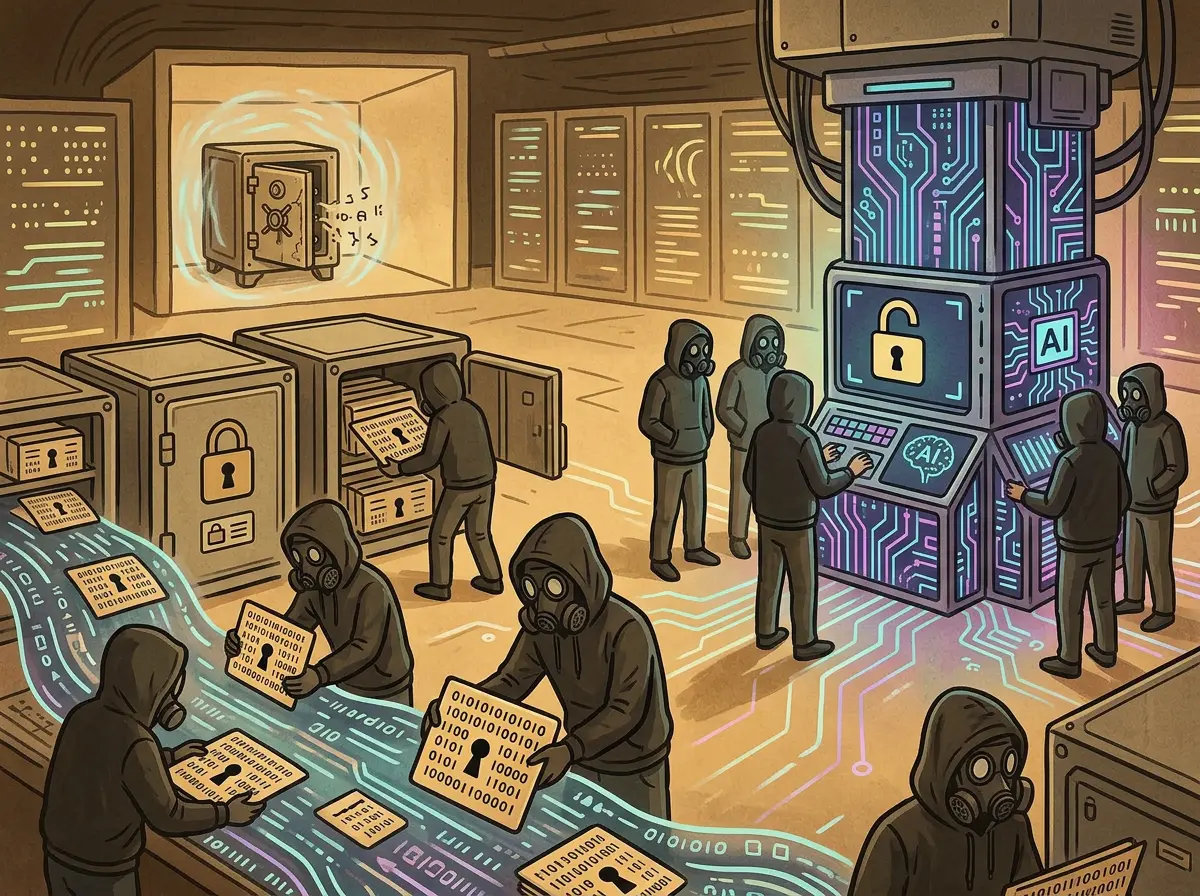
CoinDesk reported on May 25 that Project Eleven CEO Alex Pruden and NEAR Protocol co-founder and former Google AI researcher Illia Polosukhin, in interviews, both confirmed that AI is accelerating the development of quantum computing by optimizing quantum error correction algorithms, warning that “harvest now, decrypt later” attacks may already be underway.
Technology mechanisms for AI to accelerate quantum computing: confirmed research progress
Pruden confirmed that researchers have used machine learning systems to optimize quantum error correction, which is one of the biggest engineering bottlenecks in quantum computing R&D, and AI’s involvement can shorten the time required to reach cryptographically meaningful quantum computers (CRQC). Polosukhin, citing his own experience at Google in 2016, confirmed that machine learning systems were already being used to discover new materials; he said, “Next-generation quantum computers may be built from this generation of AI and quantum computing technologies, and they mutually reinforce each other.”
The threat of AI to cryptographic security is not limited to accelerating quantum computing. Pruden confirmed that AI models have become increasingly effective at identifying software vulnerabilities and flaws in cryptographic implementations, “and they are also increasingly able to break cryptographic technologies themselves.” On the defense side, developers are also using AI for code auditing, testing, and formal verification—Pruden said, “AI can help with formal verification for post-quantum systems and, in theory, improve security.”
“Harvest Now, Decrypt Later” is the immediate threat highlighted by researchers: governments and sophisticated hacker organizations have begun large-scale collection of encrypted network traffic, waiting for future quantum computers to decrypt it. Polosukhin said, “If I knew that quantum computers would show up in a few years, I would start trying to capture all possible data. This situation is very likely already beginning.”
Post-quantum migration plans for major blockchains: confirmed timelines and technical approaches
NEAR Protocol: Confirmed integration of FIPS-204 (ML-DSA, NIST-approved standard), to be launched in Q2 2026; v2.13 upgrade is expected to go live in June 2026; NEAR’s architecture adopts a rotatable access key design, so that for each user, post-quantum migration requires only one on-chain transaction; plans to extend quantum-secure chain signatures to more than 35 external chains
Ethereum: After the establishment of a post-quantum security initiative in January 2026; goal is to complete initial quantum upgrades and full post-quantum protection by 2029; Vitalik Buterin’s “Ship of Theseus” approach: bundle post-quantum upgrades with performance improvements; EIP-8141 proposal: allow accounts to independently switch post-quantum signature schemes; the consensus layer plans to use XMSS multi-signatures and the Poseidon2 hash function
BNB Smart Chain (BSC): Feasibility tests for ML-DSA-44 and pqSTARK aggregation have been completed
Industry-wide standardization: NIST post-quantum standards (ML-DSA / Falcon) are established; US/EU regulators require critical infrastructure to complete post-quantum algorithm migration by 2030; Zcash, Solana, and Ripple are also researching or implementing post-quantum migration strategies
FAQ
Google revises its estimate of the number of quantum bits needed to break Ethereum’s elliptic curve encryption to 1,200—what does this number mean?
1,200 is the estimated number of “logical qubits,” which are the basic computational unit of quantum computing. In physical implementations, each logical qubit requires hundreds to thousands of physical qubits to realize fault-tolerant computation; therefore, although the number of physical qubits in the most advanced quantum computers (such as Google’s Willow) has reached a certain scale, the number of logical qubits is still far below the threshold. The 1,200 estimate is lower than the 4,000+ logical qubits figure previously widely cited across the industry, which implies that cryptographically meaningful quantum computers may arrive earlier than previously expected—one of the direct drivers behind Ethereum’s accelerated roadmap.
What is the immediate impact of a “harvest now, decrypt later” attack on crypto asset wallets?
The target of a “harvest now, decrypt later” attack is addresses whose public keys have already been published on-chain—active addresses that have initiated transactions. Attackers can collect this publicly available public-key data, and when quantum computers reach sufficient computational power, derive the private keys from the public keys using Shor’s algorithm. For “silent addresses” that have never broadcast transactions (only receiving unspent UTXOs), the public keys have not been published on-chain, so the threat level is relatively lower. Glassnode’s prior research confirmed that in Bitcoin’s circulating supply, about 30.2% of BTC (6.04 million) already has public-key exposure—this is exactly the kind of address facing potential “harvest now, decrypt later” risk.
How do technical limitations of post-quantum cryptographic systems being “larger and slower” affect real blockchain deployment?
Polosukhin confirmed that, for now, NIST-standard post-quantum cryptographic schemes (such as ML-DSA) have signature and public-key sizes far larger than existing ECDSA schemes. For example, in ML-DSA-65, the signature size is about 100 times larger than ECDSA, which directly leads to more data per transaction, thereby reducing the number of transactions that each block can accommodate and increasing storage and bandwidth burdens on nodes. BNB Smart Chain testing has confirmed that ML-DSA is technically feasible, but it comes with increased transaction and block sizes. NEAR’s rotatable key architecture design alleviates this problem to some extent, but the post-quantum migration across the whole industry still needs to strike a balance between security upgrades and on-chain performance.


