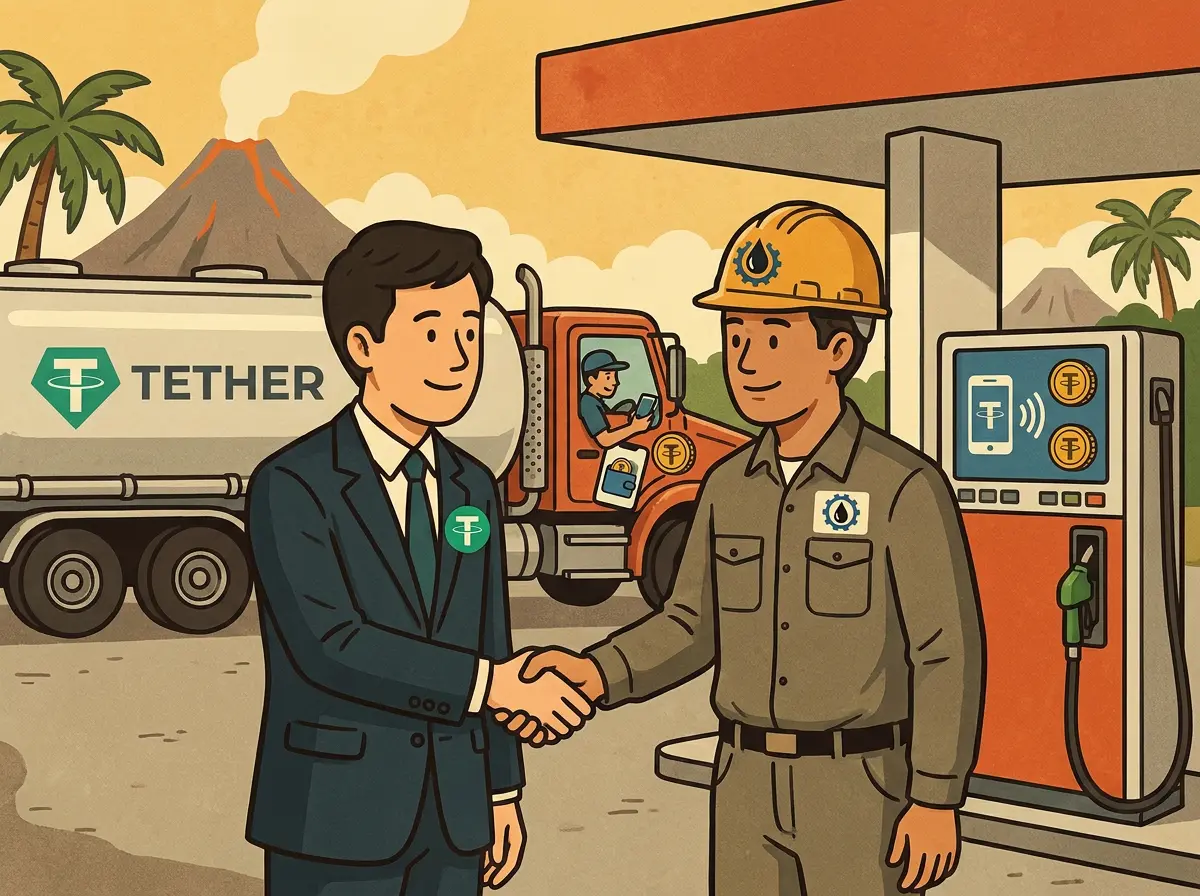
Bloomberg reported on May 19 that Trafigura Group, a multinational commodities trader, is in discussions with USDT issuer Tether about a pilot program. The plan is to use USDT to pay for fuel and snacks at Puma Energy gas stations in El Salvador. A Puma Energy spokesperson confirmed that the discussions are still in an exploratory technical stage and require approval from regulatory authorities.
Pilot mechanism: confirmed payment structure and prerequisites
Payment flow (confirmed): El Salvador consumers pay with USDT for fuel or snacks → an intermediary converts the USDT into Dollars → Trafigura receives the Dollars.
Prerequisites: The pilot must be approved by regulatory authorities; insiders confirmed that the discussions are still in an early stage.
Puma Energy’s official statement: “We will periodically explore new payment methods to improve customer convenience and meet constantly changing payment preferences”; discussions about El Salvador’s plan are “still in an exploratory technical stage.”
Tether moving into commodities: confirmed business and financial background
Commodity lending (confirmed): On November 2025, Tether CEO Paolo Ardoino confirmed that Tether had extended a $1.5 billion loan to a commodities trader and said it plans to “significantly” expand this business. Tether previously said it provided financing for an oil transaction, but did not disclose the counterpart name or the payment currency.
Asset allocation (confirmed): Tether holds about $20 billion in gold and has invested in multiple mining companies; it is also expanding into various areas, from brain implants to sports teams.
Financial figures (confirmed): Based on CoinGecko data, the USDT marketcap increased 38% to about $190 billion; Tether is expected to record about $10 billion in profit in 2025; global stablecoin total transaction volume grew 72% to $33 trillion in 2025 (Artemis Analytics data).
Valuation plan (confirmed): Bloomberg reported in March that Tether had discussed raising funds at an approximately $500 billion valuation, but the plan has been put on hold, pending the results of its first comprehensive financial audit.
FAQ
Why was the pilot chosen for El Salvador instead of other countries?
El Salvador is one of the most important crypto-policy-friendly countries in Latin America, with a relatively open regulatory environment, and it is also a key hub for the crypto industry. Insiders noted that rising oil prices have worsened a shortage of Dollars in some countries, and stablecoin payments can complete transactions without relying on traditional Dollar remittance channels; El Salvador was therefore selected as a suitable pilot scenario.
After consumers pay with USDT, how does Trafigura receive Dollars?
Under the confirmed mechanism, consumers pay with USDT at the gas station, and the intermediary is responsible for converting the USDT into Dollars, then transferring the Dollars to Trafigura. Trafigura itself does not directly accept USDT; instead, it receives payments in the form of Dollars through this conversion mechanism.
Why is this pilot referred to as the “known first case” of a stablecoin commodities collaboration?
Tether previously mentioned providing financing for an oil transaction, but did not disclose whether USDT or any specific details were used. This El Salvador gas-station pilot being discussed with Trafigura is the confirmed first cooperation case between Tether and a major commodities trader involving a concrete stablecoin application scenario (consumer payments).
Disclaimer: The information on this page may come from third-party sources and is for reference only. It does not represent the views or opinions of Gate and does not constitute any financial, investment, or legal advice. Virtual asset trading involves high risk. Please do not rely solely on the information on this page when making decisions. For details, see the
Disclaimer.


