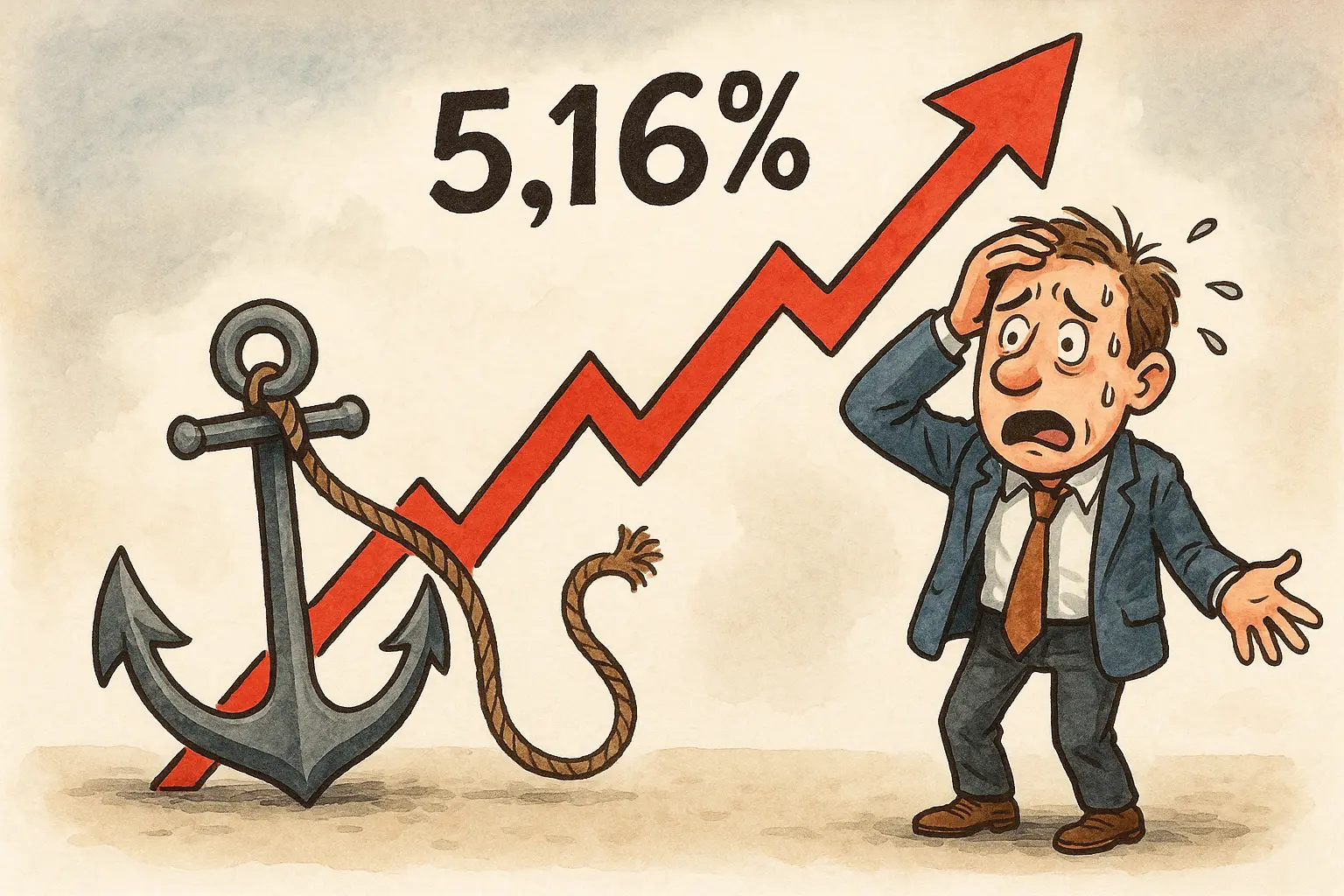
The U.S. 30-year Treasury yield briefly rose by 4 bps to 5.16% on May 18, its highest level since October 2023; the 10-year yield touched 4.63% and the 2-year yield touched 4.10%. Guneet Dhingra, head of U.S. rates strategy at BNP Paribas, confirmed that there is no “anchor point” above 5%.
Confirmed Treasury yield levels across maturities
30-year: 5.16% (+4 bps), highest since October 2023
10-year: 4.63%, highest since February 2025
2-year: 4.10%, highest since February 2025
Trigger factors (confirmed): April CPI year-over-year growth of 3.8%; April PPI year-over-year growth of 6% (double the expectations); continued Iran-related issues keeping oil prices on an uptrend; the FED keeps rates unchanged, and rate-cut expectations have been pushed back to 2027.
Japan 30-year bond at 4.2%: breaks the 1999 record and triggers cross-selling pressure worldwide
Japan’s 30-year government bond yield surged 20 bps in a single day to 4.2%, setting a record high since issuance in 1999 and one of the largest one-day increases. U.S.-Japan long-end yields rose in tandem to peak, reflecting that the market’s pricing for inflation is shifting from “temporary” to “structural.”
Japan is one of the world’s largest holders of U.S. Treasuries. As Japan’s bond yields rise, the relative attractiveness of Japanese institutions buying U.S. Treasuries declines, creating cross-selling pressure between the U.S. and Japan bond markets and further pushing up global long-end yields. After the Bank of Japan ended its negative interest rate policy last year, it gradually raised rates; however, the 30-year yield’s 20-bp single-day jump still exceeded market expectations.
Trading framework confirmed by BNP Paribas
Guneet Dhingra, head of U.S. rates strategy at BNP Paribas, confirmed the following:
Direct quote: “There are no anchor points above 5%.”
Area to watch: The 30-year U.S. Treasury yield range of 5.25% to 5.5% is the next trading band Dhingra highlighted.
Bond traders have long viewed the 5% yield level on the 30-year as a bargain line, believing institutional buying would step in there. But with yields already breaking above 5% and continuing to climb, this assumption has been overturned by market price action.
Common questions
After the U.S. 30-year Treasury yield breaks above 5%, what is the next level Dhingra recommends watching?
BNP Paribas’s Guneet Dhingra confirmed that there is “no anchor point” above 5%, and recommended focusing on the 5.25% to 5.5% trading range, implying that selling pressure may persist until reaching that range.
How did Japan’s 30-year bond yield setting a new high in 1999 affect the U.S. Treasury market?
Japan is one of the world’s largest holders of U.S. Treasuries. After Japan’s bond yields rose, the relative attractiveness for Japanese institutions to buy U.S. Treasuries fell, creating an inverse “cross-selling” pressure for U.S. Treasuries and further pushing up U.S. long-end Treasury yields.
When are current FED rate-cut expectations?
Based on existing reports, the market has pushed back its FED rate-cut expectations to 2027. April inflation data (CPI 3.8%, PPI 6%) further reduced the likelihood of near-term rate cuts, and the FED is currently keeping rates unchanged.
Disclaimer: The information on this page may come from third-party sources and is for reference only. It does not represent the views or opinions of Gate and does not constitute any financial, investment, or legal advice. Virtual asset trading involves high risk. Please do not rely solely on the information on this page when making decisions. For details, see the
Disclaimer.


