#USPPIHits2.5YearHigh
#USPPIHits2.5YearHigh
Macro Shock: Inflation Is No Longer a Narrative — It’s a Supply Chain Reality
Markets don’t move on opinions.
They move on pressure building inside the system.
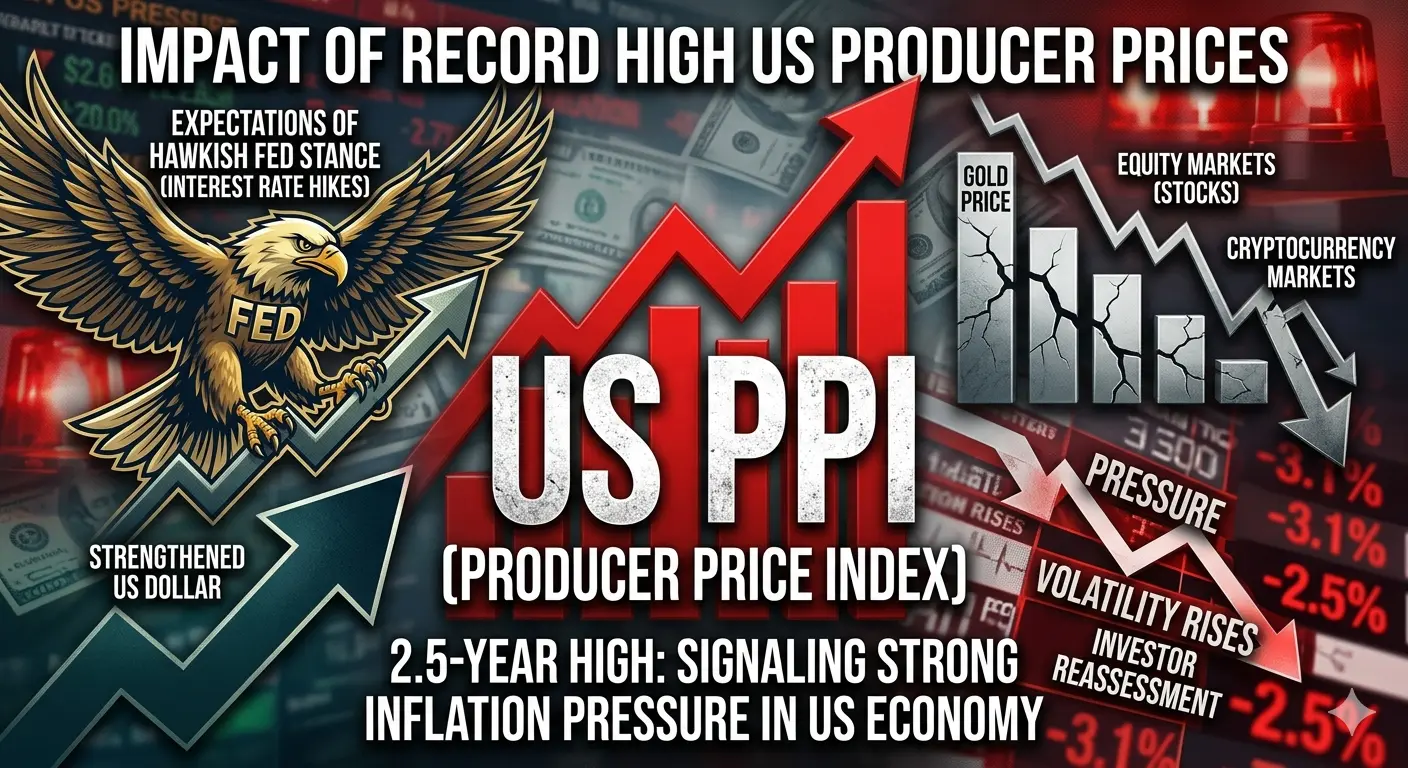
The latest U.S. Producer Price Index (PPI) just confirmed that pressure is rising again.
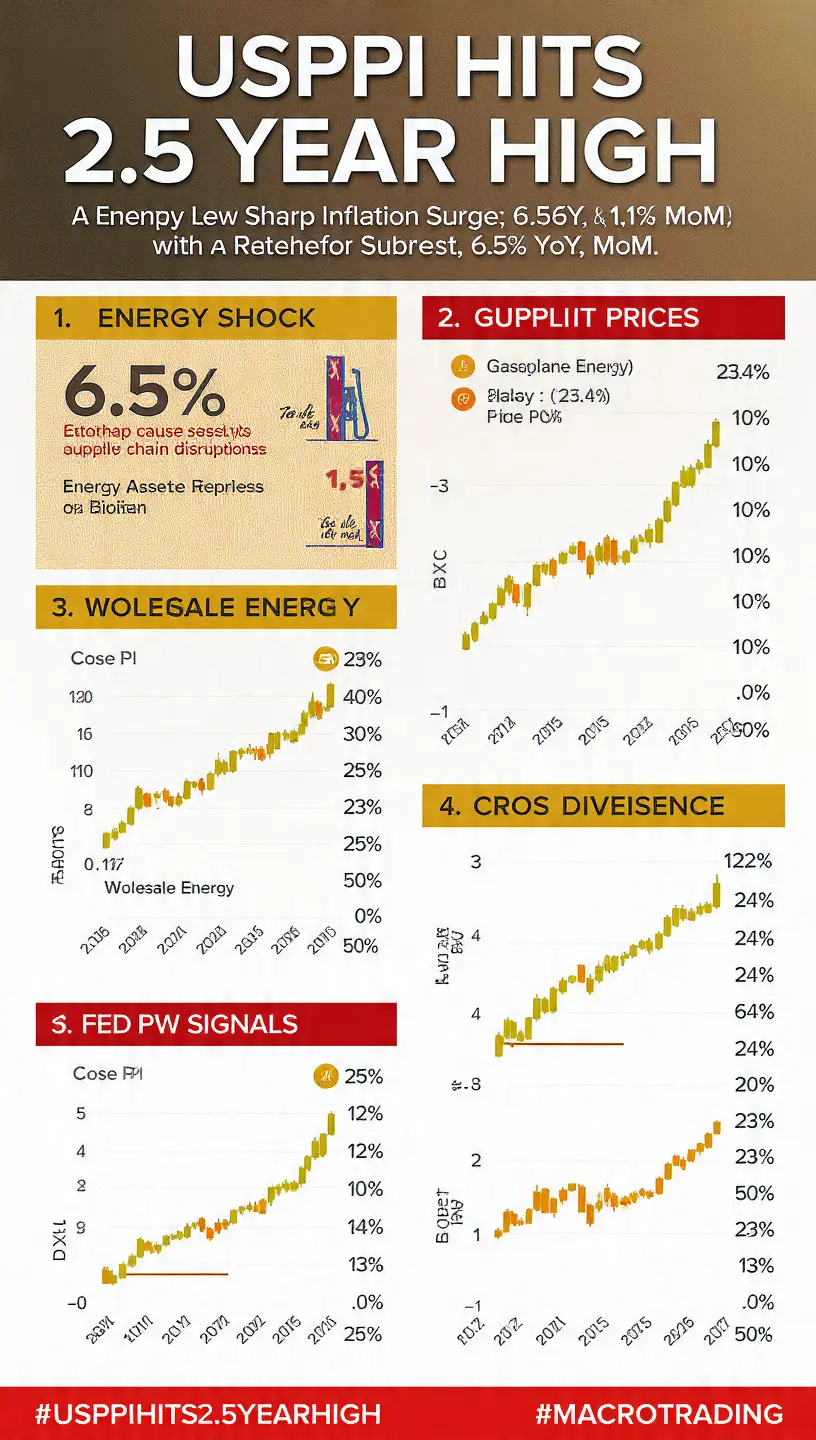
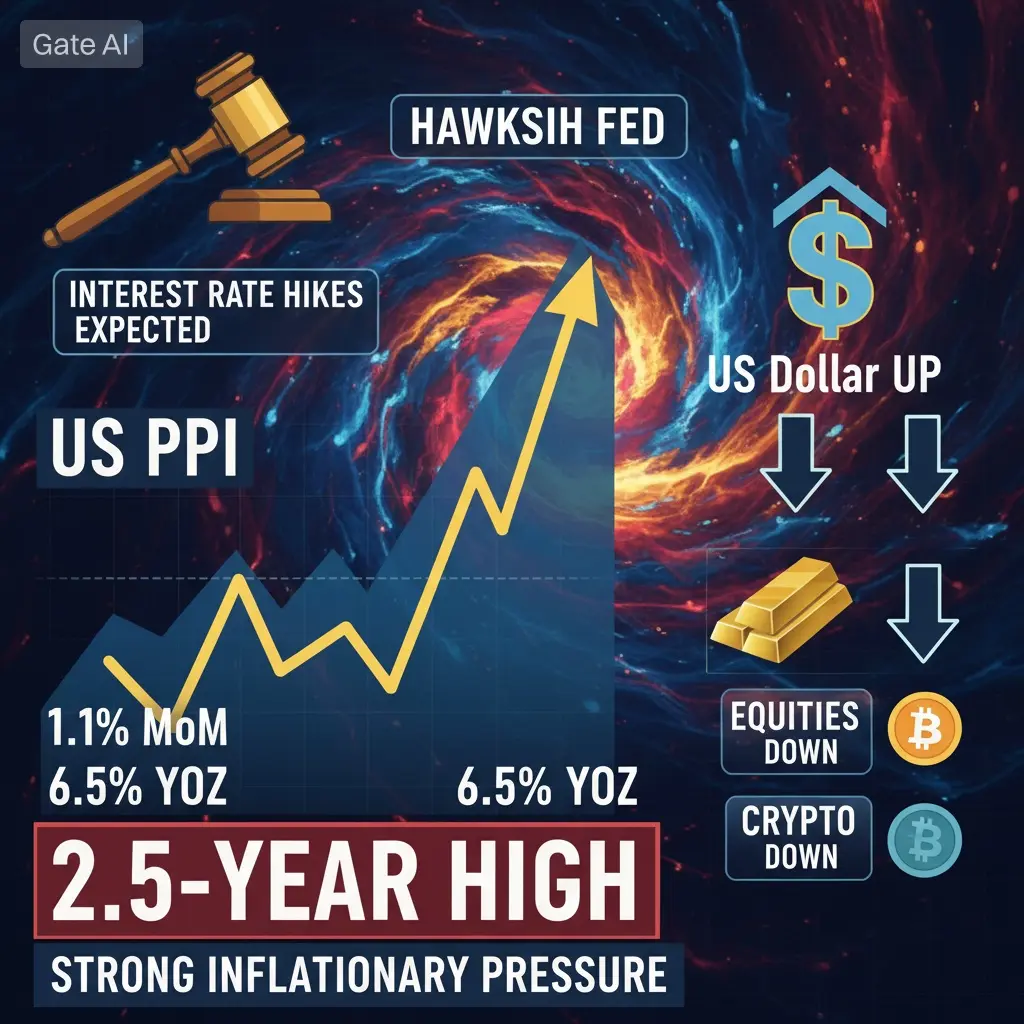
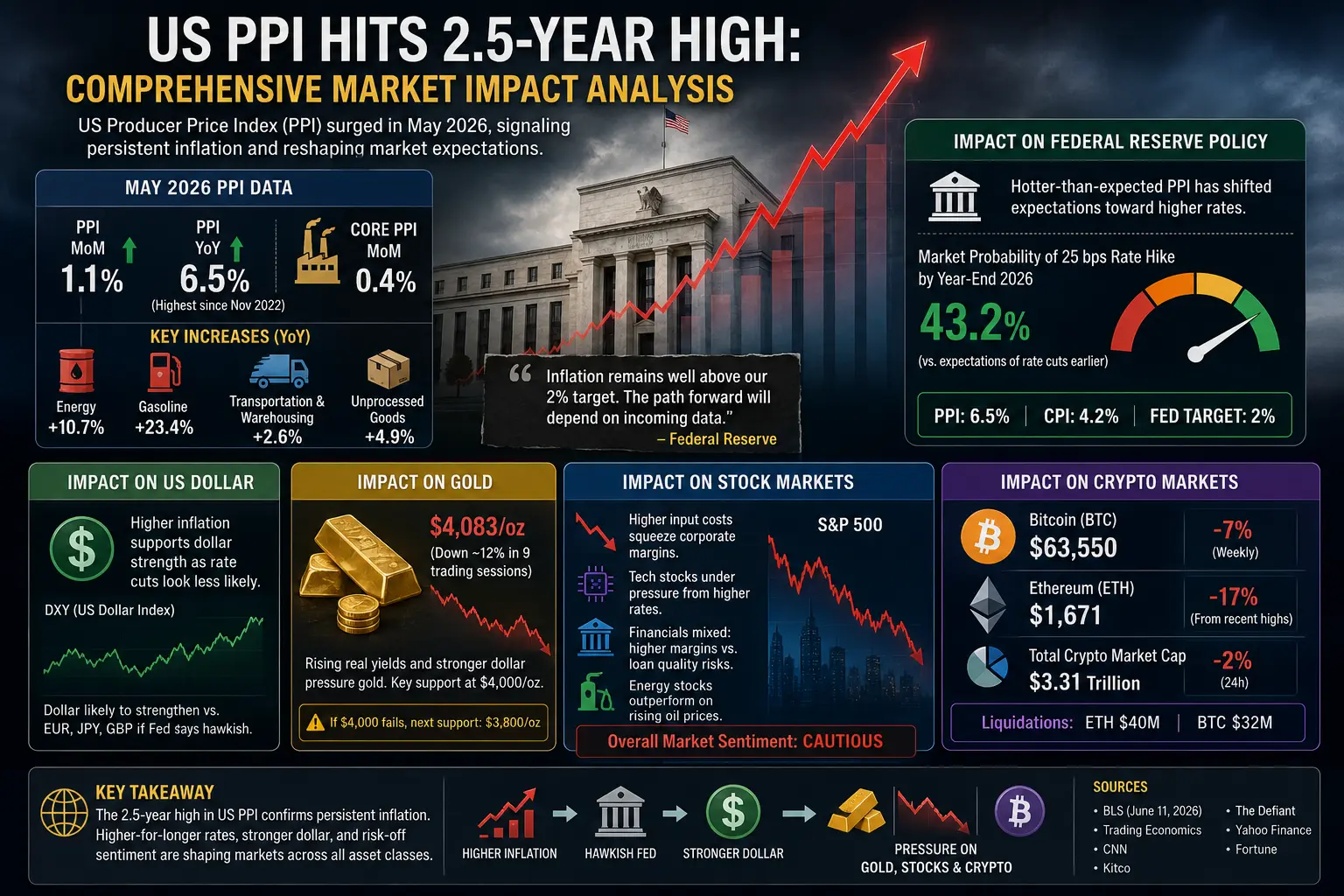
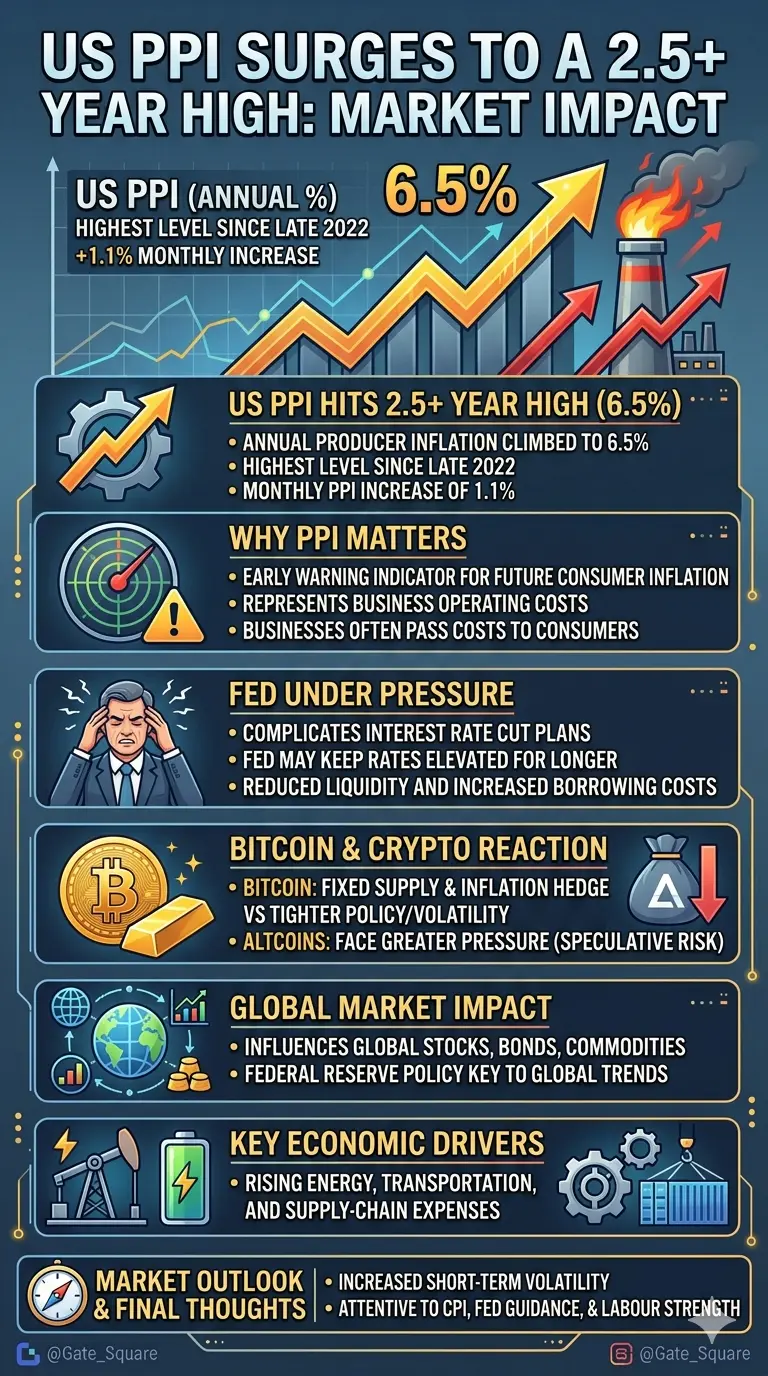
Headline PPI surged +1.1% month-on-month, while year-over-year inflation jumped to 6.5%, the highest level since late 2022.
But the real story isn’t the number.
It’s where the inflation is coming from.
---
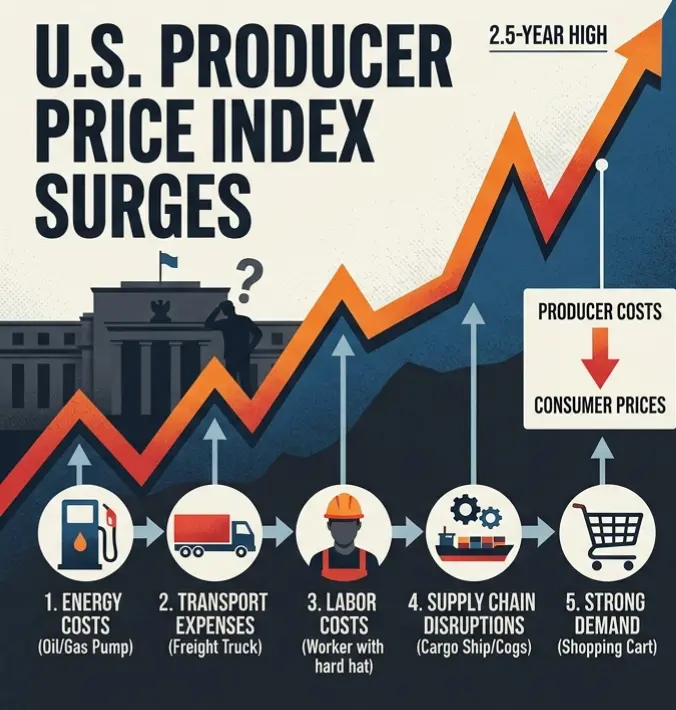
🔥 1. THE CORE DRIVER: ENERGY SHOCK REPRICING THE SYSTEM
This move wasn’t broad-based demand inflation.
It was supply-driven compression in energy inputs.
Key breakdown:
• Energy prices surged +10.7% MoM
• Wholesale gasoline exploded +23.4%
• Nearly 80% of the PPI increase came from energy alone
This is not gradual inflation.
This is a shock transmission event through production chains.
When energy spikes this aggressively, everything downstream reacts:
👉 Transportation costs
👉 Manufacturing margins
👉 Retail pricing pipelines
👉 Corporate earnings expectations
Inflation doesn’t arrive at consumers instantly.
It travels through layers — and we are watching that pipeline activate.
---
🧠 2. THE HIDDEN SIGNAL: CORE PPI IS NOT CONFIRMING PANIC
Now here’s where the structure becomes important.
Core PPI (excluding food & energy):
• +0.4% MoM
• +4.9% YoY (below expectations of 5.4%)
This divergence matters.
Because it tells us:
👉 Inflation is not demand-driven
👉 It is externally shock-driven
👉 Underlying pricing power is not fully overheating
This creates a split-market narrative:
- Energy = explosive volatility
- Core economy = controlled pressure
---
🏛️ 3. FED POSITIONING: THE POLICY TRAP
The Federal Reserve is now stuck between two conflicting signals:
Hawkish pressure:
If energy inflation flows into CPI → PCE rises → policy must stay restrictive
Dovish counterweight:
Jobless claims rising to 229K (4-month high) signals cooling labor conditions
So the Fed is not reacting to one number.
It is managing conflicting data velocity.
And markets hate uncertainty in policy direction.
---
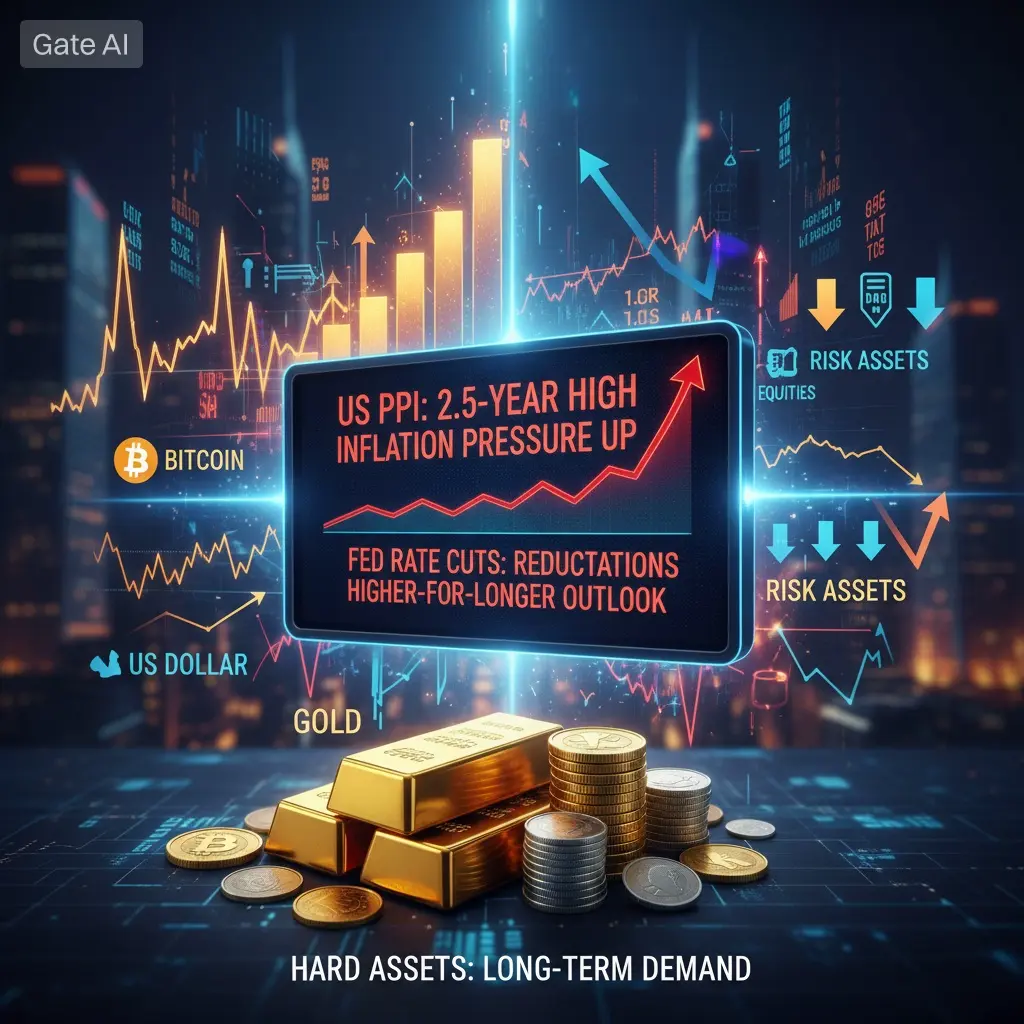
📊 4. MARKET IMPACT: CROSS-ASSET REPRICING ZONE
This kind of macro shock does not stay isolated.
It immediately flows into:
💵 Dollar Index (DXY)
Short-term strength expected due to inflation repricing expectations.
₿ Bitcoin ($BTC)
Dual narrative forming:
- Short-term pressure from stronger dollar & tighter liquidity expectations
- Long-term hedge narrative strengthening due to inflation persistence
📈 Risk Assets
Equities & high-beta crypto enter sensitivity mode:
- Faster reaction to macro data
- Lower tolerance for volatility spikes
- Increased correlation across asset classes
---
🧠 5. TRADING INSIGHT: LIQUIDITY DOES NOT DISAPPEAR — IT RELOCATES
This is the part most traders miss.
Liquidity is not destroyed by macro shocks.
It moves into defensive positioning first.
That means:
• Sudden volatility spikes
• Liquidity gaps across intraday charts
• Sharp stop hunts on both sides
Markets are not trending right now.
They are repricing uncertainty.
---
⚙️ 6. POSITIONING FRAMEWORK: MACRO-FIRST ENVIRONMENT
In this regime, traders should understand one principle:
👉 Technical structure only works AFTER macro settles
Until then:
• Breakouts are fragile
• Support/resistance are liquidity zones, not absolutes
• News becomes a trigger, not a background factor
---
💡 FINAL TAKEAWAY
This PPI print is not just inflation data.
It is a signal that supply-side volatility is back in control of macro direction.
Markets are no longer reacting to growth optimism.
They are reacting to cost pressure transmission risk.
And that changes everything about how liquidity behaves across crypto, forex, and equities.
📊 Question for traders:
In a market driven by energy shocks and policy uncertainty, do you think Bitcoin behaves more like a risk asset… or a macro hedge?
#USPPIHits2.5YearHigh #GateSquare #MacroTrading
#USPPIHits2.5YearHigh
Macro Shock: Inflation Is No Longer a Narrative — It’s a Supply Chain Reality
Markets don’t move on opinions.
They move on pressure building inside the system.
The latest U.S. Producer Price Index (PPI) just confirmed that pressure is rising again.
Headline PPI surged +1.1% month-on-month, while year-over-year inflation jumped to 6.5%, the highest level since late 2022.
But the real story isn’t the number.
It’s where the inflation is coming from.
---
🔥 1. THE CORE DRIVER: ENERGY SHOCK REPRICING THE SYSTEM
This move wasn’t broad-based demand inflation.
It was supply-driven compression in energy inputs.
Key breakdown:
• Energy prices surged +10.7% MoM
• Wholesale gasoline exploded +23.4%
• Nearly 80% of the PPI increase came from energy alone
This is not gradual inflation.
This is a shock transmission event through production chains.
When energy spikes this aggressively, everything downstream reacts:
👉 Transportation costs
👉 Manufacturing margins
👉 Retail pricing pipelines
👉 Corporate earnings expectations
Inflation doesn’t arrive at consumers instantly.
It travels through layers — and we are watching that pipeline activate.
---
🧠 2. THE HIDDEN SIGNAL: CORE PPI IS NOT CONFIRMING PANIC
Now here’s where the structure becomes important.
Core PPI (excluding food & energy):
• +0.4% MoM
• +4.9% YoY (below expectations of 5.4%)
This divergence matters.
Because it tells us:
👉 Inflation is not demand-driven
👉 It is externally shock-driven
👉 Underlying pricing power is not fully overheating
This creates a split-market narrative:
- Energy = explosive volatility
- Core economy = controlled pressure
---
🏛️ 3. FED POSITIONING: THE POLICY TRAP
The Federal Reserve is now stuck between two conflicting signals:
Hawkish pressure:
If energy inflation flows into CPI → PCE rises → policy must stay restrictive
Dovish counterweight:
Jobless claims rising to 229K (4-month high) signals cooling labor conditions
So the Fed is not reacting to one number.
It is managing conflicting data velocity.
And markets hate uncertainty in policy direction.
---
📊 4. MARKET IMPACT: CROSS-ASSET REPRICING ZONE
This kind of macro shock does not stay isolated.
It immediately flows into:
💵 Dollar Index (DXY)
Short-term strength expected due to inflation repricing expectations.
₿ Bitcoin ($BTC)
Dual narrative forming:
- Short-term pressure from stronger dollar & tighter liquidity expectations
- Long-term hedge narrative strengthening due to inflation persistence
📈 Risk Assets
Equities & high-beta crypto enter sensitivity mode:
- Faster reaction to macro data
- Lower tolerance for volatility spikes
- Increased correlation across asset classes
---
🧠 5. TRADING INSIGHT: LIQUIDITY DOES NOT DISAPPEAR — IT RELOCATES
This is the part most traders miss.
Liquidity is not destroyed by macro shocks.
It moves into defensive positioning first.
That means:
• Sudden volatility spikes
• Liquidity gaps across intraday charts
• Sharp stop hunts on both sides
Markets are not trending right now.
They are repricing uncertainty.
---
⚙️ 6. POSITIONING FRAMEWORK: MACRO-FIRST ENVIRONMENT
In this regime, traders should understand one principle:
👉 Technical structure only works AFTER macro settles
Until then:
• Breakouts are fragile
• Support/resistance are liquidity zones, not absolutes
• News becomes a trigger, not a background factor
---
💡 FINAL TAKEAWAY
This PPI print is not just inflation data.
It is a signal that supply-side volatility is back in control of macro direction.
Markets are no longer reacting to growth optimism.
They are reacting to cost pressure transmission risk.
And that changes everything about how liquidity behaves across crypto, forex, and equities.
📊 Question for traders:
In a market driven by energy shocks and policy uncertainty, do you think Bitcoin behaves more like a risk asset… or a macro hedge?
#USPPIHits2.5YearHigh #GateSquare #MacroTrading